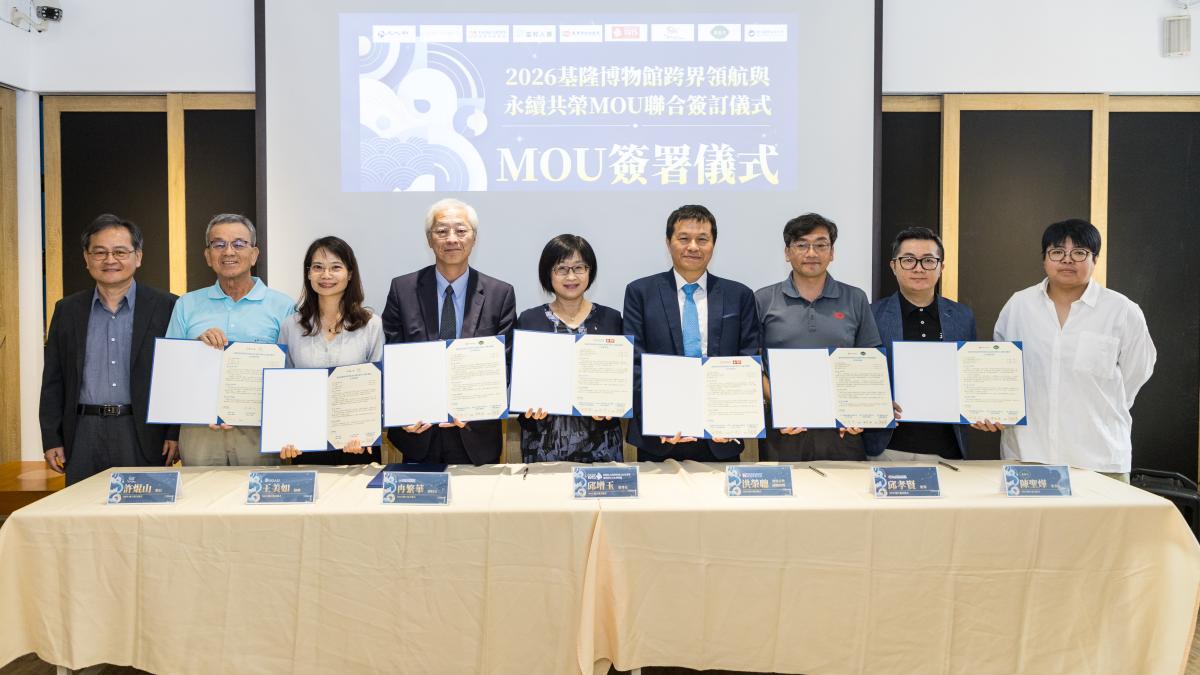
Marine waste is transformed into educational building blocks, and old photos and life memories of the Batozi fishing village are re-organized and published. Corporate cable expertise will also enter Keelung's historic districts, transforming into nighttime light art and low-carbon tourism programs. National Taiwan Ocean University today (22nd) facilitated Hon Hai (2317), Fubon Financial (2881) subsidiary Fubon Life, and Taiwan Electric Cable to sign MOUs with three cultural venues in Keelung, aiming to move corporate ESG from one-time donations to long-term cooperation that combines business expertise with local needs.
The '2026 Keelung Museum Cross-Border Navigation and Sustainable Prosperity - MOU Joint Signing Ceremony' was held today at the Yangming Marine Culture and Art Museum, witnessed by the Ministry of Culture, Keelung City Cultural and Tourism Bureau, and National Taiwan Ocean University, facilitating cooperation between Hon Hai and Yangming Marine Culture and Art Museum, Fubon Life and Batozi Fishing Village Cultural Museum, and Taiwan Electric and the entrusted street area.
The cooperation covers marine environmental education, fishing village cultural preservation, low-carbon tourism, and nighttime tourism. Unlike simply providing funds, the three cooperations attempt to transform circular economy, cultural content promotion, and cable applications into sustainable educational activities, cultural content, and tourism experiences for local venues.
NTU acts as an academic think tank and mediation platform in the 'Keelung City Museum and Local Cultural Venue Introduction of Private Resources Plan' guided by the Ministry of Culture, organized by the Keelung City Cultural and Tourism Bureau, and executed by the National Taiwan Ocean University. NTU identifies the actual needs of local venues and cultural venues in the plan, then finds enterprises with corresponding resources and professional capabilities, establishing a cooperation mechanism between the government, universities, enterprises, and local communities.
Zheng Dingqing, Deputy Director of the Keelung City Cultural and Tourism Bureau, pointed out that local cultural venues and cultural venues carry precious memories of the development of Keelung Port, fishing village life, and street changes. Through NTU's professional inventory and mediation, corporate ESG investments can move from 'not just one-time sponsorship' to gradually developing into cooperative relationships with sustainability and locality.
Zheng Dingqing stated that the Keelung City Cultural and Tourism Bureau will continue to integrate related resources in the future, assist local venues and cultural venues to strengthen operational resilience, and encourage enterprises to participate in local development with their own professionalism and creativity, exploring cooperation models that combine public welfare value, cultural preservation, and tourism economic benefits.
In terms of marine environmental education, Hon Hai and the Yangming Marine Culture and Art Museum jointly launched the 'Marine Fun Assembly' marine waste building blocks teaching aids, transforming marine waste and circular economy issues into educational media that the public can actually operate and understand.
The two parties also plan to combine Keelung Port culture, port history, and marine waste circular economy into walking activities, so that participants can not only learn about marine waste issues from the teaching aids but also further enter the port area and cultural venues to understand the historical connection between Keelung and the ocean.
This cooperation demonstrates the possibility of combining corporate environmental sustainability actions with museum education, and allows marine waste processing to extend from the recycling level to environmental education and cultural experience.
《Northeast Wind》 Leaves Fishing Village Memories
Fubon Life, together with the Batozi Fishing Village Cultural Museum, published the 《Northeast Wind》 magazine and helped display local precious historical and cultural data and fishing village relics. Through old photos, fishing village tours, and fish education, the life memories and marine culture of Batozi are reorganized.
The local stories of Batozi not only reflect the development of traditional fisheries but also record the lifestyle and generational changes of coastal settlements. This cooperation hopes to transform the data, which was originally scattered in local collections or residents' memories, into cultural content that is easier for the public to access through publication, display, and guided tours, reducing the risk of local knowledge being lost with generational changes.
Taiwan Electric's Cable Expertise Enters Old Streets, Plans Low-Carbon Night Tours
Taiwan Electric's cooperation with the entrusted street area brings the company's cable expertise into historical districts, combining light art, traditional street environments, and historical spaces, and planning low-carbon nighttime tourism experiences in Banzi Ding.
The two parties hope to improve the nighttime environment, enhance the street's recognition, and design characteristic programs, so that tourists can, in addition to traditional daytime tourism, also recognize Keelung's port development, commercial history, and civilian life through lights and street textures.
Compared to one-time festival activities, this cooperation focuses more on how corporate expertise responds to street needs and, through nighttime light environments and low-carbon programs, extends the experience time of cultural venues. However, the relevant plans are still in the planning stage, and the actual scope of improvement, implementation schedule, and program content still need to be announced later.
MOU is Just the Starting Point, Can Cultural ESG Last?
Vice President of National Taiwan Ocean University, Ruan Fanhua, stated that NTU has been deeply involved in Keelung for a long time and implemented university social responsibility. Through linking the government, universities, enterprises, and local cultural venues, a cross-domain sustainable cooperation model was established. He hopes that future partner relationships can continue to deepen and transform cooperation results into specific educational activities, cultural content, and local development plans.
Ruan Fanhua hopes to further make Keelung's museums, local cultural venues, and historical districts become indicative cultural sustainable practice venues in Taiwan.
The three MOUs provide different paths for corporate participation in local culture, but signing is just the starting point. Whether this 'cultural ESG' model can operate long-term still needs to observe the actual progress of various projects, corporate investment, local residents' participation, and whether education, cultural preservation, and local economic results can be continuously measured.
This MOU cooperation originated from the 'Keelung City Museum and Local Cultural Venue Introduction of Private Resources Plan' guided by the Ministry of Culture, organized by the Keelung City Cultural and Tourism Bureau, and executed by National Taiwan Ocean University. (Provided by Hon Hai)
FACT BOX
- Source: PR Times
- Category: Partnership
- Dates in source: 2026