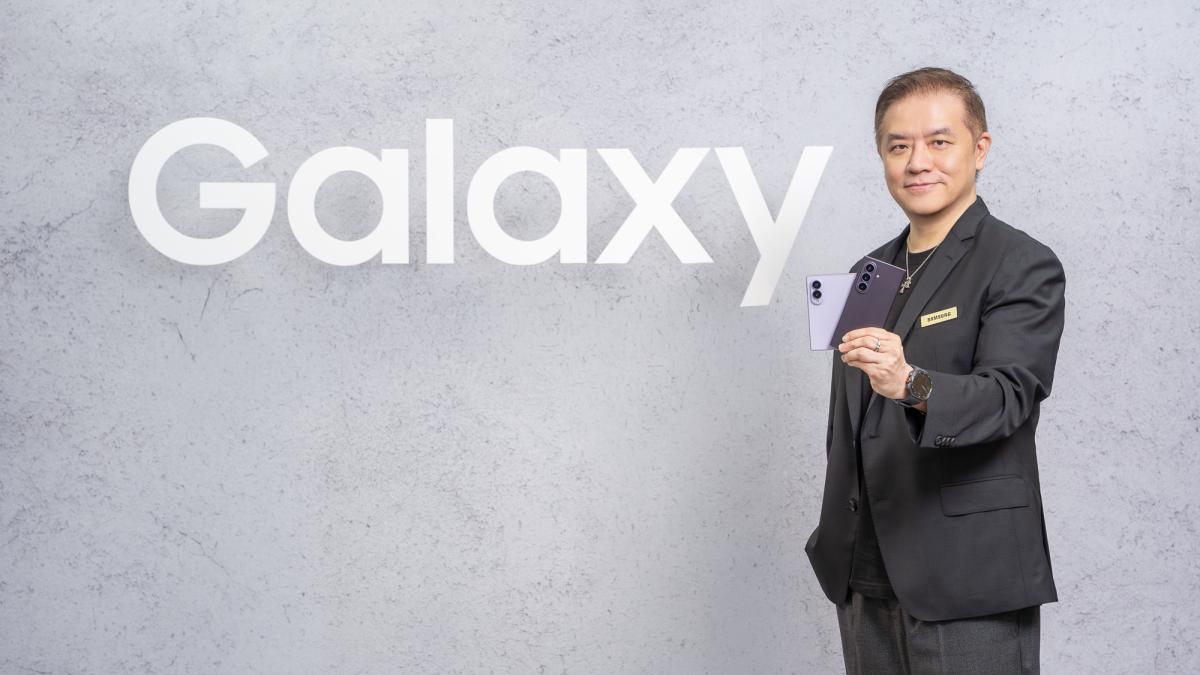
The next phase of the foldable smartphone market competition appears to still revolve around thickness, weight, crease visibility, and camera specs, but the real battle is for dominance in the generative AI era's ecosystem. Samsung has split its book-style foldable lineup into two flagship models—Galaxy Z Fold8 and Fold8 Ultra—and enhanced Smart Switch to transfer Passkeys and eSIM, while making Quick Share compatible with AirDrop. This signals that Samsung’s true target extends beyond existing Android users to long-term iPhone users locked into Apple’s hardware and software ecosystem.
According to Counterpoint Research, global foldable smartphone shipments will grow by 21% in 2026, with book-style foldables expected to account for 65% of that market. Meanwhile, generative AI smartphones will represent 45% of global smartphone shipments this year, rising to 52% by 2027.
The convergence of these two trends indicates that foldable phones are transitioning from niche products used by tech enthusiasts to a more scalable high-end market. AI smartphones are also evolving beyond simply having generative features, now competing on their ability to understand personal context, perform cross-app tasks, and extend experiences to wearables like watches and glasses.
Splitting Fold into Two: Samsung Expands Book-Style Foldable User Base
Previously, Samsung attempted to meet diverse needs—content entertainment, business multitasking, and professional creation—with a single Galaxy Z Fold model. This year, it introduces a dual-tier strategy with Fold8 and Fold8 Ultra for the first time.
Fold8 reduces weight to 201 grams, featuring a 5.5-inch cover screen and a 7.6-inch inner display, lowering the carrying burden of book-style foldables and targeting users focused on video, gaming, reading, and social media content. In contrast, Fold8 Ultra raises the bar for business productivity and content creation with an 8-inch main display, 200-megapixel camera, flagship processor, 5,000mAh battery, and professional-grade multimedia features.
This product segmentation reflects the maturing book-style foldable market and the diversification of user needs. Samsung is no longer just promoting the idea of 'one phone unfolding into a tablet,' but instead building two distinct usage scenarios—lightweight entertainment and top-tier productivity—while Flip8 targets selfie, fashion, and social media markets.
However, Samsung has not yet announced pricing in Taiwan, so it remains unclear whether the price gap between Fold8 and Fold8 Ultra will effectively expand the market or merely further segment the existing high-end customer base.
Galaxy Z Fold8 supports dual recording with front and rear cameras simultaneously, allowing users to view their own image in real time via the cover screen—perfect for capturing reactions, interactions, or shared memories. (Provided by Samsung)
Foldable Hardware Now Serving AI: Large Screens as Agent Operation Interfaces
Past generations of foldable phones primarily upgraded hinges, crease reduction, thickness, and durability. This time, Samsung tightly integrates hardware design with Agentic AI.
Now Nudge can identify schedules and locations from conversations and proactively suggest checking times, opening maps, or saving locations. Gemini Intelligence understands on-screen content and images, enabling it to perform tasks across more than 40 apps and services—such as checking tickets, finding restaurants, making reservations, and compiling documents.
For traditional slab smartphones, executing AI tasks often requires switching between apps. Fold8’s large screen and split-window functionality allow users to simultaneously view conversations, maps, schedules, and AI-generated results. This is Samsung’s new narrative for foldables: the foldable screen isn’t just about increasing display area, but serves as an operational interface for AI agents performing complex tasks.
Flip8 takes a different approach, bringing Now Brief and Gemini to its 4.1-inch cover screen, enabling users to check suggestions or execute voice commands without unfolding the phone. From Fold to Flip, Samsung is demonstrating that different foldable form factors can all serve as differentiated entry points for AI services.
Migration Barriers Extend Beyond Photos: Passwords and eSIM Are the Real Ecosystem Moats
Yet, attracting users from Apple requires more than just foldable design and AI features. In the mature smartphone era, the main barriers to switching operating systems go beyond contacts, photos, and videos—they include years of accumulated passwords, Passkeys, eSIMs, account settings, call logs, and ingrained habits of sharing files with friends and family.
Samsung has upgraded Smart Switch to allow iOS users to wirelessly transfer data to a new Galaxy device by simply scanning a QR code—no need to download additional apps on the original iPhone. Support now includes passwords, Passkeys, call logs, accessibility settings, and eSIM.
Smart Switch addresses the one-time 'switching cost,' while Quick Share’s AirDrop compatibility aims to reduce the long-term 'cross-system communication cost.' With bidirectional file transfer between Galaxy and iPhone, users who leave iOS no longer have to completely lose the ability to quickly share photos and videos with existing Apple users.
However, this barrier hasn’t fully disappeared. Currently, AirDrop compatibility is only supported on Galaxy S26 series and three latest foldable models, with plans to expand to other flagships later. Smart Switch’s data transfer and eSIM support are also subject to OS version, carrier, and regional limitations.
Therefore, Samsung’s current strategy isn’t to completely 'break' Apple’s closed ecosystem, but to gradually lower the transition costs for users leaving iOS.
Gemini Moves from Pocket to Wrist and Field of View: Samsung Expands AI Touchpoints
Samsung’s AI ambitions extend beyond smartphones. At this year’s Galaxy Unpacked, the company also launched Galaxy Watch Ultra2, Watch9, and AI smart glasses developed with Google, Gentle Monster, and Warby Parker—extending Gemini from phones to wrists and users’ line of sight.
Samsung’s AI smart glasses use the Snapdragon AR1 Gen 1 platform, feature built-in cameras, and run on Android XR. They can summarize long messages, read important information aloud, provide real-time translation and navigation, and capture content from whiteboards or meetings, later organizing it into Samsung Notes.
The glasses offer up to 9 hours of use on a single charge, with the charging case providing up to seven full recharges. Users can operate them via voice, touch, or gestures linked to connected devices, with some gesture interactions requiring Galaxy Watch9.
Won-Joon Choi, CEO of Samsung’s Mobile Experience Division, said: 'As agentive AI reshapes mobile experiences, the next step is making these services respond more intuitively to each user’s context. Smart glasses provide a new interaction entry point, allowing personalized AI assistance to naturally integrate into daily life.'
Phones manage communication, work, and content; smartwatches continuously collect activity, sleep, and health data; AI glasses understand gaze, location, and surroundings. If Samsung can enable these three devices to share context and seamlessly continue tasks, the stickiness of the Galaxy ecosystem will no longer rely solely on a single phone, but on the continuous accumulation of data and AI services across different life scenarios.
The More Proactive the AI, the More Critical Privacy and Permission Management
However, as Agentic AI understands more contexts and performs broader tasks on behalf of users, data governance becomes increasingly important. For AI to proactively arrange routes, check schedules, process documents, or monitor health, it must access more app data, location, personal preferences, and biometric information.
Samsung employs its Personal Data Engine to build personalized AI features on-device, uses Knox Enhanced Encrypted Protection to create encrypted storage spaces for different apps, and leverages Knox Vault for hardware-level security.
The new AI Assistant Activity dashboard in One UI 9 allows users to centrally review what AI agents have done and adjust permissions in relevant services. These mechanisms show that the next phase of AI smartphone competition will not only be about model capabilities, but also about transparency—letting users see what AI is doing, what data it uses, and whether they can revoke access at any time.
Will the Taiwan Market Accept It? Pricing and Feature Rollout Are Key
Samsung has already launched pre-orders for its new foldable phones in global markets, but pricing, release dates, storage configurations, and telecom plans in Taiwan remain unannounced. The AI smart glasses also lack a Taiwan launch timeline.
This means whether Samsung’s global strategy can drive upgrade momentum in Taiwan depends on several factors: whether Fold8 Ultra is priced at a reasonable gap from top-tier slab flagships, how much carrier subsidies are offered, and when AirDrop interoperability becomes available to local users.
FACT BOX
- Source: PR Times
- Category: New Product
- Organizations: Samsung / Apple / Google
- Products / services: Galaxy Z Fold8 / Galaxy Z Fold8 Ultra