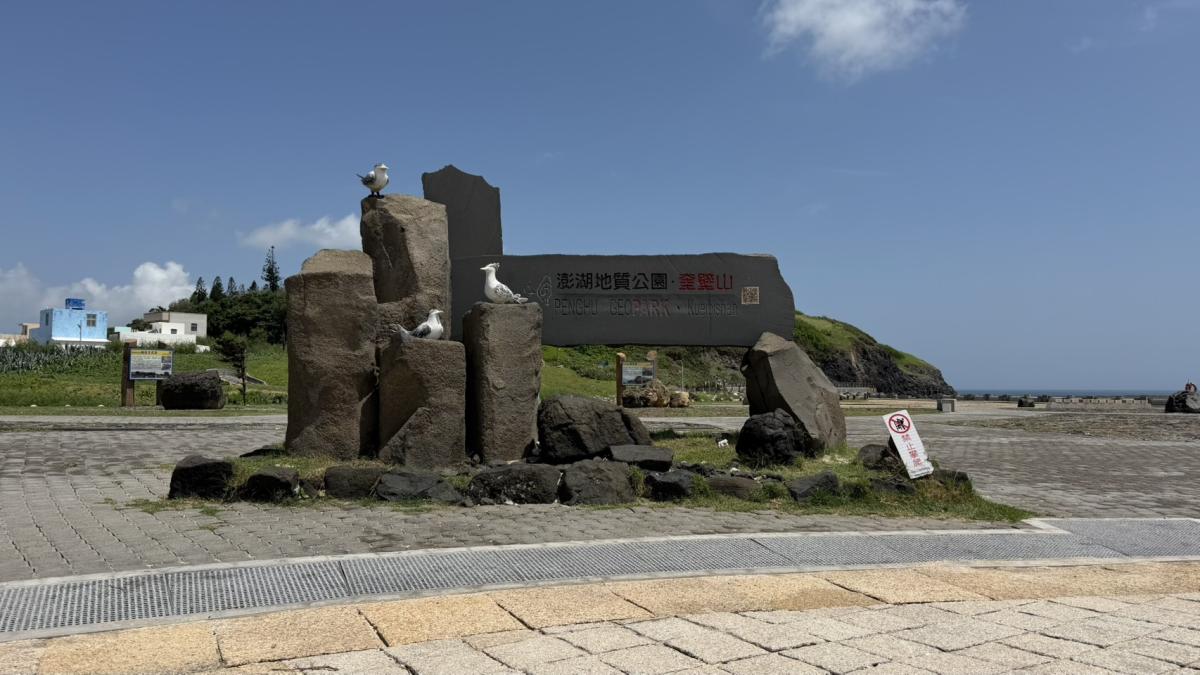
Exploring Penghu isn’t just about the Cross-Sea Bridge, basalt formations, and seafood feasts. To experience the legendary Moses Parting the Sea, century-old settlements, underground military tunnels, and dreamy beaches all in one journey, hop on the Taiwan Tourist Shuttle’s Magong-Husi Line. Departing easily from Magong City, this cruise-style public bus takes you on a deep, one-day journey along Penghu’s east coast, blending natural wonders, cultural stories, and sustainability.
The 'Penghu Taiwan Tourist Shuttle' operates four main routes: the 'Penghu Airport Express,' designed specifically for airport transfers, and three cruise-style sightseeing lines (same vehicle to destination with onboard guides)—the Magong North Loop Line, Magong-Husi Line, and Magong-Pengnan Line. (Photo/Captured by Chen Youjia)
This cruise-style sightseeing bus connects multiple unique attractions in Huxi Township, featuring professional onboard guides throughout the journey. Travelers don’t need to drive or worry about inter-attraction transfers—perfect for families, independent travelers, and senior groups to discover a different side of Penghu beyond its popular landmarks.
At Kuibi Mountain, a natural S-shaped gravel path emerges at low tide, allowing visitors to walk through the center of the sea and witness Penghu’s famous Moses Parting the Sea phenomenon. (Photo/Captured by Chen Youjia)
Tidal-Exclusive Sea Path: Chasing the Tide to Witness Moses Parting the Sea
The journey begins at Kuibi Mountain Geological Park. Named for its shape resembling a giant turtle lying on the sea surface, Kuibi Mountain reveals a natural S-shaped gravel path during low tide, connecting it to Chi Islet—reminiscent of the biblical Moses Parting the Sea—and has become one of Penghu’s most iconic natural wonders.
Visitors can walk through the center of the sea according to tide schedules and on-site staff guidance, observing crabs, shellfish, and seaweed in the intertidal zone up close. With sea breezes, polished gravel underfoot, and vast ocean views ahead, it’s a magical moment performed by nature every day.
Residents of Nanliao Community repainted recycled fishing buoys to create a vibrant, island-themed sustainable tourism hidden gem. (Photo/Captured by Chen Youjia)
Reviving a Century-Old Fishing Village: Colorful Buoys Turn into Sustainable Hidden Gems
Next, enter the internationally acclaimed Nanliao Community. Preserved with coral stone-walled vegetable plots, traditional houses, fish ovens, and winding alleys, it fully showcases Penghu’s traditional farming and fishing village lifestyle. Locals use stone walls to block northeast monsoon winds and protect crops from salt damage—each structure embodying ancestral wisdom in adapting to island life.
The community’s popular attraction, the Buoy Secret Garden, transforms sustainability into the most eye-catching tourism scene. Residents recycle used fishing buoys, repurposing them through painting and artistic design into colorful public spaces—becoming a must-photograph spot for tourists while giving new life to waste materials.
In recent years, Nanliao Community has promoted resident-led tours, local cuisine, hands-on experiences, and cultural storytelling, allowing visitors to go beyond quick photos and truly step into village life, understanding the power of local revitalization and community co-prosperity.
Longmen Coastal Fortress fully preserves underground tunnels and military facilities, guiding visitors through time to explore Penghu’s wartime history as a key coastal defense site. (Photo/Captured by Chen Youjia)
Descending into Granite Underground Tunnels: Traversing Penghu’s Wartime Era
The Longmen Coastal Fortress adds a mysterious wartime atmosphere to the journey. Built during wartime, this underground military tunnel was carved from solid granite, preserving command centers, machine gun bunkers, ammunition storage, and soldiers’ living quarters—fully showcasing the former defensive infrastructure.
Walking through the dimly lit, winding tunnels, the cool rock walls, narrow passages, and heavy military equipment transport visitors back to the era when Penghu bore the critical responsibility of Taiwan’s coastal defense. Through guided explanations, visitors gain deeper insights into Penghu’s unique role in Taiwan’s defense history.
Lintou Park features casuarina forests, pristine sandy beaches, and expansive ocean views—a healing destination for strolling and feeling Penghu’s relaxed rhythm. (Photo/Captured by Chen Youjia)
Forest and Beach in One: Sea Breezes Conclude the Journey with Serenity
The journey ends at Lintou Park, where endless sandy beaches, lush casuarina forests, and vast ocean views intertwine to form Penghu’s most iconic coastal scenery. Visitors can slowly stroll along shaded pathways, listening to waves and feeling gentle sea breezes, slowing down the pace of a full day’s journey.
Nearby Aimen Beach is a popular summer swimming spot, with fine sand and turquoise waters creating a stunning contrast. From Moses Parting the Sea and sustainable villages to wartime tunnels and coastal forests, the Magong-Husi Line doesn’t just connect attractions—it leads travelers deep into Penghu’s nature, culture, and everyday life.
FACT BOX
- Source: PR Times
- Category: Event