Yoshitaka Yorita, Executive Director of the Indo-Pacific Strategy Think Tank, was attacked and injured in Taichung City on the 6th by a Chinese national named Liao Gangfa. The Mainland Affairs Council (MAC) warned that this is the first case of 'transnational repression' since the implementation of the 'People's Republic of China Law on the Promotion of Ethnic Unity and Progress' (Ethnic Unity Promotion Law), and emphasized it would not be taken lightly. Chen Bin-hua, spokesperson for the Taiwan Affairs Office (GTP), stated during a press conference that the man's actions were driven by 'righteous anger' and were entirely an isolated, incidental public security case.
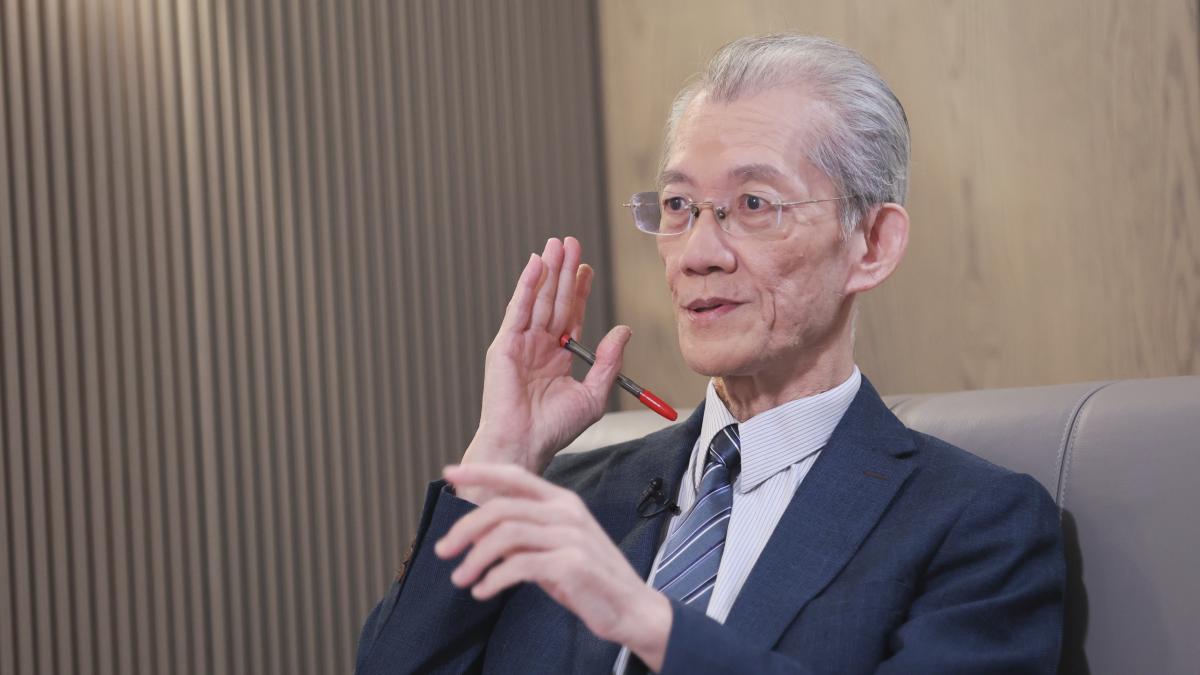
In response, Ming Ju-cheng, honorary professor at National Taiwan University's Department of Political Science, appeared on the program 'Xia Ban Han Ni Liao' and urged the Kuomintang (KMT) to recognize the true nature of the Chinese Communist Party (CCP).
'Why is the GTP defending Liao Gangfa?' Ming questioned, calling the move 'a classic case of protesting too much.' 'How can the official GTP defend someone who premeditatedly crossed borders to commit violence, claiming it was out of 'righteous anger'? In other words, does the GTP believe that committing crimes is acceptable if done out of 'righteous anger'? Could someone then go to China and commit crimes there out of 'righteous anger'? The GTP clearly lacks any sense of law.'
Regarding KMT caucus secretary Lin Pei-hsiang's statement that 'we should not pre-judge and allow the police to conduct proper investigations,' and his suggestion that the attacker might have 'mistaken the identity,' Ming expressed skepticism. 'Liao shouted 'Mr. Yorita' before the attack—this was an assault after confirming the identity. What motive does the KMT have to defend Liao Gangfa? Is it necessary?'
Ming stated frankly that if this were the KMT of the past, it would have condemned such transnational repression and clearly stated that the CCP's actions are unacceptable. He urged the KMT to clearly see the CCP's true nature: 'Those who defend the CCP—how will they ultimately survive in Taiwan and the free world?'
Ming also discussed the Ethnic Unity Promotion Law, arguing that China's laws are designed to facilitate governance, control, and repression. Although the Communist Party once claimed that 'law is a tool of class oppression' serving the bourgeoisie, what it didn't say was, 'once I (the Communist Party) am in power, the law serves me.' This Ethnic Unity Promotion Law is a 'word game' that wraps the Communist Party's rule in terms like 'nation' and 'ethnicity.'
Ming cited Article 63 of the law: 'Organizations and individuals outside the People's Republic of China who engage in acts that undermine ethnic unity and progress or create ethnic division against the People's Republic of China shall be held legally accountable.' He pointed out that if citizens vote for the President of the Republic of China, regardless of party, they could be considered in violation of the law, as the CCP claims 'the Republic of China ceased to exist in 1949.' Therefore, by the CCP's standards, a presidential election in Taiwan constitutes an act of splitting the nation and ethnicity. According to Article 54, Chinese citizens are not only monitoring each other but can also monitor the entire world and Taiwan. 'Soon, we will see Taiwan entertainers who have aligned with China begin to report on us,' he warned. The Communist Party always traces identities retroactively, so past actions will be scrutinized. He cited the example of people in mainland China after the cross-strait division, who, despite not opposing communism, were executed by the Communist Party simply for having once served in the Nationalist Army.
Ming believes this situation is causing some Taiwanese people to begin self-censoring, creating a chilling effect—the very outcome China desires. 'Those defending Liao Gangfa by saying he mistook the identity—that is the chilling effect. Does the person saying this really believe he (Liao Gangfa) made a mistake in identity?'
In the past, after the Communist Party took control of mainland China, it adopted a policy of 'downgrading and gradually eliminating' underground CCP members who had operated in 'KMT-controlled areas.' Ming warned: 'Don’t think that saying pro-Communist things will guarantee you a good life under Communist rule. In the eyes of the Communist Party, these people betrayed the Republic of China and the KMT, so they could just as easily betray the Communist Party. Unless you are still useful to me (the Communist Party), I will keep you around.'
FACT BOX
- Source: PR Times
- Category: News