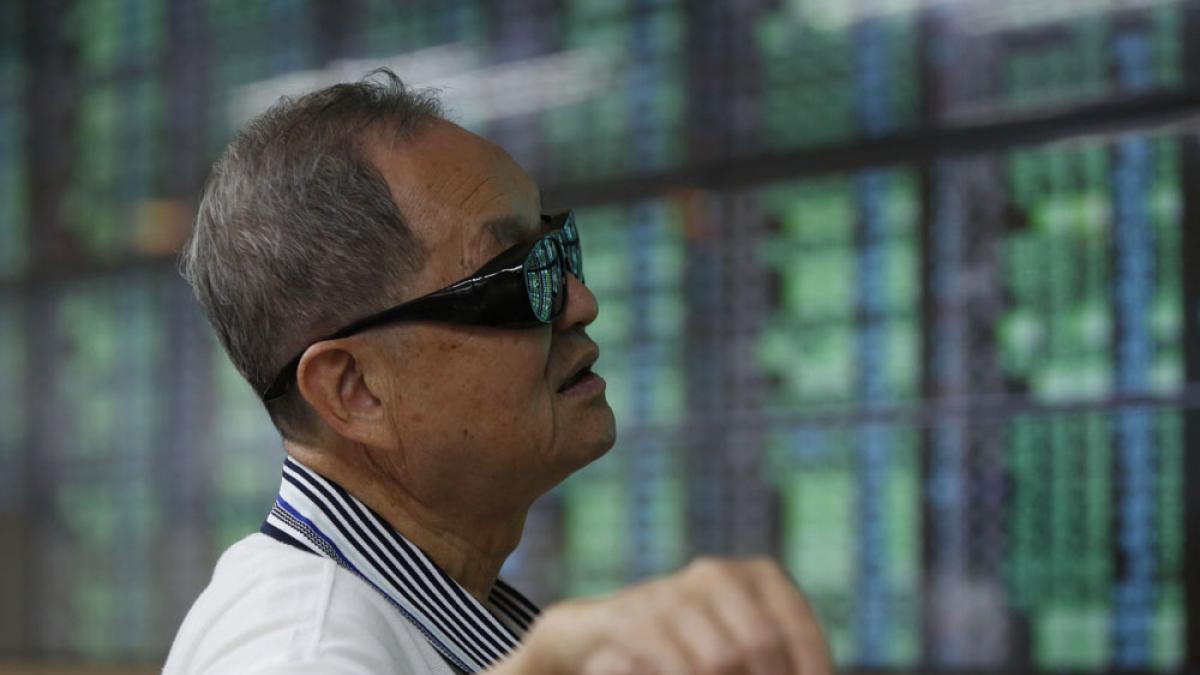
Fueled by the AI boom, semiconductor stocks have become virtually the only main players in the market. Despite a sharp correction last week, the Philadelphia Semiconductor Index has still outperformed the S&P 500 by 57 percentage points in year-to-date gains. In contrast, previously popular investment assets such as cryptocurrencies and precious metals have underperformed recently, making investments outside chip manufacturers seem like a waste of time.
However, the recent pullback has prompted the market to reconsider whether this is a chance to buy the dip or a turning point after an extended rally. Investors stand at a crossroads, and the decision of whether to continue holding semiconductor stocks has become the most critical question at hand.
Gavin Baker, a well-known investor who backed Nvidia and SpaceX early on, remains optimistic about the AI outlook, viewing this correction as an opportunity to add positions. On the other hand, bears anticipate that market capital may gradually shift toward sectors with lower valuations that have yet to benefit from the AI theme, such as healthcare and consumer technology stocks. Michael Burry, the protagonist of 'The Big Short,' has even suggested investors look to Hong Kong's stock market for undervalued opportunities.
To assess whether the semiconductor rally still has momentum, it may be necessary to examine three aspects: macroeconomic trends, industry competition, and market liquidity.
If optimistic economic expectations reverse, semiconductor stocks could be hit first. Bloomberg Opinion columnist Shuli Ren cited Gavekal Research analyst Louis-Vincent Gave, noting that this rally is essentially a macro trade, reflecting market bets on global economic expansion and the inflation cycle. Because the semiconductor industry is highly cyclical and capital-intensive, it benefits most during economic upswings but is often the first to suffer when conditions weaken.
This market sentiment is also reflected in Bank of America's latest Global Fund Manager Survey. The survey shows that 41% of respondents expect a global economic boom—the highest since February 2022—while inflation expectations have dropped to their lowest since January 2025. Additionally, 61% of respondents believe major cloud service providers will not cut AI capital expenditures this year.
However, if market optimism about the economy begins to cool—whether due to escalating U.S.-Iran tensions or renewed risks of Fed rate hikes—semiconductor stocks could face even greater selling pressure. As high-beta stocks, semiconductors typically experience more volatile price movements than the broader market.
Is the Technological Moat Truly Impenetrable?
Beyond macroeconomic factors, another key reason for the surge in semiconductor stocks is the market's belief that a few leading companies possess irreplaceable competitive advantages.
For example, the DRAM market is still dominated by three major players: Samsung Electronics, SK Hynix, and Micron. All three have surpassed a market capitalization of $1 trillion this year, reflecting investor confidence that AI-era memory demand growth will continue to benefit firms with technological and scale advantages.
However, investors are beginning to reassess whether these moats are truly unbreakable. Whether China's ChangXin Memory Technologies (CXMT) could disrupt the current oligopoly in the DRAM market is a key focus for the market.
On the other hand, regulatory risks are emerging. South Korea recently launched an investigation into China's Montage Technology, Japan's Renesas Electronics, and U.S.-based Rambus, suspecting them of price manipulation in memory interface products.
All three companies are suppliers to Samsung and SK Hynix. Following the announcement, Montage Technology's Hong Kong-listed shares plunged as much as 23%. The company stated it is fully cooperating with South Korean authorities and has not yet been formally charged.
AI Chip Rally Driven Not Just by Fundamentals—Liquidity Matters Too
Beyond corporate earnings and valuations, market liquidity is also a key driver of the AI chip rally.
Take SK Hynix, for example. Its U.S.-listed ADR once traded at a nearly 50% premium to its Seoul-listed shares. Although both represent equity in the same company, which better reflects SK Hynix's fair value? Such a significant price gap shows that capital flows can influence stock prices, even surpassing fundamentals in the short term.
This alone proves that in addition to monitoring AI industry developments and corporate competitiveness, investors must closely watch liquidity—especially whether retail investors are taking profits, as their growing influence is disrupting traditional market dynamics, or whether hedging positions via derivatives are increasing. These signals may reflect market sentiment earlier than industry news.
As AI chip trading becomes increasingly crowded, this rally may face the test of 'rising with AI, falling with AI.'
FACT BOX
- Source: PR Times
- Category: Survey
- Organizations: SpaceX / Rambus
- Products / services: DRAM