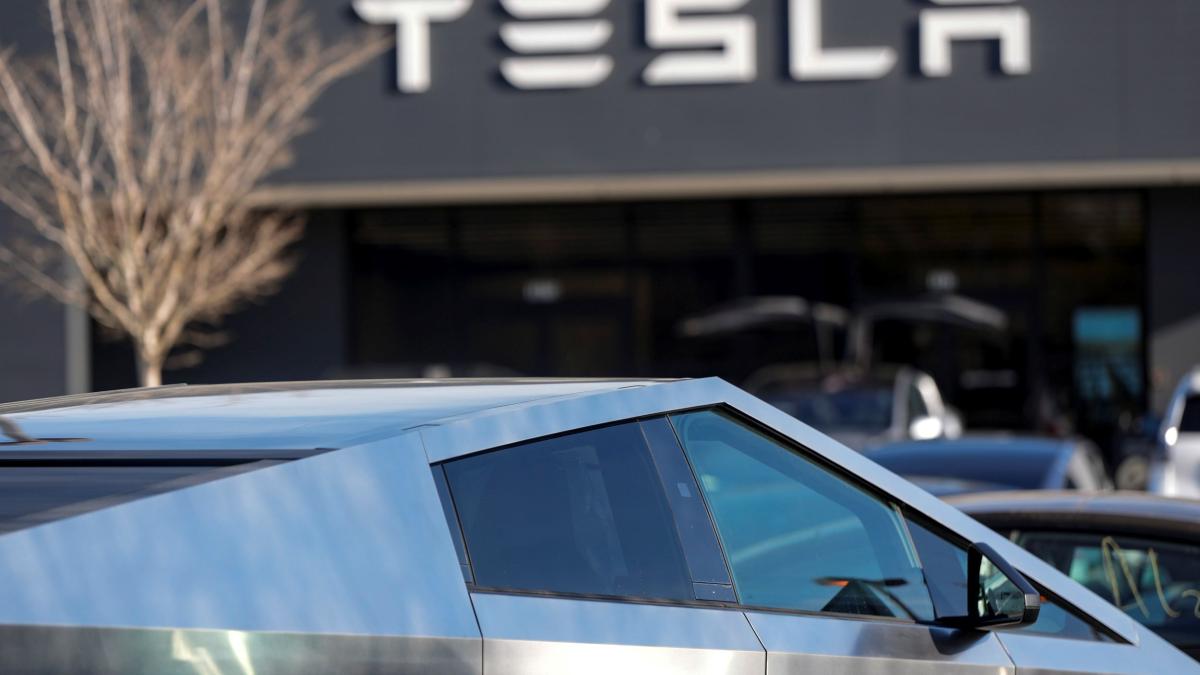
U.S. electric vehicle giant Tesla has released its Q2 2026 earnings, revealing that while revenue and delivery figures surpassed market expectations, free cash flow turned negative for the first time in over two years. This shift is attributed to major investments in artificial intelligence (AI) infrastructure, battery production capacity expansion, Robotaxi autonomous ride-hailing, and next-generation manufacturing technologies. Following the earnings announcement, Tesla's stock dropped approximately 3% in after-hours trading.
The company reported a negative free cash flow of $1.1 billion for the quarter. Despite the outflow, the result significantly outperformed market expectations. According to data from the London Stock Exchange Group (LSEG), analysts had forecasted a cash outflow of around $3.3 billion, making Tesla's actual performance notably better than even the most pessimistic projections.
On the operational front, Tesla generated $28.24 billion in revenue for the second quarter ending June 30, exceeding the LSEG-analyst consensus estimate of $25.71 billion. This reflects strong contributions from both vehicle deliveries and energy business segments.
However, profitability remains under pressure. Adjusted earnings per share (EPS) came in at $0.33, below Wall Street's forecast of $0.51, indicating that ongoing investments in new technologies and product development continue to impact margins.
Tesla delivered 480,126 vehicles globally in Q2, surpassing market expectations and representing a roughly 25% increase compared to 384,122 vehicles delivered in the same period last year. Vehicle production during the same period totaled 451,758 units, meaning deliveries exceeded production by over 28,000 units. This successfully reduced previously accumulated inventory, marking a clear reversal from earlier in the year when production outpaced deliveries and inventory levels rose.
This data suggests that after a relatively weak demand in Q1, sales momentum rebounded in Q2. Despite the delivery recovery, the market continues to scrutinize whether Tesla's core automotive business can maintain its competitiveness.
The global EV market has become increasingly competitive, with automakers from China, Europe, and the U.S. launching newer models, many priced below Tesla's offerings, increasing competitive pressure. Tesla's sales remain heavily reliant on its two main models—the Model 3 sedan and Model Y SUV—highlighting concerns over its limited product lineup and raising questions about when new mass-market vehicles will be introduced.
To stimulate demand, Tesla launched simplified, lower-priced versions of the Model 3 and Model Y at the end of last year. Additionally, the company began offering a six-seat version of the Model Y in the U.S. this month, aiming to expand into the family vehicle market. However, the removal of certain EV tax credits in the U.S. last year has dampened demand, leaving uncertainty over whether these new models will effectively boost sales.
According to Visible Alpha data, Wall Street analysts currently project Tesla's full-year 2026 deliveries at around 1.7 million units, higher than last year, reflecting continued market expectations for growth. However, analysts remain divided on whether Q2's delivery rebound signals a full recovery in demand or merely a delayed delivery effect following Q1's weakness.
Moreover, with last year's Q3 delivery base already high, maintaining current growth momentum in Q3 2026 will face a tougher year-over-year comparison, making future quarterly performance a key market focus.
Beyond vehicle sales, Tesla's energy business continues to demonstrate strong growth. The company deployed 13.5 GWh of energy storage products in Q2, up from 8.8 GWh in Q1 and 9.6 GWh in the same period last year—setting another record for its energy storage segment.
Rising demand for large-scale energy storage systems, driven by global grid upgrades, renewable energy expansion, rapid growth of AI data centers, and the need for stable power systems, is making energy storage an increasingly important revenue and profit pillar for Tesla, reducing its reliance on automotive sales.
In recent years, investor perception of Tesla has shifted from a traditional automaker to a company focused on AI, autonomous driving, and robotics. The market is now closely watching CEO Elon Musk's initiatives in Robotaxi, autonomous driving software, and humanoid robots, hoping to see Tesla's long-promised autonomous vision transition into concrete business models and sustainable revenue streams.
Tesla announced in April that it expanded its unsupervised Robotaxi service to Austin, Texas, and simultaneously launched services in Dallas and Houston. The company is also providing Robotaxi services in Miami, Florida, and has expanded operations to Orlando and Tampa. Tesla has previously indicated that Phoenix and Las Vegas are next on its list for Robotaxi expansion.
On the autonomous driving front, Tesla received regulatory approval in April from Dutch authorities to deploy its advanced driver assistance system, 'Full Self-Driving (Supervised)', marking a significant milestone in its European rollout. Following the Netherlands' approval, several other European countries have begun permitting the technology. A crucial vote on whether to fully approve FSD technology across Europe is expected later this year, which will significantly impact the speed and scale of Tesla's autonomous service expansion in the region.
In addition to Europe, Tesla continues to seek regulatory approval from Chinese authorities for FSD-related features, aiming to further expand its autonomous driving footprint.
Despite Tesla's stock declining over 15% year-to-date, its market capitalization remains around $1.4 trillion, still far ahead of other global automakers and solidifying its position as the world's most valuable carmaker. The market now views Tesla's valuation as being less tied to vehicle sales and more anchored in the growth potential of high-margin future businesses such as autonomous driving software, Robotaxi, energy storage systems, and humanoid robots. Investors will continue to monitor whether these new ventures can transition from technical validation to large-scale commercialization, becoming the new engines for long-term growth.
FACT BOX
- Source: PR Times
- Category: News
- Products / services: Model 3 / Model Y