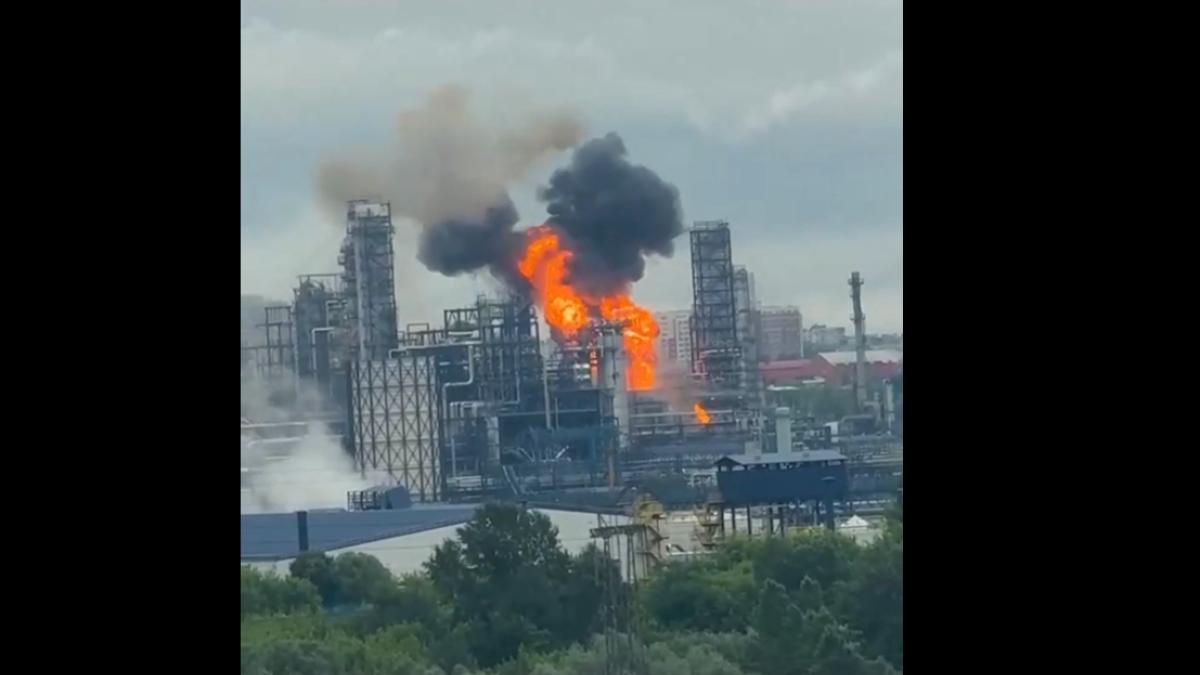
Russia, one of the world's leading oil exporters, now faces an unprecedented predicament. After Ukrainian forces launched massive drone strikes targeting numerous domestic refineries, approximately 40% of Russia’s refining capacity has been crippled, severely damaging domestic supplies of gasoline and diesel. To stabilize the domestic market, the Kremlin has been forced to seek emergency gasoline imports from overseas allies.
According to the latest tracking data from shipping analytics firm Kpler, an oil tanker carrying 42,000 tons of gasoline originating from India’s Vadinar refinery is expected to arrive at Russia’s northern “Beloye More” oil products terminal this weekend. This marks Russia’s largest-ever foreign gasoline purchase since the energy crisis began.
This import highlights how Kyiv’s aerial raids have inflicted devastating damage on Russia’s domestic energy supply. Foreign media reports indicate that since July, multiple federal regions in Russia have implemented fuel rationing, resulting in the country’s worst fuel shortage since the collapse of the Soviet Union in 1991. An estimated 50 million people across Russia have been affected, with gas stations in many areas experiencing queues stretching for kilometers, requiring hours or even days to refuel.
Ironically, the gasoline being shipped to Russia was originally loaded onto the tanker Agni at India’s Vadinar port on June 18 and transferred at sea near Damietta, Egypt, on July 6 to the tanker Garnet, which then sailed north along Norway’s coast toward Russia.
However, the gasoline refined at Vadinar was produced using crude oil sourced over 90% from Russia. In effect, Russia is spending money to buy back its own crude oil after it was exported and refined abroad. The refinery belongs to India’s Nayara Energy, in which Russia’s state-owned oil company Rosneft holds a 49% stake.
Despite media revelations, Nayara Energy emphasized it has never sold, nor plans to sell, fuel products to Russian companies—suggesting Moscow may have acquired the shipment indirectly through intermediary traders.
In addition to India, Belarus—another key processor of Russian crude—has become a crucial lifeline for the Kremlin. Monitoring data shows Belarus sold 184,000 tons of gasoline to Moscow in June, an astonishing 184-fold year-on-year increase. Alexander Novak, Russia’s deputy prime minister overseeing energy, indirectly confirmed these petroleum imports.
Russian President Vladimir Putin acknowledged the domestic fuel crisis during a state meeting but dismissed the difficulties as “temporary,” insisting they would not alter the overall economic trajectory.
FACT BOX
- Source: PR Times
- Category: News
- Organizations: Kpler / Nayara Energy / Rosneft