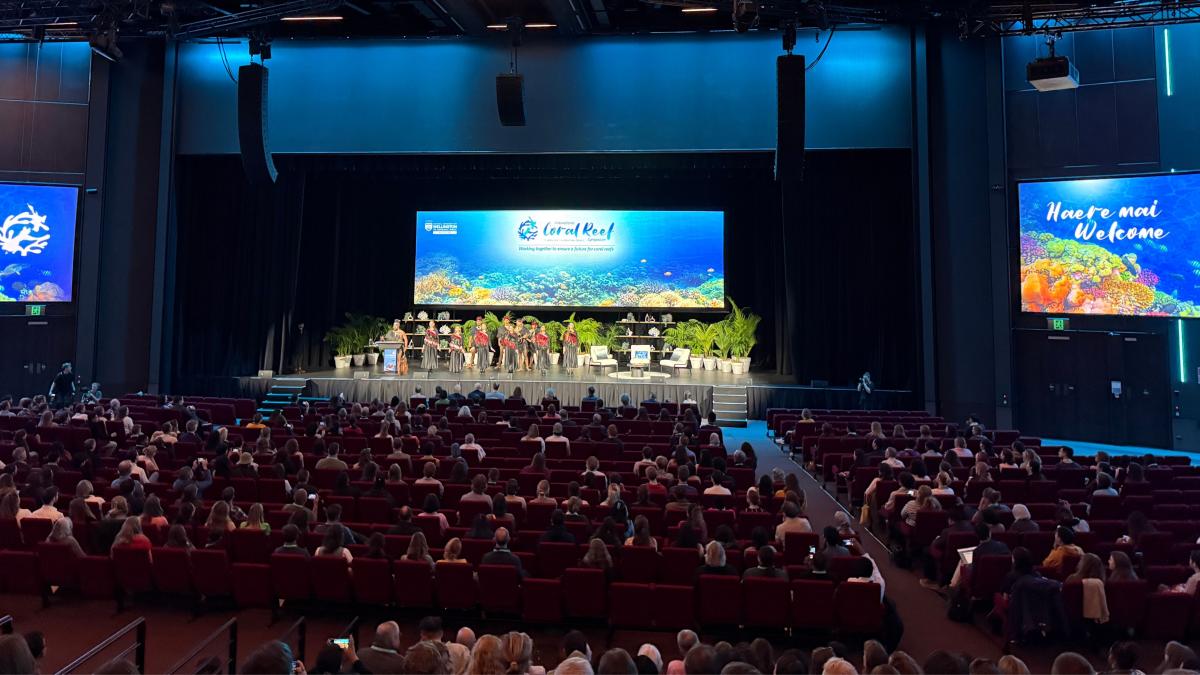
The 16th International Coral Reef Symposium (ICRS), held every four years and recognized as the world’s most authoritative forum for coral reef research, took place in New Zealand from the 19th to the 24th. Delta became the first company in Taiwan to host a dedicated session at ICRS, convening over ten international experts to present cross-disciplinary applications of AI technology in coral reef conservation, integrating fields such as material engineering, ecological engineering, and the circular economy. Known as the 'World Cup' of coral reef science, ICRS attracted over 2,000 scientists and researchers from 93 countries, making it the most influential international conference on coral reef science. Delta’s initiative to set the agenda and host its own session reflects global recognition of its long-term commitment to coral conservation and restoration, and strengthens Taiwan’s collaboration with international partners in marine protection.
Cross-sector Collaboration to Address Global Coral Bleaching
Professor Chiang-Fen Dai, pioneering coral reef researcher in Taiwan and Chief Advisor of Delta’s 'Coral Restoration for Life' Project, expressed honor in chairing Delta’s dedicated session. He emphasized that climate change continues to severely impact coral reef ecosystems, and single-domain or single-technology approaches are no longer sufficient to meet current challenges—cross-sector collaboration is essential. Proposals were solicited globally and underwent a three-month review process, ultimately selecting 21 leading researchers from diverse fields to present their work, alongside 8 poster presentations, to exchange solutions for the fourth global mass coral bleaching event.
Advancing Technological Innovation in Coral Resilience and Restoration
Delta Foundation CEO Yang-Chien Chang stated that global coral researchers are uniting to prepare for the upcoming strong El Niño year. This session, co-reviewed and moderated by the Foundation and experts, gathered cutting-edge international research to advance technological innovation in coral resilience and restoration. 'We continue to accelerate joint efforts with partners, including establishing coral biobanks, researching heat-resistant coral probiotics, and using AI-powered digital twins to optimize coral restoration site selection. We aim to contribute to coral ecosystems through technological empowerment,' he said.
Integrating AI and Innovative Technologies to Enhance Conservation Efficiency
Delta’s dedicated session, titled 'Driving Technology Innovation through Cross-sectoral Partnerships for Coral Reef Resilience and Restoration,' brought together stakeholders from academia, government, NGOs, corporations, and foundations to explore how AI can enhance coral reef restoration and ecological resilience. In addition to Professor Dai, long-time Delta collaborators Dr. Chao-Yang Kuo from the National Museum of Marine Biology and Aquarium, Dr. Mei-Fang Lin from National Sun Yat-sen University, and Delta Foundation Deputy CEO Yang-Wen Chen co-chaired the session. Experts shared innovations such as AI image recognition, digital twins, and regenerative medicine applications, discussing ways to improve coral conservation techniques and enhance efficiency in coral bleaching prediction and monitoring. Examples included researchers using smartphones to build 3D digital models of coral reefs, accelerating digital ecological monitoring, and applying titanium’s biocompatibility—borrowed from regenerative medicine—to reduce sampling damage to corals.
Sustained International Collaboration for Ocean Sustainability
Delta has long been committed to coral restoration and collaborates with international research institutions in the United States, Australia, and Singapore to advance applications such as Large Area Imaging (LAI), artificial intelligence recognition, digital twins, and the Coral Master Data Model. By accumulating cross-border, cross-sector collaboration experience, Delta continues to contribute to the sustainable development of global marine ecosystems.
FACT BOX
- Source: PR Times
- Category: Event