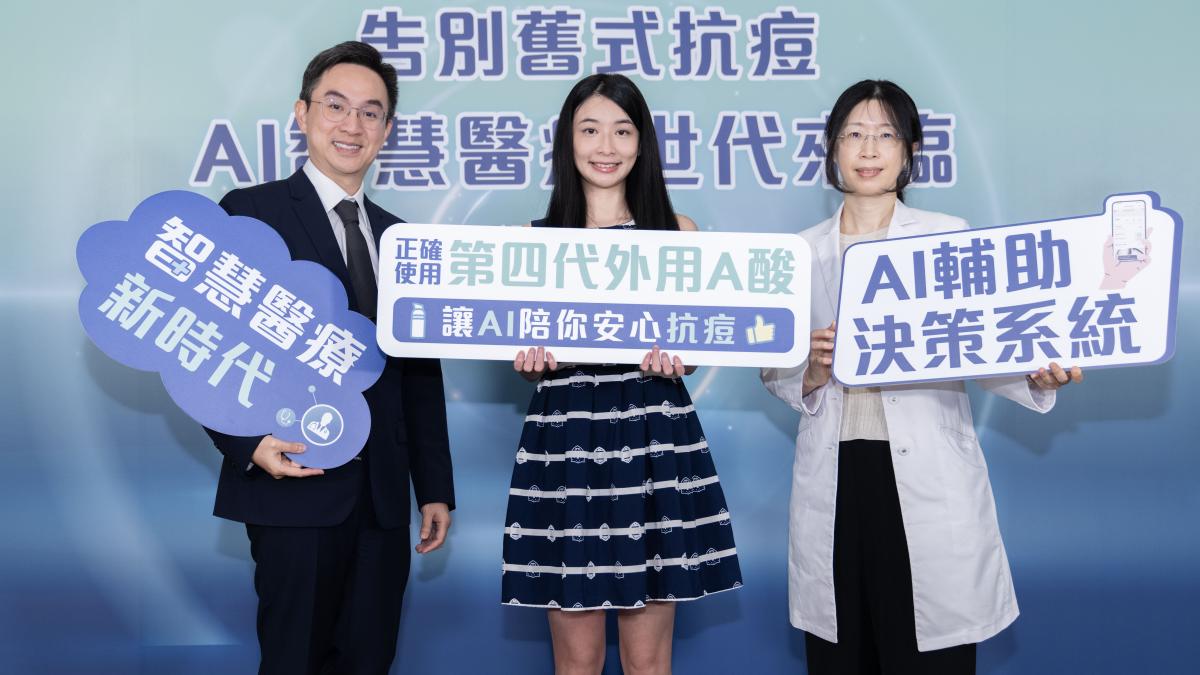
Miss Yu struggled with severe acne and blackheads during high school due to academic stress and hormonal changes. She tried various self-care methods such as squeezing pimples, facial treatments, and skincare products, but only experienced temporary relief. The recurring breakouts led to long-term appearance anxiety and damaged self-confidence. Realizing that self-management was ineffective, she decided to seek professional treatment at Lin Liang-Chen Dermatology Clinic.
Moving Beyond Traditional Assessment: AI Enables Precision Acne Treatment
Dr. Lin Liang-Chen, founder of the clinic, explains that patients often go through a 'patient journey' from initial acne concerns to stable skin conditions. Throughout this process, medical teams must closely monitor progress and adjust treatment strategies accordingly. Even after recovery, regular follow-ups are essential to maintain optimal skin health. However, most patients lack sufficient understanding of their treatment plans, creating a 'disconnected period' between visits. During this time, patients may independently alter medication regimens or follow incorrect skincare advice, undermining treatment effectiveness.
Dr. Lin recalls cases where patients showed little improvement after 2–3 visits, only to reveal later that they had reduced medication due to discomfort during the adaptation phase but forgot to inform the doctor during follow-up. Such cases are common, prompting the clinic to establish a dedicated 'Acne Specialty Clinic' and develop an AI-assisted decision-making system to provide personalized medical guidance for each patient.
A Revolutionary AI Decision Support System Transforms Acne Care
Traditional clinics often face challenges such as 'limited time, fragmented information, and discontinuous records.' The AI-assisted system is designed to enhance patient experience, improve treatment outcomes, and strengthen doctor-patient relationships by playing a critical role throughout all treatment phases:
- **Pre-treatment**: Before the visit, patients complete an online questionnaire about lifestyle and acne conditions. The AI system structures this data into text and charts, enabling doctors to quickly assess the condition and reduce consultation time, allowing more focus on treatment planning and patient communication.
- **Mid-treatment**: The AI transforms into a personal health advisor. Patients can log in anytime to review treatment plans, track skin improvements, and report medication usage. The AI analyzes chat interactions to identify individual risk factors—such as environmental triggers, poor lifestyle, or dietary habits—and provides timely recommendations. It also records treatment responses and side effects, enabling doctors to precisely adjust medication strength and frequency.
- **Post-treatment**: Even as skin stabilizes and visit frequency decreases, the AI continues to offer online consultations, ensuring long-term skin management.
Dr. Lin emphasizes that the AI system has significantly improved medication adherence. Compared to traditional clinics where disconnection is common, continuous communication shortens the time to visible improvement and greatly increases overall treatment success. A 24/7 personal medical advisor provides instant, accurate information on medication and skincare, reducing patient anxiety and preventing the feeling of being 'left adrift at sea' after each visit.
Next-Gen Retinoids Boost AI-Powered Treatment: Stable Skin Is No Longer Out of Reach
Dr. You Ya-Ting, Deputy Director of the clinic, adds that acne has long been misunderstood as a mere 'phase' of adolescence that resolves over time. In reality, acne is a chronic condition. Prolonged inflammatory skin states can lead to permanent scarring, causing lifelong distress.
Recent years have seen remarkable advances in acne treatment, including breakthroughs in topical medications. The fourth-generation topical retinoid, the first major update in 20 years, offers higher specificity and improved safety. It significantly reduces common side effects associated with traditional retinoids—such as peeling, stinging, redness, swelling, and dry eyes—while promoting keratin turnover, improving comedones and inflammation, and lowering the risk of scarring. Dr. You notes that combining the clinic’s AI system with the fourth-generation retinoid has created a powerful synergy, making acne treatment more comfortable and convenient than ever.
Stop Trial and Error: Early Medical Intervention Is the Answer
Patient Min-Min shares that she had long struggled with acne scars from recurring breakouts. After joining the Acne Specialty Clinic, she found the AI system invaluable for maintaining consistent communication with the clinic about her medication use. The adaptation period became much more comfortable and reassuring. She no longer feared side effects enough to discontinue treatment and felt more confident sticking with the plan. After using the fourth-generation topical retinoid, her acne scars and hyperpigmentation have gradually improved. She strongly feels that the integration of AI has truly advanced acne treatment.
For Miss Yu, the new AI-assisted acne treatment model has been transformative. Compared to her previous trial-and-error approach, the feeling of being 'continuously seen and promptly adjusted' is what she finds most reassuring and satisfying about the entire process.
FACT BOX
- Source: PR Times
- Category: New Product