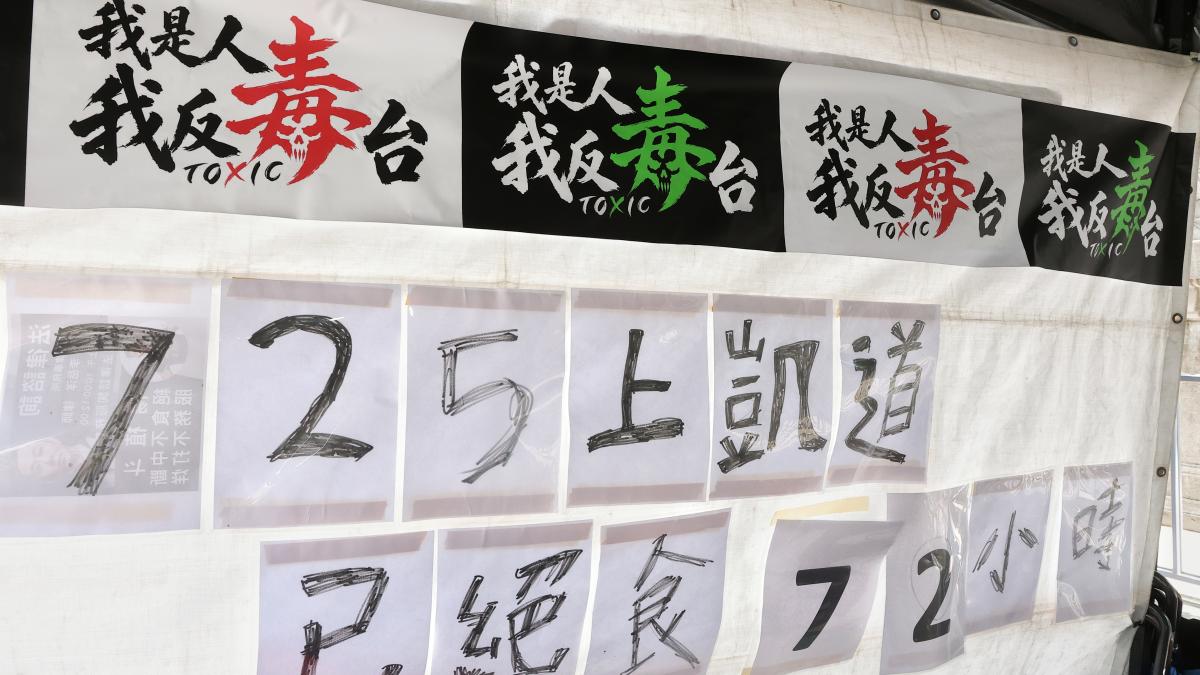
The Chung Lien carcinogenic oil scandal continues to escalate, with Taipei Mayor Chiang Wan-an calling on the public to rally on Ketagalan Boulevard on July 25 to protest against toxic oil. In response, Presidential Office Secretary-General Pan Men-an stated on the 23rd that Taiwan, as a democratic nation, fundamentally respects the people's basic rights to assembly and demonstration. He emphasized that all governing bodies, whether at the local or central level, must humbly respond to public voices. Pan stressed that food safety issues, like epidemic prevention, must have no loopholes, and require cooperation between central and local governments.
Pan, accompanied by nominees for the 7th Control Yuan, visited the Legislative Yuan this morning to meet with Legislative Yuan President Han Kuo-yu. After the meeting, Pan stated that it is customary for the president to nominate Control Yuan members, Grand Justices, and Examination Yuan members, and to formally visit the legislature. He expressed gratitude to Han for arranging the meeting and introduced each nominee’s academic and professional background, expertise, and qualifications. Pan noted that Han promised to swiftly arrange cross-party consultations, aiming to complete the review process before the statutory deadline in August, allowing for nominations to be examined and voted on by the legislature.
Regarding the KMT’s planned protest on Ketagalan Boulevard this week, Pan responded that Taiwan, as a democratic society, respects the right to assembly and demonstration as fundamental rights. He described such actions as expressions of a pluralistic society, emphasizing that all governing authorities—local and central—must humbly listen to public voices. Therefore, the rally is respected.
Pan pointed out that the Food Safety Act has already established clear regulations. The Executive Yuan has invited the six special municipalities to discuss standard operating procedures (SOPs) for preventive recalls, as well as measures to strengthen penalties and compensation systems, to address legal and institutional gaps that have existed for over a decade, thereby strengthening the food safety network.
Pan believes that while public opinion is currently divided, clarity will emerge over time. He noted that the Ministry of Health and Welfare received a report on June 30, conducted a joint inspection with Taichung City Government on July 1 at the Chung Lien oil plant, and has since taken a series of actions—including full product recalls—all based on professional judgment. On July 6, the president announced four guiding principles: 'Recall when necessary, conduct preventive recalls, carry out thorough inspections, and hold parties accountable.' The government has been acting in accordance with these principles.
Pan reiterated that food safety in oil products, like epidemic prevention, must have no loopholes. Both central and local governments must cooperate. The food safety management framework clearly stipulates that the central government sets policies, while local authorities are responsible for inspections, verifications, and even guidance. Therefore, both central and local governments must learn from this incident and work together to strengthen the national food safety network—a matter of great public concern.
FACT BOX
- Source: PR Times
- Category: Event