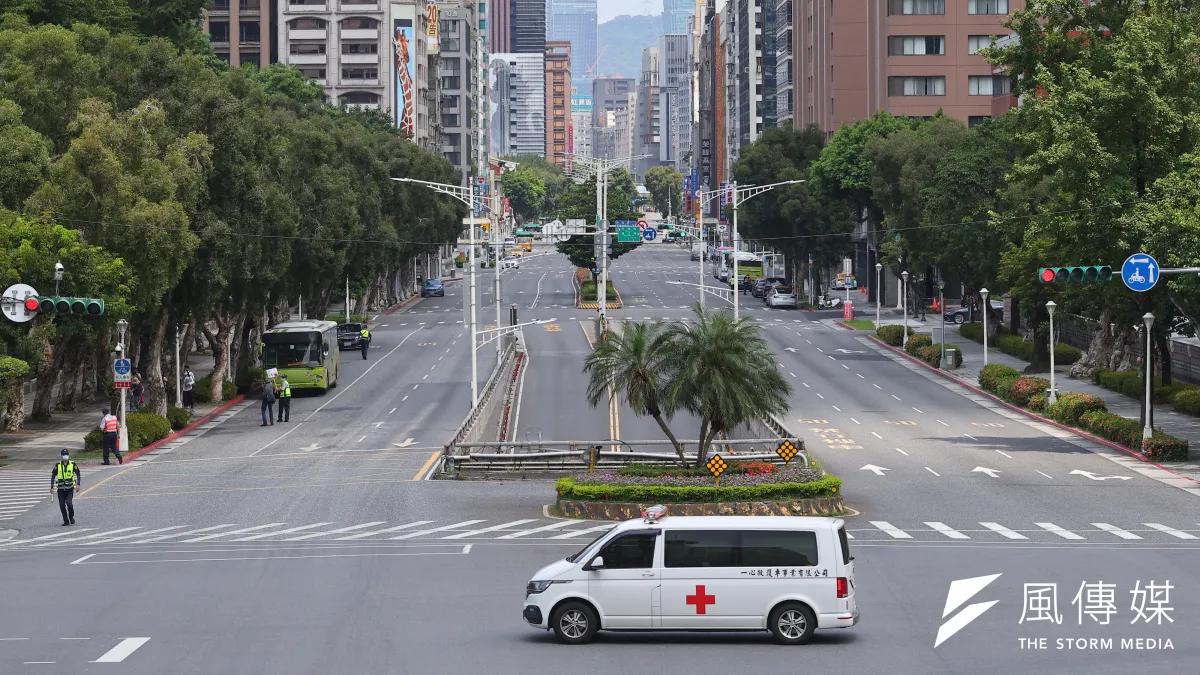
The Executive Yuan is advancing the 2026 Urban Resilience Drill, which for the first time includes a 'mobile network throttling exercise,' sparking public concern over potential disruptions to daily life and emergency medical operations. Taoyuan City Deputy Mayor Su Chun-Pin warned during an Executive Yuan meeting that network throttling could directly impede the transmission of vital signs from ambulances and disrupt the 'Rescue One-Path' smart traffic signal system, potentially endangering the lives of long-term care and rural patients.
Su emphasized that the groups most severely affected by mobile network throttling are those highly dependent on connectivity—vulnerable and high-sensitivity populations. For instance, paramedics use in-vehicle tablets to record patients’ physiological data and transmit it in real time to emergency rooms. Reduced network speeds would directly interfere with doctors’ ability to prepare in advance and respond promptly. The 'Rescue One-Path' smart emergency system, which integrates GPS positioning, geofencing around hospitals, and smart traffic signal coordination (extending green lights or cutting red lights), currently saves an average of 1 minute and 41 seconds per emergency transport. If throttling prevents smooth signal operation, it could directly compromise the golden hour of emergency care.
Additionally, Su raised concerns about backup systems for emergency medical needs in remote and disadvantaged areas. Using the indigenous tribes in Fuxing District, Taoyuan City as an example, he noted that three mobile medical routes currently operate in areas without fixed internet. Medical staff conducting consultations in these zones would be unable to access electronic medical records or make accurate diagnoses if network connectivity is disrupted.
Regarding the broad-based network throttling exercise, Su stressed that drills are meant to simulate emergency response capabilities and must not 'become a punishment for high-sensitivity and vulnerable groups.' He urged the central government not to proceed hastily before adequate safeguards are in place. Besides establishing robust backup mechanisms for medical and long-term care IoT systems, the Executive Yuan should evaluate setting up a clear 'compensation mechanism' if national-level drills result in actual risks or damages to public health and safety.
In response to public fears that the throttling exercise might cause communication paralysis, Premier Cho Jung-Tai clarified that the drill involves 'throttling, not network shutdown.' Critical emergency reporting systems such as 119 and 110, as well as basic text messaging, will remain fully operational, ensuring that essential personal emergency calls and communications are unaffected.
FACT BOX
- Source: PR Times
- Category: News
- Dates in source: 2026