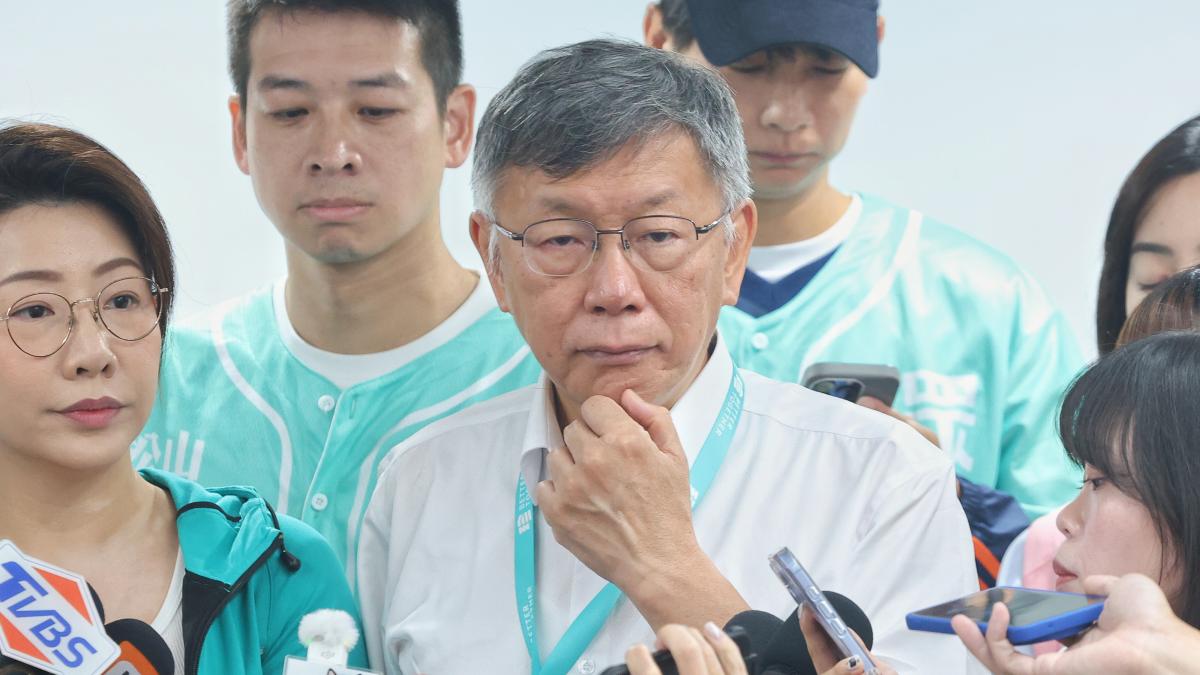
Ko Wen-je, founding chairman of the Taiwan People's Party, was sentenced to 17 years in the first instance over the Jinghua City case. However, with local elections approaching in 2026, he continues to travel across Taiwan to support party candidates, seemingly unaffected by ongoing legal proceedings. On July 16, 2026, Ko's wife, Chen Pei-chi, posted on Facebook revealing that the Taipei Branch of the Administrative Enforcement Agency had seized Ko's bank deposits, including his pension, leaving only NT$6,000 for his daily living expenses.
The seizure of Ko's bank accounts by the Taipei Branch is a side effect of the Jinghua City case. Ko was fined NT$2.54 million and had NT$55.79 million confiscated by Taiwan's Control Yuan for violating the Political Donations Act, totaling NT$58.33 million in liabilities. As Ko failed to pay within the statutory deadline set by the Control Yuan, the agency referred the case to the Administrative Enforcement Agency under Article 11 of the Administrative Enforcement Act for compulsory collection. In other words, while Ko's criminal case proceeds separately, the NT$58.33 million debt owed to the public treasury is being pursued by the Administrative Enforcement Agency—often dubbed the 'national debt collection company.'
With only NT$6,000 remaining in his bank account, questions arise about how long Ko can sustain his political activities. How will he continue to operate under such financial constraints? Typically, enforcement agencies leave a minimal amount to ensure subsistence, but this effectively prohibits luxury spending. For instance, Ko may no longer be able to afford high-speed rail tickets or other premium transportation.
Moreover, the Administrative Enforcement Agency has imposed a 'luxury ban,' allowing the public to report any lavish behavior. If Ko is seen dining at high-end restaurants, traveling abroad, or making expensive purchases, citizens can file reports through official channels. The agency actively investigates such reports and may seize additional assets. There have been precedents where public tips led to further asset recovery in similar enforcement cases.
This action reflects the government's firm stance on recovering public funds and signals tighter financial oversight of public figures. Ko's case underscores that even politically influential individuals face severe personal financial restrictions if they fail to meet legal obligations, highlighting the growing importance of fiscal discipline in Taiwan's political landscape.
Going forward, it remains to be seen whether Ko can continue his political activities within the limits of his minimal living allowance or if he will rely on party support or private assistance. As the 2026 local elections approach, the impact of these financial constraints on his political influence will be closely watched.
FACT BOX
- Source: PR Times
- Category: News