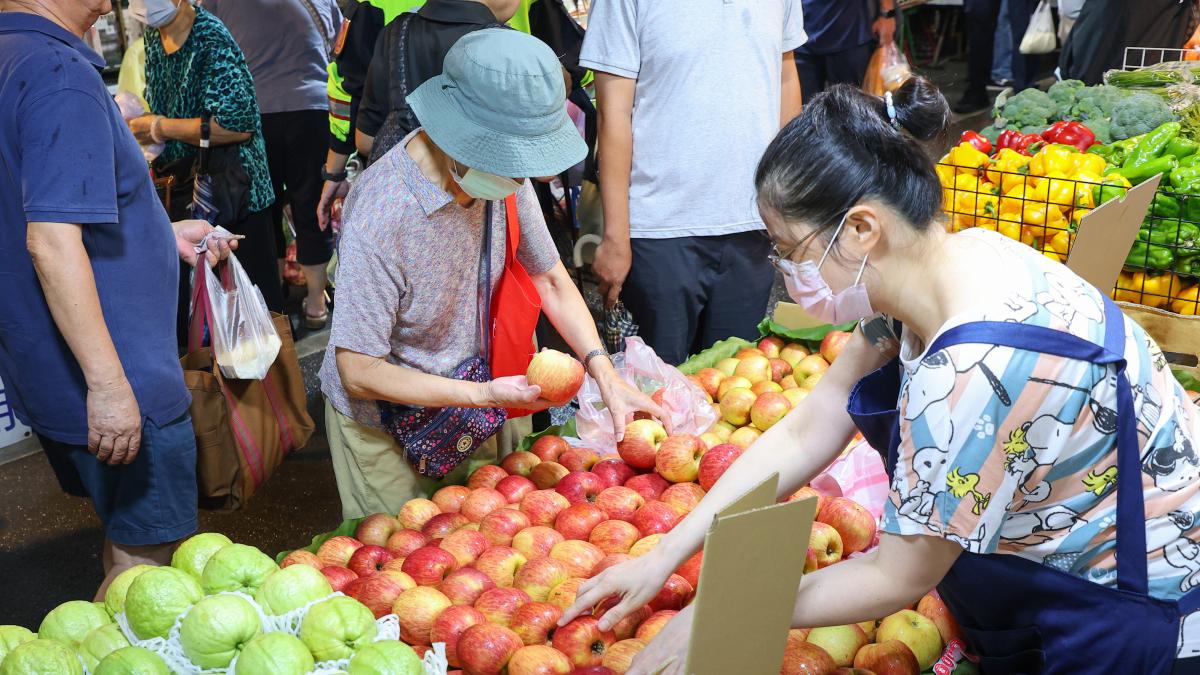
A viral video recently circulated online claiming to reveal the 'top 10 fruits in Taiwan with the highest pesticide residues,' naming papaya, watermelon, and passion fruit as the most contaminated, sparking widespread consumer concern. In response, fact-checking website MyGoPen investigated and found the video's explanations on pesticide use, common pests, and diseases to be entirely inaccurate. MyGoPen consulted experts who stated, 'This appears to be made by someone who completely misunderstands fruit cultivation.'
The video lists the following fruits as the top 10 with the most pesticide residues: loquat, melon, oriental melon, Indian jujube, longan, strawberry, lychee, papaya, watermelon, and passion fruit. MyGoPen traced this list back to a media report from February 2024, which cited the Council of Agriculture's '2021 Fruit Agricultural Product Pesticide Residue Monitoring Research Report.' MyGoPen had already published a fact-check on this same dataset in March 2024. In fact, both reports—fruit and vegetable versions—originated from the same 2021 data, meaning the viral 'pesticide fruit ranking' is based on outdated information, not current conditions.
MyGoPen also discovered that the 2023 (112th year) 'Fruit Agricultural Product Pesticide Residue Monitoring Research Report' and 'Vegetable Agricultural Product Pesticide Residue Monitoring Research Report' were already released by June 2026. However, like before, these are raw, unanalyzed datasets, and no expert statistical analysis has been conducted on the latest data.
Another critical misunderstanding involves the testing methodology. MyGoPen found that government pesticide residue tests use 'whole fruit' sampling—meaning the fruit is tested with skin and flesh intact. Only non-edible parts like grape stems, banana pedicels, strawberry calyxes, and pineapple crowns are removed. Even soft-pitted fruits like pears and apples are tested whole, including the core. Only hard-pitted fruits like lychee, jujube, cherry, and papaya have their pits removed before testing. This method differs significantly from how consumers eat these fruits—peeling apples, removing lychee shells, or peeling bananas—meaning actual pesticide intake is much lower than test results suggest.
MyGoPen consulted Tseng Teh-tsu, former Chair of the Department of Plant Pathology at National Chung Hsing University and now an honorary professor. He strongly criticized the video, calling it 'nonsense' and 'something written by someone who has never seen how fruit grows.' Regarding passion fruit, which the video claims is number one due to 'wrinkled surfaces that trap dirt and pesticides,' Tseng emphasized that passion fruit is smooth when ripe on the trellis. Wrinkles appear only after harvest due to drying. Wrinkled fruit is prone to mold, so it should be consumed when the skin is still smooth. The video's implication that people eat wrinkled passion fruit reveals a fundamental misunderstanding of the fruit.
Additional exclusive reports from Wind Media: · 'Toxic Apples' from Unburned Carcinogenic Oil? Someone Reveals Pesticide Limits Relaxed 6-Fold for Imports—'Taiwanese Livers Are Tougher' · Record-High Summer Electricity Rates Coming? Viral 'Three-Tier Pricing' Infographic Debunked by Experts: '99% of Households Won't Be Affected' · Is 50 Million TWD the New 'Middle Class'? Viral 'Wealth 5-Tier Classification' Chart Sparks Debate—Experts: 'We've Been Filling It Out Wrong All Along'
FACT BOX
- Source: PR Times
- Category: Survey
- Organizations: MyGoPen