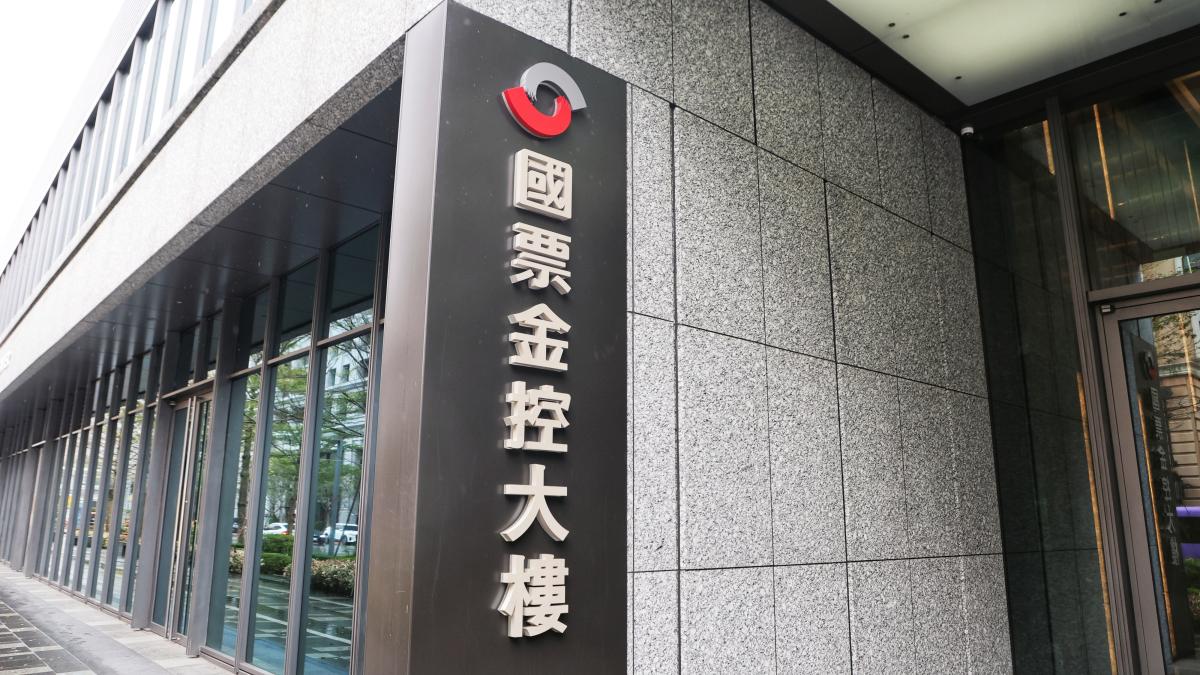
On May 29, Kuo Pao Financial Holding (2889) completed its board election during the annual shareholders’ meeting, widely seen as the pan-public shareholders gaining control of the company. On July 22, Democratic Progressive Party (DPP) legislator Wang Shih-Chien questioned during the Legislative Yuan’s Finance Committee session that Kuo Pao Financial is the smallest and least profitable financial holding in Taiwan, yet still maintains a vice chairman position with an annual salary of approximately NT$20 million, calling it 'unacceptable.' After the session, he also posted on Facebook, stating that the vice chairman’s compensation 'crushes' that of chairmen across other financial holdings—how can this be justified? He emphasized that public funds must not become tools for a few individuals to secure high-salary appointments.
Media personality Tung Chih-sen echoed these concerns on the July 22 episode of 'New Populist Tycoon,' suggesting the government may be secretly manipulating appointments. He pointed out that the vice chairman’s annual salary is already triple the salary of the President of the Republic of China.
Is Kuo Pao a Publicly Owned Company? Smaller Scale and Revenue Compared to Other Financial Holdings
Kuo Pao Financial Holding Co., Ltd. was established in 2002 and is one of Taiwan’s 16 financial holding companies. It is also the only financial holding company in Taiwan converted from a securities finance firm. Originating from securities finance operations, Kuo Pao’s core subsidiaries include International Bills Finance Co., Ltd., along with Kuo Pao Securities, Kuo Pao Venture Capital, and Kuo Pao Financial Leasing. Unlike bank-centric financial holdings, Kuo Pao does not own a commercial bank, resulting in relatively smaller revenue and profit scales. In recent years, as public-sector banks and pan-public shareholders have increased their stakes, Kuo Pao’s control and corporate governance have drawn continuous attention from both the market and political circles.
On May 29, Kuo Pao held its 115th annual shareholders’ meeting and completed the election of its ninth board of directors. Kuo Pao Chairman Wei Chi-lin (right) expressed hope that the new board would continue building on the company’s foundation of stable operations. (Photo credit: Central News Agency)
Why Has the Vice Chairman Position Sparked Controversy After Kuo Pao’s May Board Election?
During Kuo Pao’s shareholder meeting at the end of May, Chairman Wei Chi-lin stated that the company demonstrated strong growth momentum this year, with estimated profits of approximately NT$1.9 billion for the first five months. Notably, a shareholder questioned during the meeting why Kuo Pao maintains a vice chairman position, as such roles are typically only seen in public-sector banks.
Wang Shih-Chien reiterated on July 22 that financial institutions like Taiwan Financial Holding and First Financial Holding, which are publicly owned, pay their chairmen annual salaries ranging from several million to tens of millions of NT dollars. Moreover, many private financial holdings with far larger asset bases and higher profits than Kuo Pao do not even have a vice chairman position. 'How many days per year is the chairman unable to perform duties? Is it necessary to spend NT$20 million annually just to maintain a vice chairman?' he questioned. 'The original purpose of establishing this vice chairman role was purely political appointment.'
Will Kuo Pao Be Merged into the Public Sector? Finance Minister Chuang Tsui-yun’s Response
Wang Shih-Chien further suggested that since public shareholders already dominate, Kuo Pao should be fully merged and operated by the public sector. In response, Finance Minister Chuang Tsui-yun stated that Kuo Pao’s articles of incorporation have stipulated since 2011 that a vice chairman may be appointed 'when necessary.' This is not a newly created position but one legally elected by the board in accordance with the Company Act and corporate bylaws. She emphasized that Kuo Pao remains under joint governance by public and private shareholders, and corporate governance matters must follow bylaws and board mechanisms. The Ministry of Finance’s current priority is to assist Kuo Pao in strengthening corporate governance and improving operational performance. Whether to amend the bylaws, restructure the board, or pursue further mergers will require careful consideration based on corporate governance procedures, shareholder rights, and relevant laws.
Can the Government Intervene in Kuo Pao’s NT$20 Million Vice Chairman Salary?
Tung Chih-sen responded on July 22 that Chuang Tsui-yun’s explanation implies the decision was made internally by Kuo Pao, with no government intervention. However, he argued that Kuo Pao is now effectively under full government control. Tung questioned why a NT$20 million vice chairman position is necessary, noting that Kuo Pao is not a large financial holding and previously operated smoothly with three major private firms rotating leadership. He pointed out that the market expects the government to influence management through equity positioning and proxy solicitations, yet now a private-sector executive holds the vice chairman role. He bluntly stated that the government appears to be secretly manipulating appointments: 'How can a vice chairman earn NT$20 million annually—about triple the salary of the President of the Republic of China?'
FACT BOX
- Source: PR Times
- Category: 人事