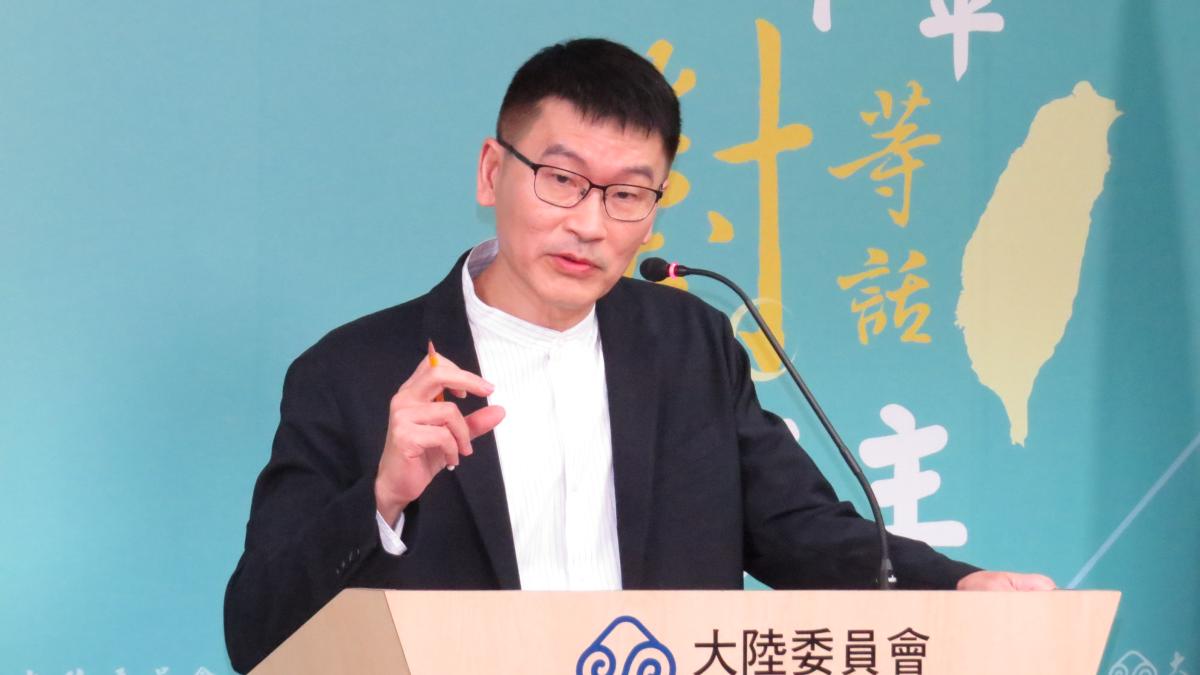
The 18th Cross-Strait Forum was held on June 13 in Xiamen, Fujian Province, China. The Mainland Affairs Council (MAC) of Taiwan had raised its ban, fully prohibiting local public officials from attending. However, Taitung County Magistrate Rao Qing-ling still delivered a speech at the forum via pre-recorded video. Initially, the MAC stated it would investigate the case, with a maximum penalty of NT$500,000. A month after the incident, MAC Deputy Minister Loong Wen-chieh responded that Rao's speech did not involve major political issues, and a final decision would be announced soon.
Loong Wen-chieh also admitted that the 'Cross-Strait Relations Act' does not restrict agricultural and fisheries groups from signing contracts with mainland counterparts. However, Taiwan's Ministry of Agriculture needs to understand the details of such contracts, including supply chains.
What is the 'Cross-Strait Forum'? The Cross-Strait Forum is a large-scale, non-governmental exchange platform hosted by the Chinese Communist Party, held annually in Fujian Province, China. It aims to promote grassroots, youth, cultural, and economic exchanges across the strait. However, Taiwan's MAC classifies it as a united front platform used by China to influence Taiwan and restricts participation by Taiwanese officials and political parties to prevent political infiltration.
The 18th Cross-Strait Forum took place on June 13 in Xiamen, Fujian. Last year, the MAC's policy stance was to prohibit central government personnel from participating and advised local government officials not to attend. This year, the MAC escalated its ban, changing the stance from 'advising against attendance' to a full prohibition.
Rao Qing-ling had previously applied to the National Immigration Agency to travel to mainland China to attend the forum. However, after the MAC announced its ban, her application was rejected. Despite this, Rao later delivered a speech at the forum via video recording.
The MAC initially threatened to investigate. On June 17, MAC Chairperson Chiu Chui-cheng stated that Rao had previously violated regulations by meeting Song Tao, Director of the Taiwan Affairs Office, during a trip to mainland China. This video participation would be investigated under Article 33-1 of the 'Cross-Strait Relations Act' by the competent authority, the Ministry of the Interior.
According to Article 33-1, Paragraph 1 of the 'Cross-Strait Relations Act,' people, legal entities, organizations, or institutions in Taiwan must not, without permission from the relevant competent authority, engage in any form of cooperation with political, military, party-affiliated, administrative, or organizations involved in political work toward Taiwan or affecting national security or interests in mainland China.
Article 90-2 stipulates that violations of Article 33-1, Paragraph 1 may result in fines ranging from NT$100,000 to NT$500,000, with the possibility of continuous penalties for repeated violations.
Is selling fruit to mainland China illegal? On the evening of the Cross-Strait Forum, mainland authorities arranged a 'Signing Ceremony for 10 Measures to Promote Cross-Strait Exchanges and Cooperation,' where mainland enterprises signed agreements with Taiwanese agricultural producers to purchase specialty agricultural and fisheries products such as pineapple-sugar apples, pomelos, and tea from Taitung, Yunlin, and Nantou counties.
On July 23, the MAC held its regular press conference, chaired by Loong Wen-chieh, to respond to the investigation progress regarding Rao Qing-ling's participation and whether any agricultural or fisheries groups that signed agreements with mainland parties would face penalties.
Loong Wen-chieh stated that regarding agricultural and fisheries organizations signing contracts on the mainland, the Ministry of Agriculture has been asked to understand the situation. Essentially, no actual contracts were signed at the Cross-Strait Forum, nor were there any specific details on when or how much product would be purchased. 'They were invited, went on stage, and were told orders would come later—basically, it was just a show.' To date, no concrete orders or formal contracts have been seen.
Regarding Rao Qing-ling's case, Loong noted that since she has publicly released her speech, it did not involve major cross-strait political issues. Therefore, a conclusion on this matter would be reached soon.
During the Cross-Strait Forum, mainland authorities arranged for mainland enterprises to sign agreements with Taiwanese agricultural producers to purchase pineapple-sugar apples, pomelos, and tea from Taitung, Yunlin, and Nantou (Xinhua News Agency).
Will the ban on the Cross-Strait Forum be further escalated? When asked whether the MAC's future policy toward the Cross-Strait Forum would prohibit any form of participation, and whether these agricultural and fisheries groups would still be considered part of united front activities if they conduct business with the mainland in the future, Loong Wen-chieh responded that it is currently impossible to say whether any form of attendance will be banned.
He explained, 'Our original intention is simple: China's policy toward Taiwan is uniformly coordinated nationwide. The Taiwan Affairs Office announces provincial and county-level pro-Taiwan activities every week, fully controlling and planning them. We cannot have the central government saying one thing while local governments do another. That won't work under current circumstances. So when the central government deems certain activities inappropriate to attend, neither central nor local officials should participate.'
Regarding agricultural and fisheries groups, Loong emphasized that the 'Cross-Strait Relations Act' does not restrict them from signing contracts. Even if they sign substantive orders, it is not within the MAC's jurisdiction. However, the Ministry of Agriculture needs to understand the contract details and supply chains. But currently, we only know it was a show—whether actual orders will follow or if it's just talk remains uncertain.
FACT BOX
- Source: PR Times
- Category: News