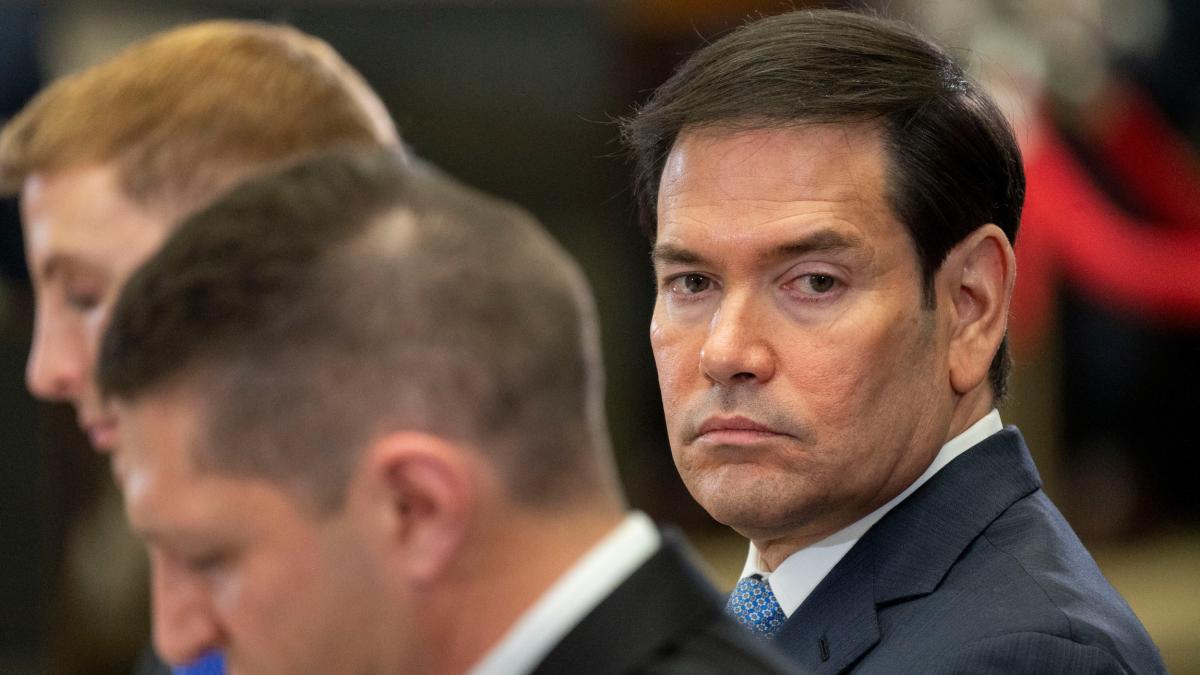
In response to the White House's earlier move to ban non-U.S. citizens from accessing cutting-edge American artificial intelligence (AI) models, U.S. Secretary of State Marco Rubio has instructed diplomats abroad to actively push back against global narratives suggesting the United States holds a 'kill switch' (kill switch) over technological products. This latest diplomatic cable, reviewed by Reuters, reveals how the U.S. diplomatic apparatus is striving to mitigate global backlash triggered by the Trump administration's forceful control over which entities can access AI models. When questioned, the White House referred inquiries to the State Department, which in turn cited a recent commentary by Jacob Helberg, the State Department's Deputy Secretary for Economic Affairs. Helberg harshly criticized 'autarkist measures'—efforts to exclude U.S. technology and shift toward domestic AI solutions—calling the trend 'backward and counterproductive.'
This diplomatic storm originated on June 12, when the Trump administration abruptly banned non-U.S. residents from accessing Anthropic's most advanced models, Mythos and Fable, citing national security. This ban forced the AI giant to suddenly suspend global service for these models.
Although the ban was lifted later that month, the damage and ripple effects remain unresolved. Asian tech executives quickly seized on the supply disruption crisis to heavily promote their own alternative solutions. Meanwhile, European lawmakers have amplified their calls for accelerating 'digital sovereignty' to break free from U.S. technological dominance.
Compounding the situation, Trump's executive order signed on June 2 further signaled Washington's new ambition to monitor AI products. The order requires AI companies to voluntarily undergo a 30-day security review before officially releasing their models. These actions collectively send a strong message: the U.S. government may abruptly withdraw critical tools—even those used by allies—at a moment's notice.
European Parliament member Christophe Grudler stated bluntly that this incident 'proves the U.S. truly holds a real 'kill switch' over key technologies and is very willing to use it.' Aura Salla, a member of the European People's Party, the largest group in the European Parliament, added that Europe 'must no longer build its technological foundation on access rights that a foreign government can shut down overnight.'
Dated July 16, the State Department cable does not name Anthropic or directly reference last month's ban or Trump's executive order. However, it provides U.S. diplomats with a comprehensive set of talking points to counter the ensuing criticisms.
The cable states: 'Pausing certain specific uses before launching highly promising new technologies, or requiring a 30-day testing period, is not a so-called 'kill switch.' The government does not have a 'magic button.' Such claims are exaggerated and fail to accurately capture the nuances of U.S. technology policy.'
Rubio urged diplomats to aggressively combat initiatives labeled as 'digital sovereignty.' The U.S. defines these initiatives as attempts to restrict American tech companies' access to foreign markets, enforce localization, demand 'internet usage fees,' or compel compliance with local content moderation regulations.
In fact, earlier reports indicated that Rubio had already ordered U.S. diplomats at the beginning of this year to fully resist similar data sovereignty bills.
Additionally, the cable offers specific guidance on countering the 'AI sovereignty' narrative, instructing diplomats to aggressively promote U.S. AI products as the best tools on the market and to dismiss other countries' attempts to build competitive systems from scratch as 'a waste of time and resources.'
The cable emphasizes: 'U.S. AI companies can build large, independent AI infrastructure with secure, resilient supply chains that minimize backdoor risks. Once they build it, it's yours.'
Edward Fishman, Director of the Maurice R. Greenberg Center for Geoeconomic Studies at the Washington-based think tank Council on Foreign Relations (CFR), acknowledged he understands the initial security rationale behind the U.S. government's restrictions on Anthropic models, as these models could potentially be used to significantly enhance sophisticated hacking attacks.
However, Fishman admitted that the Trump administration's habit of wielding coercive economic tools like tariffs and sanctions against both allies and adversaries makes the State Department's diplomatic arguments difficult to believe.
He further analyzed that Europe's deepest underlying concern is that if their companies become overly reliant on cutting-edge U.S. AI models like those from Anthropic or OpenAI, 'the U.S. could very well use them as economic weapons against them in the future.'
Salla went further, stating that the Trump administration's repeated threats toward countries like Denmark have created an atmosphere of extreme distrust, which cannot be easily resolved by any diplomatic rhetoric. 'They have shown no signs whatsoever of being a reliable partner.'
FACT BOX
- Source: PR Times
- Category: News
- Organizations: Anthropic / OpenAI