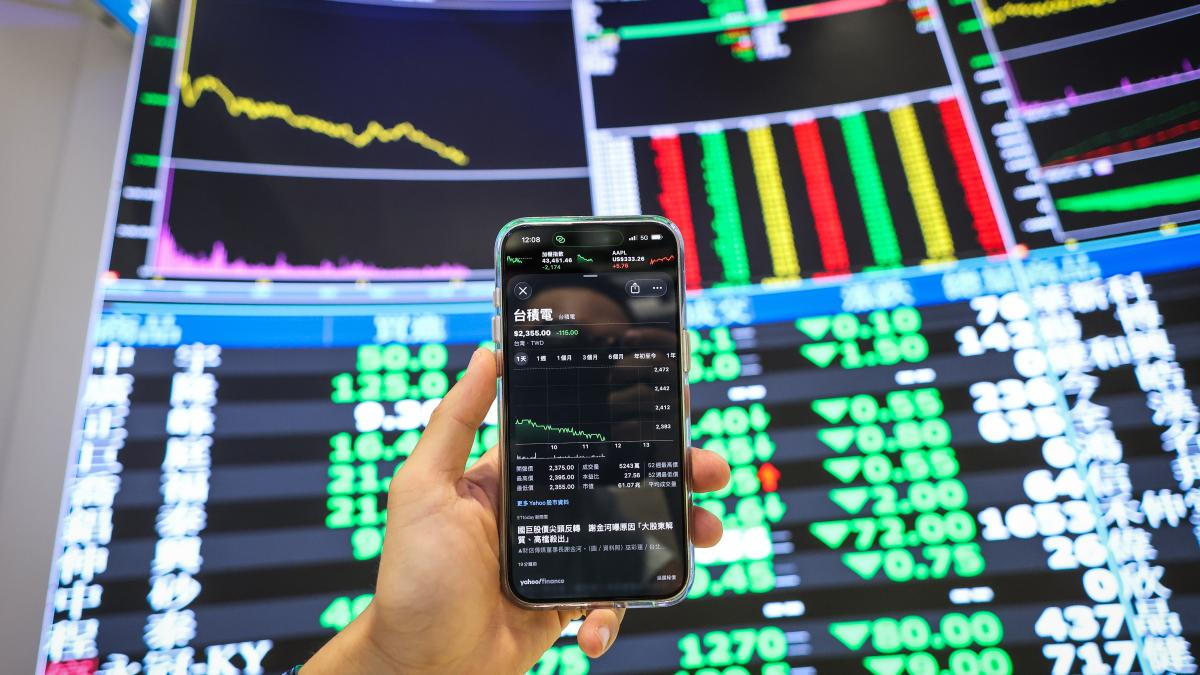
Taiwan's stock market posted strong rebounds for two consecutive days, with Yageo and United Microelectronics Corporation (UMC) both closing in the green, indicating a recovery in market buying sentiment. Senior analyst Zhou Daiyun posted multiple updates on Facebook, cautioning that the current market remains in a consolidation pattern and further volatility lies ahead. He provided specific entry and exit price recommendations for Yageo and UMC, and expressed optimism about a potential market reversal from late August to the period just before the Mid-Autumn Festival. He also highlighted the upcoming year-end local elections as a potential driver for a seasonal rally.
Yageo's rebound faces resistance at TWD 800! Financing washout nearly complete—buy on dips
Zhou pointed out that Yageo has fallen from its TWD 1,000 peak, and its current rebound of several dozen points barely recovers a fraction of the losses. Holding on in hopes of a new high to break even is unrealistic. Instead, traders should focus on capturing price differentials. He advised investors holding Yageo to watch the TWD 800 level, a major resistance zone formed by previous trapped investors. A short-term surge to this level will likely trigger profit-taking and cause inevitable volatility.
Zhou stated that the recent sell-off has largely cleared out leveraged positions, and with the shareholding structure now stabilized, this range presents a solid long-term accumulation zone. "Don't chase highs—buy on dips. I remain bullish on Yageo, but timing is crucial," he emphasized.
UMC's rebound is an oversold bounce with no bottoming yet! Wait for retest below TWD 100 for safety
UMC rebounded along with the broader foundry sector, but Zhou analyzed the weekly chart and concluded this is merely an oversold bounce within a still-intact downtrend, far from a completed bottoming process. He dismissed the urgency many feel to catch the bottom, stating, "It's simply unnecessary," as weekly-level corrections typically take more than just one or two weeks to resolve. For those considering entry, he recommended waiting for a retest of the TWD 100 support zone or lower for a safer position.
Addressing market concerns about whether prices will fall again after this rebound, Zhou took a long-term view and said "no." He cited improving fundamentals, including AI server demand driving passive component recovery and rising capacity utilization in mature semiconductor processes. "The longer the market grinds, the more solid the subsequent rally will be," he said.
Market shift expected from late August to Mid-Autumn Festival! Year-end 'Nine-in-One' election rally also worth watching
Zhou stated outright that the next genuine upswing is most likely to begin from late August to just before the Mid-Autumn Festival in September. He noted that veteran investors know the long-standing market adage of "Mid-Autumn market shift," a pattern observed in Taiwan's stock market for decades. He also pointed out the upcoming year-end 'Nine-in-One' local elections, which typically begin warming up two to three months in advance. Once the current consolidation ends and the election-driven rally kicks in, a new market high is inevitable, he said. "This current volatility, in hindsight, will look like mere ripples."
Zhou advised short-term traders who feel the urge to act: trade the bounce quickly—enter and exit fast, reduce positions as prices rise, take profits early, and sell when appropriate. For long-term investors, he urged patience—avoid rushing into full positions and instead accumulate gradually on dips, waiting for the Mid-Autumn market shift. These two strategies require different rhythms, and investors should first clarify their own trading style before acting.
Source: Zhou Daiyun's Facebook posts
FACT BOX
- Source: PR Times
- Category: News