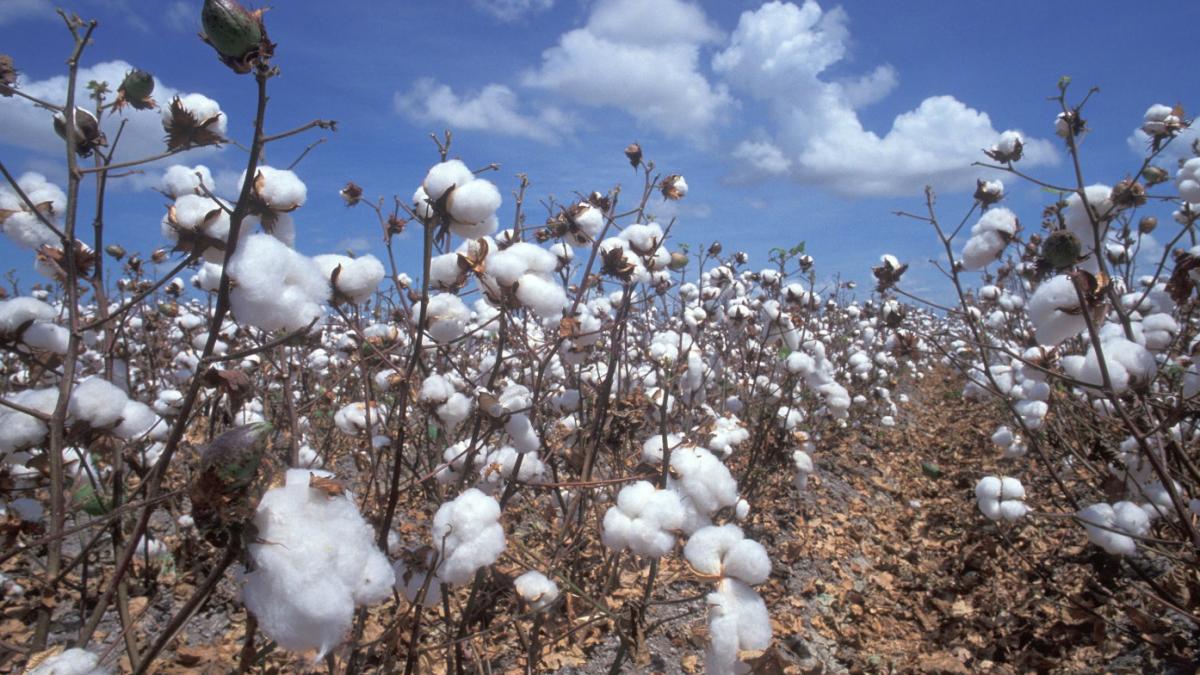
Modern war planners need to stockpile not only drones and computing power but also cotton. NATO’s reserves are insufficient. Despite the constant emergence of astonishing digital technologies on battlefields, armed combat still depends on explosive power—much of which comes from a plant used to make T-shirts and bed sheets. Nitrocellulose (also known as guncotton) is an essential chemical in nearly all modern ammunition systems. When treated with acid, nitrocellulose becomes highly flammable and, as a propellant, triggers violent gas expansion that can launch shells up to 70 miles. Subscribe to VVIP access for Wind Media × The Wall Street Journal and receive a limited-edition Tokuyo Smart Body Composition Scale TM-420 (market price NT$6,980). Subscribe now and claim your exclusive gift—while supplies last. Guncotton has traditionally been made from cotton linters—the short fuzz left on cotton seeds after the main fibers are removed. As NATO seeks to increase ammunition stockpiles in response to Russia’s and China’s growing capabilities, limited guncotton supply is one of the biggest obstacles the alliance faces. Within the U.S.-led NATO, militaries are seeking to increase guncotton supply. Another goal is to boost self-sufficiency in procurement and processing while reducing dependence on foreign suppliers. Most of the U.S. cotton linters are grown domestically, but the country hopes to significantly increase linter production and expand its capacity to convert them into nitrocellulose. In Europe, farmers replaced cotton with other crops centuries ago, and these countries have long relied on China for cotton linters and finished guncotton. They are now seeking to expand their own guncotton production and evaluate alternative natural precursors for manufacturing it. Manufacturing steel warheads and tanks takes time, but increasing nitrocellulose output is even more challenging. The explosive TNT, used in shells, is also scarce—Europe now has only one TNT production plant, located in Poland. "You can invest in capacity, but for most companies in the industry today, the real issue lies in key inputs, especially nitrocellulose and TNT," said Peter Russell, investor relations head at Czechoslovak Group, a major European manufacturer of 155mm artillery shells. The U.S. primarily relies on a nitrocellulose plant in Virginia, while Europe has several. At a factory in Bergerac, southern France, defense company Eurenco recently restarted production. A robotic assembly line packages nitrocellulose—resembling toothpaste in texture—into cylindrical rolls resembling large toilet paper rolls. These highly flammable cylinders are dried and then shipped to the front lines, where artillery crews load up to six of them into howitzers and other artillery systems, depending on the desired firing range. Eurenco CEO Thierry Francou said it is crucial for Europe to develop its own chemical capabilities to ensure self-sufficiency. But under current legal and bureaucratic constraints, building new ammunition plants in Europe is a challenge. The consequence is that a single 155mm artillery shell typically contains parts from six countries. "We can’t have all the capabilities within one country," Francou said. "We must accept this interdependence between nations." Industry leaders say Europe needs to more than double its current nitrocellulose production capacity to reach 20,000 tons annually, creating a buffer for supply chains against unpredictable events. The Pentagon similarly seeks to minimize reliance on foreign sources and is working to increase cotton linter stockpiles and guncotton production capacity. "We need to focus more on shortening supply chains—even making them war-proof," said Morten Brandtzæg, CEO of Norwegian-Finnish defense company Nammo. He said countries like China, "may have different goals than us, but they control a key supply chain." Nitrocellulose was invented in the mid-19th century when Swiss chemist Christian Friedrich Schönbein accidentally discovered that cotton becomes highly flammable when soaked in mixed acid. Crucially, igniting guncotton produces no smoke that could reveal soldiers’ positions. It was quickly adopted widely. Europe’s defense industry is slowly filling the production gap. German defense giant Rheinmetall is converting a civilian nitrocellulose plant into a military-grade facility. Poland is building a new production site. Eurenco is running a pilot project in Sweden aimed at converting textile waste into nitrocellulose. Another "cure" for this frontline challenge grows in Scandinavian forests. Nitrocellulose can be made from wood pulp. Nammo produces nitrocellulose in Vihtavuori, Finland, using pulp sourced from Nordic countries. Eurenco has also gradually phased out cotton in favor of wood. Manufacturers in the U.S. and Canada are gradually doing the same. Nonetheless, the transition is slow and has not yet scaled up. Czechoslovak Group aims to secure the entire supply chain for artillery shells of various calibers by year-end through its facilities across several European countries. The company has acquired a German nitrocellulose plant. At its Slovak facility, massive hydraulic presses heat steel cylinders to 1,800 degrees Fahrenheit before boring them into shell shapes. At another plant, robots load TNT into shells. Another facility, located in a forest populated by deer, operates within renovated Cold War-era buildings where female workers with long manicures assemble tiny components for primers that ignite the guncotton in propellant charges. Russia also relies on China for nitrocellulose, and Washington has been trying to cut off this supply by sanctioning Chinese companies that sell the material to Moscow. Some industry leaders say they are frustrated by Western governments’ reluctance to commit to long-term defense investment. This attitude is slowly changing. "Building capacity and investing is the industry’s responsibility. But to do so, we need long-term contracts—a call we’ve made for several years," said Nammo CEO Brandtzæg. "Now, long-term contracts are entering our domain, including for ammunition and rocket engines for missiles. This is opening the door to further investment."
FACT BOX
- Source: PR Times
- Category: News
- Organizations: Czechoslovak Group / Eurenco / Rheinmetall