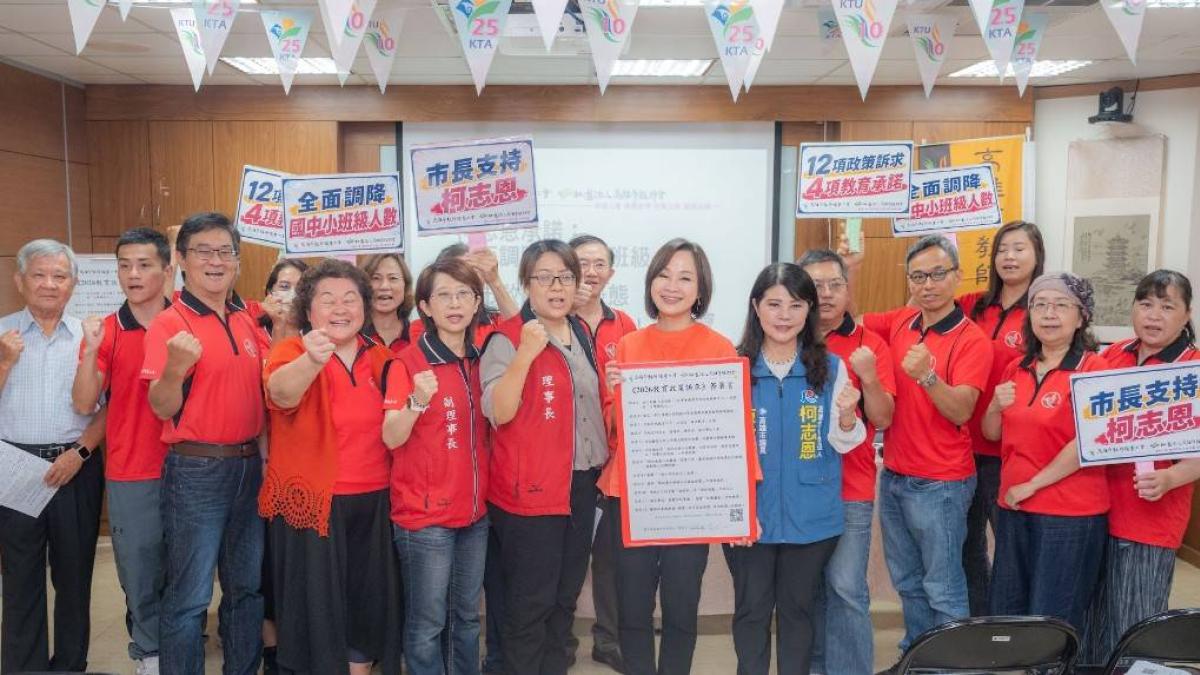
Recent incidents in Kaohsiung—including a primary school teacher’s suicide, campus sexual bullying controversies, and allegations involving a minor family member of DPP mayoral candidate Lai Jui-long in school bullying—have rapidly elevated education as a central issue in the mayoral race, intensifying scrutiny on interactions between political camps and teacher groups. Chen Chi-mai’s high administrative approval rating may fail to effectively transfer to Lai Jui-long, especially as the Teachers’ Union shifts support to Ko Chih-en, undermining the green camp’s narrative of 'continuity and seamless succession.' (Image/Screen capture from Ko Chih-en’s Facebook)
On the 22nd, the Kaohsiung City Teachers’ Union officially held a press conference announcing its support for Kuomintang (KMT) mayoral candidate Ko Chih-en. The union stated that Ko has long advocated for teachers’ rights and educational reform in the Legislative Yuan, was the first to sign the union’s 12-point '2026 Education Policy' demands, integrated them into six major education platforms, and proactively proposed four additional policy commitments—including gradually reducing class sizes in elementary and junior high schools. As early as April 29, the union’s delegate assembly had already resolved to endorse Ko for mayor.
The union’s endorsement of Ko marks a significant shift, as it follows the same group’s 2022 decision to break its 26-year tradition of political neutrality by supporting Chen Chi-mai’s re-election. This time, however, support has shifted from the DPP to the KMT, signaling that grassroots teacher support is no longer bound by party lines—a development widely interpreted as a warning sign for the green camp.
Historically, the Kaohsiung Teachers’ Union maintained political neutrality, hosting only education policy forums during elections and allowing members to decide their votes independently. In 2022, it made an exception, endorsing Chen Chi-mai after recognizing his administration’s fulfillment of key promises: full air conditioning installation in schools with electricity cost subsidies, increased health check subsidies for staff over 40, revised teacher workload reduction policies, and the appointment of directors for affiliated kindergartens.
Now, the same union has chosen not to back DPP-nominated Lai Jui-long, instead shifting support to Ko Chih-en. This has raised questions about whether Chen Chi-mai’s 81% approval rating can truly translate into votes for his successor.
Lai Jui-long has campaigned on the theme of being the 'crucial fourth batter,' aiming to continue Chen Chi-mai’s governance path. However, he has repeatedly stumbled on education issues. While Lai signed a pledge on six education demands proposed by the Kaohsiung Education Industry Union, sources indicate the coordination was facilitated by fellow DPP legislator Hsu Chih-chieh, not initiated by Lai’s campaign team. Additionally, Lai’s proposal to 'reduce unnecessary school affairs meetings' was sharply criticized by Ko, who pointed out that the school affairs meeting system was established during DPP rule—making calls for reform now appear like damage control for past governance failures.
Analysts note that while Kaohsiung’s electorate remains generally favorable to the green camp, teacher groups, though not decisive in vote share, carry symbolic weight. The shift from a group that once openly supported Chen to now backing Ko highlights a potential divergence in how voters assess Chen’s personal performance versus the DPP’s succession planning.
As education issues continue to escalate, if Chen’s high approval fails to effectively transfer to Lai, and key supporter groups show signs of drifting away, the green camp’s narrative of 'continuity and seamless succession' will face increasingly severe electoral challenges.
FACT BOX
- Source: PR Times
- Category: News