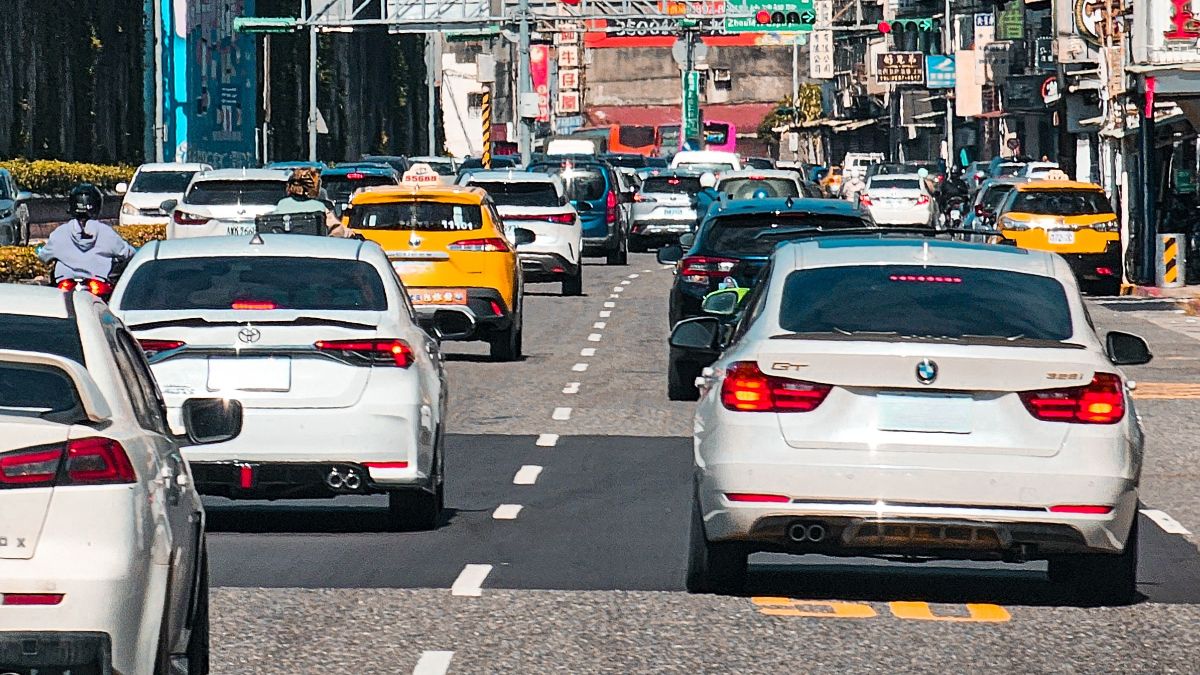
Vehicle safety is critically important. The renowned U.S. consumer testing organization, Consumer Reports, has recently released its latest 'Safety Verdict' automotive brand safety ranking. For the first time, this evaluation assesses the overall safety performance across an entire brand’s product lineup, rather than focusing solely on individual models. Mazda of Japan has claimed the top spot, outperforming global giants like Toyota and Tesla to become the safest-performing automotive brand of the year.
Consumer Reports' Top 10 Safest Car Brands:
1. Mazda 2. Genesis 3. Acura 4. Lincoln 5. Hyundai 6. Honda 7. Nissan 8. Audi 9. Subaru 10. Kia
According to the latest rankings, Mazda leads in overall safety performance, followed by Genesis, Acura, Lincoln, Hyundai, Honda, Nissan, Audi, Subaru, and Kia.
Notably, Volvo, long praised for safety, ranked only 12th, Toyota placed 14th, and Tesla fell to 26th—results that surprised many consumers.
Mazda Owner Feedback
Examining real-world feedback from Mazda owners, many praise the brand with comments such as: "No competitor matches its surround-view camera or interior quality, and reliability is excellent"; "The Mazda3’s sound insulation is top-tier in its class. The solid door closure and isolation from outside noise are superb. As someone who hates cabin noise, I feel more confident in the Japanese-built assembly quality"; "The horsepower isn’t extreme, but it’s more than sufficient for daily use. Press the pedal hard, and it really takes off. The body rigidity is impressive—cornering is stable, and it’s hard to make the tires squeal. This car made me fall in love with driving again"; "The body lines are beautiful, and reliability is outstanding. I’m truly satisfied"; "Every time I park and turn off the engine, I can’t help but look back at the car. Mazda’s designers truly poured their soul into it—the flowing lines attract attention on the road"; "This engine and transmission combo is incredibly fuel-efficient. On smooth highway drives, I easily achieve 18–20 km/L, and city driving averages 14–15 km/L, with a roughly 7:3 highway-to-city ratio"; "It has looks, quality, handling, reliability, and fuel economy. If you’re just starting your career and want your first car under $30,000 without needing much space, the Mazda3 is absolutely the best choice"; "After 15 years with my Mazda3, I had to upgrade to a larger car as my kids grew, but my next car will be a European import."
Major Changes in Evaluation Criteria: Inclusion of Interface and Driver Attention
The key difference in this year’s assessment is that it no longer focuses solely on crash test results. Instead, it now includes "accident prevention capability" and "driver operational convenience" in the scoring. In addition to crash protection, the evaluation examines whether advanced safety features—such as high-speed automatic emergency braking (AEB), blind-spot warning (BSW), and rear cross-traffic warning (RCTW)—are standard across all models in a brand’s lineup. It also assesses the ease of use of the infotainment system to prevent driver distraction and reduce accident risk.
Jake Fisher, Senior Director of Automotive Testing at Consumer Reports, explained that some brands dropped in ranking not due to poor crash protection, but because of in-car interface design. For example, Volvo and Tesla concentrate many controls—like climate and settings—on central touchscreens, requiring drivers to frequently glance at the screen while driving, increasing distraction risk and leading to lower scores in usability.
Additionally, Subaru’s partial omission of blind-spot monitoring as standard equipment across all models affected its overall score. Some large SUVs and pickup trucks were penalized for longer braking distances and weaker emergency evasion performance, lowering their brand-wide safety ratings.
Consumer Reports categorizes brand safety performance into three tiers: "Basic," "Better," and "Best."
- Basic: Meets U.S. National Highway Traffic Safety Administration (NHTSA) federal safety standards. - Better: Meets regulations and includes standard pedestrian-detecting AEB, weighs over 2,500 pounds, achieves above-average scores in braking and handling tests, and earns certain ratings in IIHS front and side crash tests. - Best: Maintains excellent crash test performance, does not receive the lowest usability rating for its interface, and includes standard high-speed AEB, BSW, and RCTW across all models.
Source: Consumer Reports Editor: Chen Defu
FACT BOX
- Source: PR Times
- Category: Survey
- Organizations: Toyota / Honda / Tesla