The disciplinary notice on former Politburo member Ma Xingrui serves as a mirror, reflecting the surface-level severity of high-level anti-corruption efforts and the deep-rooted malady of political-business interest transfers. In mid-July, the Central Commission for Discipline Inspection (CCDI) announced disciplinary measures against Ma, the former Party Secretary of Xinjiang and Politburo member, directly accusing him of "indulging and enabling relatives to use his official influence to seek huge benefits, engaging in family-style corruption," along with issues such as quid pro quo sex, purchasing property at irregularly low prices, and arranging jobs for friends and relatives.
Ma Xingrui worked for a long time in Shenzhen, where he served as Party Secretary. During his tenure, Shenzhen's urban renewal (old city redevelopment) projects flourished, involving a complex network of central SOEs, private enterprises, and local resources. While urban renewal was originally a policy tool to revitalize existing land and improve people's livelihoods, in practice it has become a channel for interest transfers: developers, local officials, and family factions intertwine, forming gray-scale interest chains worth hundreds of billions of yuan.
Notably, as the real estate era gradually recedes, the political-business interest structure has not disappeared but is shifting toward emerging industries such as artificial intelligence (AI), new energy, computing power, and data. Without a corresponding upgrade in institutional oversight, new public resources may once again become vehicles for power rent-seeking. Behind the Ma Xingrui case lies not just family corruption, but a microcosm of China's political-business model during the real estate era.
For over two decades, China's real estate sector experienced rapid growth, with local governments relying on land finance, enterprises depending on land development, and officials controlling planning, approvals, and resource allocation—forming a typical "land economy community." Although official notices do not disclose all case details, the outside world widely focuses on how relatives used official influence to gain benefits, once again reflecting the long-standing "shadow beneficiaries" problem in China's local governance. Related cases also implicate the interest structure behind Shenzhen's long-standing urban renewal projects. Shenzhen's redevelopment has long involved cooperation among central SOEs, large private enterprises, local SOEs, and local governments. The appreciation of land brings huge profits, making administrative approvals, planning adjustments, and land consolidation prone to deep entanglement between power and capital.
According to journalistic observation, the focus of China's future anti-corruption work may not merely be traditional bribery, but how to establish a more transparent system for public resource allocation. What is truly needed is a rule-of-law-based, market-oriented, and transparent mechanism that allows competition in emerging industries to rely more on the market rather than administrative resource allocation, avoiding a repeat of the real estate-era political-business interest cycle in strategic industries like AI and new energy.
With the arrival of a new industrial era, officials from the National Development and Reform Commission (NDRC) system—"NDRC faction"—have become highly sought after in the private sector. Ma Xingrui himself has an NDRC background, and Baoding's former and current Party Secretaries—Dang Xiaolong and Zhao Wenfeng—also come from this system, yet they exhibit vastly different governance styles and public responses.
When Dang Xiaolong, Baoding's former Party Secretary, left office, many local residents expressed regret online. Compared to Geng Yanbo, the former mayor of Datong, Shanxi, who gained attention for large-scale urban renewal, Dang may not be as well-known, but in the eyes of many Baoding residents, he was seen as one of the few local leaders in recent decades who genuinely prioritized urban construction, transportation improvement, and industrial development.
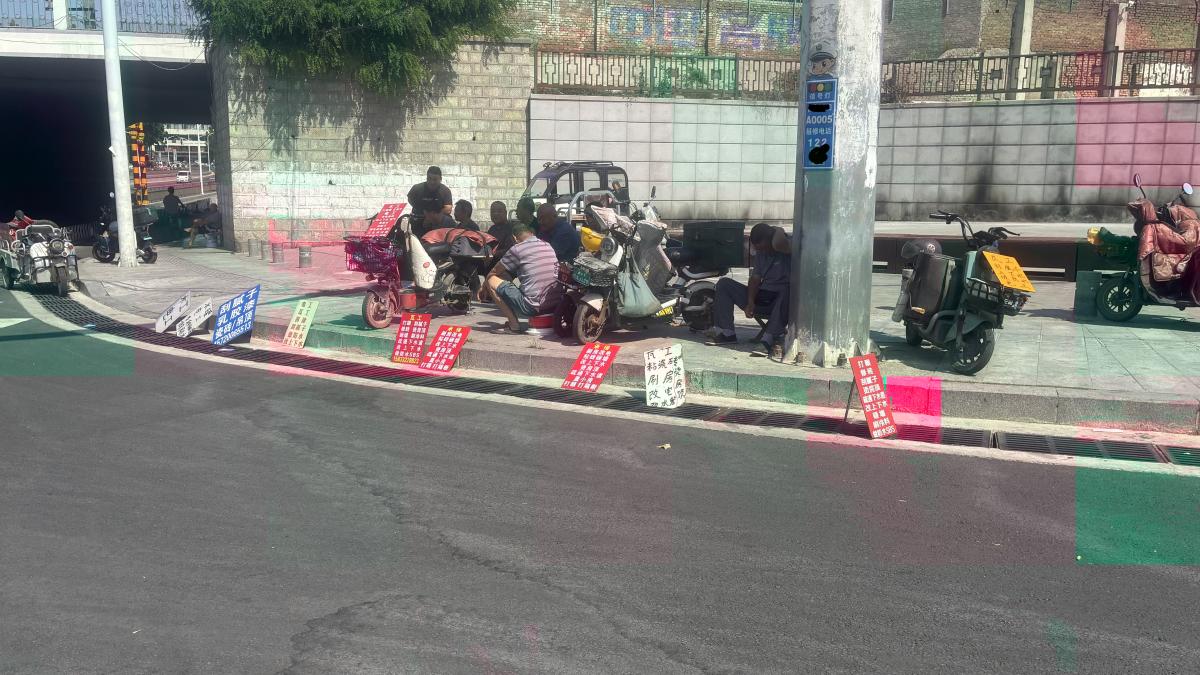
In contrast, Zhao Wenfeng, the new Party Secretary of Baoding, has made environmental protection his top policy priority within three months of taking office, rather than economic development. Zhao previously emphasized ecological protection during his tenure in Zhangjiakou. Strict environmental measures in Baoding, prompted by failing environmental inspections, have already sparked public discontent. Journalists observed in Baoding that street-sprinkling vehicles operate frequently regardless of weather, causing many citizens to slip and fall. The city's urban management department defended the practice on its WeChat public account, stating, "Frequent sprinkling is for cooling; post-rain sprinkling is for convenient travel."
Even so, "annual road repairs" have become a local "feature." In contrast, an official in Guangzhou once remarked: "Constant sprinkling on sunny days might be for cooling, but only if the asphalt pavement quality is poor."
The most controversial aspect is the promotion of the slogan "I contribute to environmental protection, offer good ideas, and serve as a guardian," requiring all levels of units, businesses, and public spaces in Baoding to widely publicize and study it.
In fact, as a crucial political security barrier for Beijing, Hebei Province has long held the designation of "political moat for the capital." Whether it's steel overcapacity reduction, air pollution control, or environmental inspections, many areas in Hebei have long borne higher environmental governance requirements than other provinces.
In the past, during China's rapid economic growth, local governments could absorb some costs through investment and land development. But with the recent slowdown in overall economic growth, real estate market adjustments, rising employment pressures, and declining local fiscal revenues, governance costs have become more apparent.
After the stable growth era of real estate ends, local governments need to find new economic growth drivers; AI, new energy, and other emerging industries have become new policy priorities. However, these new industries require not only capital and technology but also a fair and transparent institutional environment to prevent public resources from once again becoming mediums for power-capital exchange.
On the other hand, local governance also faces new tests of public opinion. What the public expects is not just slogans or single indicators, but a balance between environmental protection, industry, employment, and quality of life. The recent phenomenon of NDRC-affiliated officials receiving relatively positive local feedback reflects that grassroots society values tangible construction outcomes and development effectiveness more than formal political mobilization.
For Chinese local officials, the real competition in the future may no longer be just GDP or environmental rankings, but building a more credible and sustainable governance model between the rule of law, the market, and people's livelihoods.
FACT BOX
- Source: PR Times
- Category: News