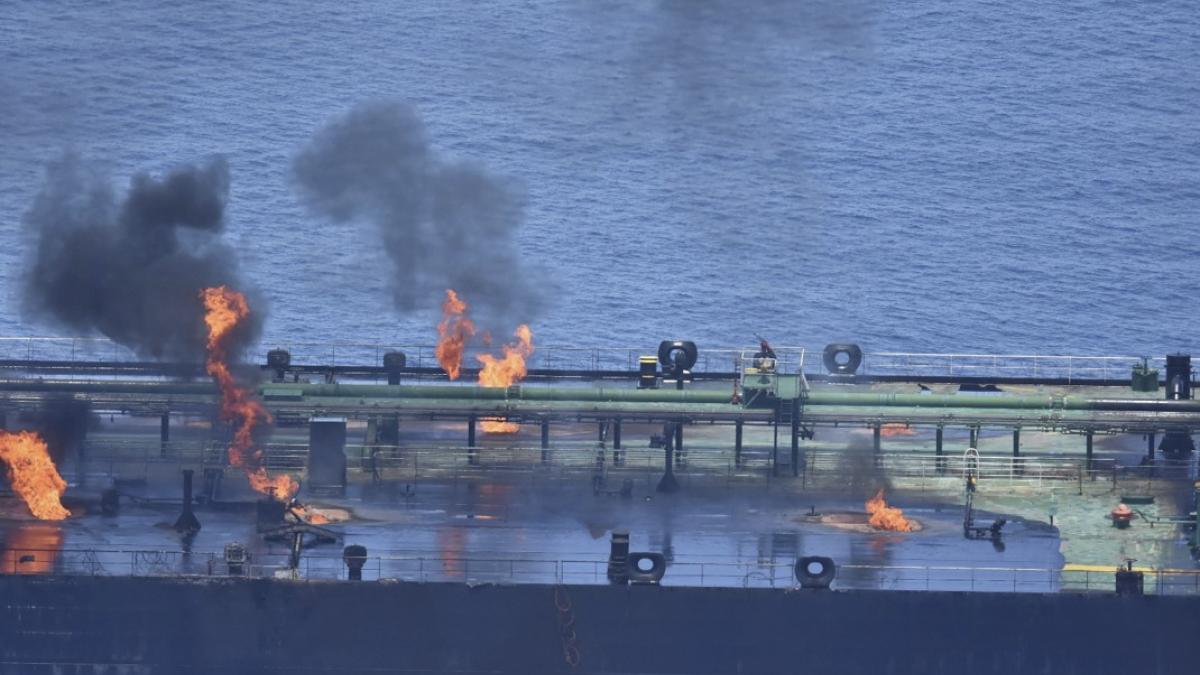
Threats by Iran's allies against a key shipping route in the Red Sea have raised concerns about further disruptions to global trade. Iran has effectively closed the Strait of Hormuz, blocking maritime traffic from the Persian Gulf. Now, its main ally in the Middle East is threatening to open another maritime front on the opposite side of the Arabian Peninsula.
The Iran-backed Houthi rebels, who control northern Yemen, have announced a 'naval blockade' on the Bab al-Mandeb Strait targeting Saudi Arabia, a U.S. ally. The strait is a vital waterway connecting the Gulf of Aden to the Red Sea and providing access to the Suez Canal. Approximately 12% of global maritime oil shipments pass through here.
On July 20, 2026, Houthi spokesperson Yahya Sarea stated that the blockade is retaliation for Saudi Arabia's blockade of ports and airports in Houthi-controlled areas.
In response, Saudi Arabia's Foreign Ministry condemned the claim, saying the country "will take all necessary measures to protect its vessels in accordance with international law."
Yemen has been ravaged by civil war since 2014, when the Houthis drove the government out of Sanaa. In 2015, a Saudi-led Arab coalition intervened to restore government rule, escalating the conflict.
The war has reportedly caused over 150,000 deaths and triggered one of the world's worst humanitarian crises. The United Nations says more than 22 million people need some form of assistance.
But can the Houthis actually close the Bab al-Mandeb Strait to Saudi vessels?
Farea al-Muslimi, a Middle East expert at Chatham House, a London-based think tank, told BBC World Service that the group has the firepower to cause disruption.
"The Houthis have sea mines and have enhanced their maritime drone capabilities over the past few years," he said.
And even without a full blockade, they can create problems.
"They only need to hit one target," al-Muslimi told BBC World Service. "Even a symbolic attack is enough to create the necessary panic among insurers, shipping companies, and oil suppliers. The damage could be greater than imagined."
"Iran's post-war strategy is to make U.S. allies in the region pay a continuous price. They are trying to drag everyone into this conflict."
Iran has previously threatened to "open other fronts." Yemen expert Anwat al-Ansi also agrees that the Houthis are acting on Tehran's behalf, attempting to draw Saudi Arabia into the conflict.
"Iran wants escalation because it's their only option now," al-Ansi told BBC World Service. "Saudi Arabia has consistently avoided direct confrontation with Tehran, but if the Houthis actually launch attacks, Saudi Arabia will have to act to protect its interests."
Why is the Bab al-Mandeb Strait so important?
The Bab al-Mandeb Strait lies between Yemen on the Arabian side of the Red Sea and Djibouti and Eritrea on the African side. Ships from the Indian Ocean and Gulf of Aden must pass through this strait to reach the Suez Canal.
The strait is 115 km long and 36 km wide. Since the opening of the Suez Canal in 1869, it has become an indispensable part of global trade, forming the shortest sea route between Europe and Asia.
The Red Sea shipping corridor is now one of the world's busiest routes, with about a quarter of global maritime traffic passing through.
The Strait of Hormuz, already effectively closed due to conflict, carries 20% of the world's oil shipments. If the Bab al-Mandeb Strait is closed, another 12% of global oil transport would be disrupted.
According to data from the U.S. Energy Information Administration (EIA), about 5 million barrels of crude oil pass through daily, originating from Middle Eastern and Asian countries and destined for Western markets.
Additionally, 8% of global liquefied natural gas (LNG) shipments pass through this strait, making it a critical artery for global energy supply.
Since the Strait of Hormuz has been effectively closed, the Red Sea's importance in global trade has further increased. Saudi Arabia has begun using the Bab al-Mandeb Strait as a transit route for oil exports from the port of Yanbu. Riyadh is piping millions of barrels of crude oil daily from its eastern oil fields to the port.
In addition to oil and gas, the Bab al-Mandeb Strait is part of a major commercial link between East and West, with dozens of cargo ships crossing its waters daily.
If closed, the impact would resemble the 2021 incident when the Panama-flagged cargo ship Ever Given ran aground and blocked the Suez Canal, causing severe bottlenecks in global supply chains, rising transportation costs for oil and various goods, and delivery delays.
The Role of the Houthis
Any attack on the Bab al-Mandeb Strait is likely to be carried out by the Iran-backed Yemeni political and military group, the Houthis.
A Houthi leader, speaking anonymously to Reuters, said the group is "militarily prepared" to support Tehran by attacking the strait.
On March 28, the Houthis attacked Israel, marking their first involvement in the war between the U.S. and Israel against Iran. Israel said it shot down two missiles launched from Yemen.
The group controls areas along Yemen's Red Sea coast and has targeted the Bab al-Mandeb Strait during the Gaza war. Without coordination with other forces, the Houthis have attacked over 100 merchant ships with missiles and drones, sinking two vessels and killing four crew members.
In November 2023, the group hijacked a cargo ship operated by a Japanese company and owned by a British firm in the Red Sea using a helicopter.
Although the Houthis claim they only target ships linked to Israel, these attacks are widely described as indiscriminate, prompting many of the world's largest shipping and oil companies to suspend transit through the area.
These attacks have since decreased. The U.S. claims the Houthis have backed down, while the Houthis counter that the U.S. has retreated. However, analysts fear the actions could resume.
BBC's chief international correspondent, Lyse Doucet, said: "People have long expected that if this war continues, Yemen's Houthis would join in."
She added: "The Houthis, who control northwestern Yemen, have not yet used their most powerful weapon—the ability to disrupt shipping through the Bab al-Mandeb Strait. This maritime chokepoint connects the Red Sea to global trade routes."
The U.S. Department of Transportation's Maritime Administration stated in a February 26 notice: "Although the Houthi terrorist organization has not attacked merchant vessels since the October 2025 ceasefire agreement between Israel and Gaza, the Houthis continue to pose a threat to U.S. assets in the region, including merchant ships."
Global Shipping Under Pressure
'Bab al-Mandab' means 'Gate of Tears' or 'Gate of Sorrow' in Arabic. The name reflects the region's dangerous conditions, including strong currents, unpredictable winds, piracy, and armed conflict.
Between 2008 and 2012, multiple piracy attacks occurred in and around the Bab al-Mandeb Strait, primarily by Somali groups who kidnapped crew members for ransom. These incidents prompted the international community and shipping companies to strengthen regional security.
If this shipping lane is now blocked, it will further exacerbate the energy market crisis already strained by the situation in the Strait of Hormuz.
Disruptions in Gulf shipping have pushed Brent crude oil prices from a pre-crisis level of about $70 per barrel to over $115 (779 RMB; 3720 TWD).
Global trade covering everything from consumer goods to agricultural products is also feeling the impact. If another critical maritime route is disrupted, prices could rise further, deepening the economic shock from the conflict with Iran.
Mohammed Albasha of U.S. risk consultancy Basha Report said it's unclear whether the Houthis will actually start attacking ships bound for Saudi Arabia.
"Even without any ships being attacked, this announcement alone could disrupt shipping and create uncertainty for Saudi ports," he told Reuters. "Whether the Houthis escalate from threats to direct action remains the key question."
We used artificial intelligence to assist in translating this article, which was originally in English. Before publication, BBC journalists reviewed the translation.
FACT BOX
- Source: PR Times
- Category: News