U.S. authoritative science journal Science and academic watchdog website Retraction Watch jointly released an investigation on the 23rd, exposing a Chinese biomedical ethics scandal that had been concealed for a full year.
A 6-year-old Chinese girl with a rare genetic mutation received the world's first experimental 'base editing' therapy targeting the brain in Shanghai last March. Seven days after the research team injected trillions of viral vectors into the girl's spinal canal, she died from severe immune rejection leading to multiple organ failure. However, the team leading the study not only failed to disclose the death, but even omitted all mention of the family's financial sponsorship and the fatal clinical outcome when publishing animal trial results in Nature earlier this year.
This incident not only exposes regulatory loopholes in China's rapidly expanding biotechnology ambitions, but is also regarded by the biomedical community as the most serious ethical and safety crisis in gene editing since the 1999 death of 18-year-old Jesse Gelsinger in a U.S. gene therapy trial.
A $860,000 Gamble of Hope and Despair
According to official documents, recorded phone calls, and family testimony obtained by Science, the 6-year-old girl, pseudonym 'Mei', had an extremely rare neurodevelopmental disorder called Snijders Blok-Campeau syndrome due to a single base mutation in the CHD3 gene (a cytosine C incorrectly mutated to adenine T). Only 237 cases have been documented worldwide, with clinical symptoms including developmental delay and language impairment.
To save their daughter, the girl's father Jason, a software engineer, and mother Linda raised $860,000 (approximately NT$28 million), contacting neuroscientist Zilong Qiu at the Songjiang Institute of Neuroscience, Shanghai Jiao Tong University School of Medicine.
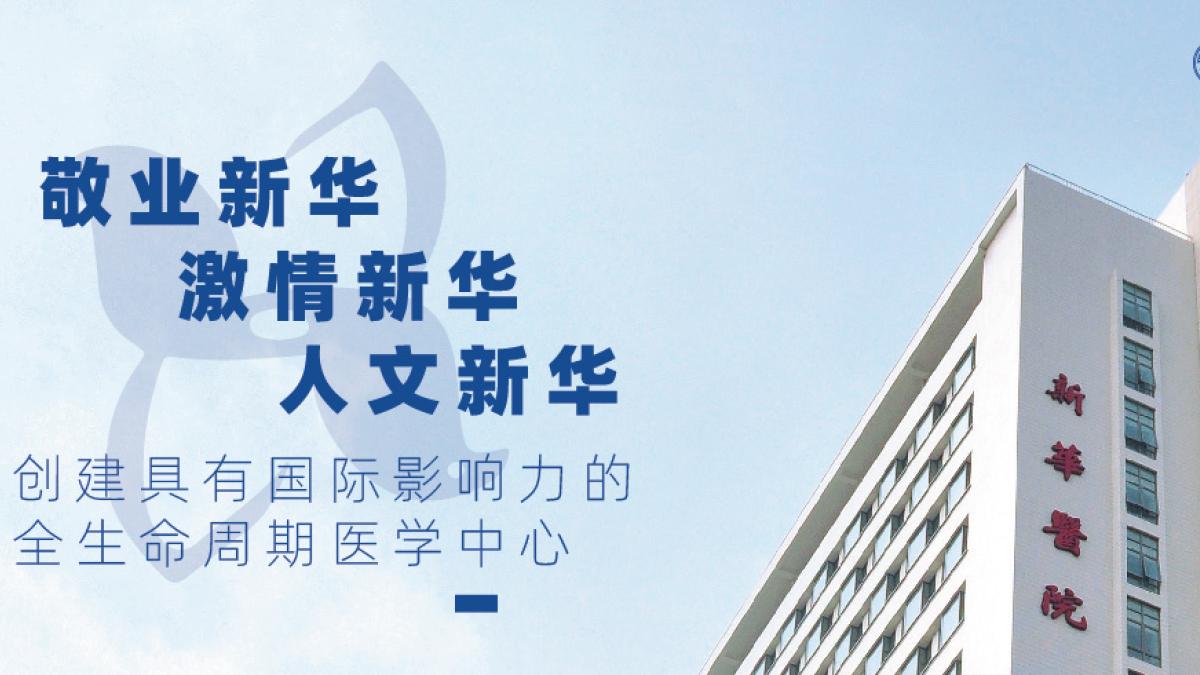
Qiu has been working to advance 'base editing' technology—a more precise form of gene editing than traditional CRISPR—into clinical applications. Qiu assured the family that a top-tier medical institution like Shanghai Xinhua Hospital, affiliated with Shanghai Jiao Tong University School of Medicine, 'could ensure no accidents would occur.' To push the trial forward, the family transferred funds not only to related foundations and biotech companies, but also, at the researchers' request, directly wired $130,000 (approximately NT$4.2 million) into the personal account of Kan Yang, a core researcher in Qiu's lab. Jason also gifted Qiu several iPhones, iPads, and a case of Moutai liquor during multiple meetings.
On March 24, 2025, the girl, wearing a pink coat, entered Shanghai Xinhua Hospital. She excitedly told her parents it 'felt just like going on vacation.' That day, a specialist administered a massive dose of AAV9 adenovirus carrying gene-editing components into the girl's cerebrospinal fluid via intrathecal infusion. This first-ever attempt to rewrite human brain neuron genes turned into a disaster just three days later: Mei developed high fever and anuria, her platelet count plummeted, and one week later she was declared dead in the ICU due to severe immune reaction-induced thrombotic microangiopathy (TMA) and multiple organ failure.
Erasing the Deceased from the Paper
Shanghai Xinhua Hospital's ethics committee held an emergency meeting two days after the girl's death, with the report explicitly stating the death was 'definitely related to the treatment.' Yet when Qiu's team published their proof-of-concept paper in the prestigious journal Nature (Vol 651, pp. 785–795) earlier this year, the paper made no mention of this fatal clinical case, even deleting acknowledgments and data thanking the family's participation from the original manuscript, merely stating 'the leap from preclinical research to clinical translation remains a major challenge.'
More seriously, safety warnings from experiments were ignored. According to Science's investigation, as early as February 2025—before the girl received treatment—a toxicology report from 'Guangxi Qimei Bio' (PriMed), commissioned to conduct monkey trials, already showed that all four crab-eating macaques receiving the gene therapy exhibited moderate to severe liver damage, with signs of kidney damage in the high-dose group.
Steven Gray, a viral vector expert at UT Southwestern Medical Center, stated bluntly: 'This data should never have allowed human clinical trials to proceed.' James Wilson, a former University of Pennsylvania gene therapy authority and current president of Gemma Biotherapeutics, emphasized that the toxicity seen in monkey trials 'should have immediately triggered low-dose safety studies to determine maximum tolerated dose, rather than rushing into human trials.'
China's 'Dual-Track' Regulatory Black Hole
Bloomberg points out that this tragedy exposes the long-criticized regulatory loophole in China's biomedical field regarding 'Investigator-Initiated Trials' (IIT). Under China's current dual-track system, non-commercial IITs do not require review by the National Medical Products Administration (NMPA), and can be implemented after only passing internal hospital ethics committee review. Statistics show that the number of IITs in China surged 11-fold between 2015 and 2023, exceeding a thousand cases. Joy Zhang, a sociologist at the University of Kent, UK, noted: 'This reveals a huge gap between system and implementation, exposing the deeply entrenched closed culture within Chinese research institutions.'
In response to this medical incident, the Yangpu District Health Commission in Shanghai imposed an administrative fine of about $3,600 (approximately NT$118,000) on Xinhua Hospital last September for 'failing to register as a commercially sponsored study'; attending physician Yongguo Yu received only an internal verbal warning; and Qiu himself faced no public disciplinary action. The family, who sacrificed their life savings and their daughter's life, has received no compensation to date.
Experts Call for Retraction, Academic Community Expresses Grave Concern
The girl's parents have filed a complaint with the university where Qiu is employed, demanding a full investigation and retraction of the Nature paper. Shanghai Jiao Tong University replied to the family in April this year, stating it would take no action against Qiu and claiming the paper 'is unrelated to the experiment funded by the family.' Kevin Bender, a neuroscientist at UCSF, previously wrote a commentary in Nature praising the study as 'paving the way for developing effective clinical therapies.' But in an interview, he admitted he had no idea the subject had already died.
Regarding the joint investigation by Science and Retraction Watch, Hank Greely, Director of the Center for Law and the Biosciences at Stanford University, said: 'In any first-in-human clinical trial, the risk of “death” must be explicitly disclosed. It's easy to be blinded by hope—whether hope for a child, for research, or for a company.'
David Sanders, a biochemist at Purdue University, stated: 'Failing to honestly disclose funding sources and clinical death outcomes in a paper itself constitutes sufficient grounds for retraction.' Francesca Cesari, Chief Biological, Clinical, and Social Sciences Editor at Nature, said: 'During the peer review process, the journal was not made aware of this clinical trial or related administrative penalties. Had this information been disclosed during review, it would absolutely have been a core part of our decision-making assessment.'
FACT BOX
- Source: PR Times
- Category: News
- Organizations: Gemma Biotherapeutics