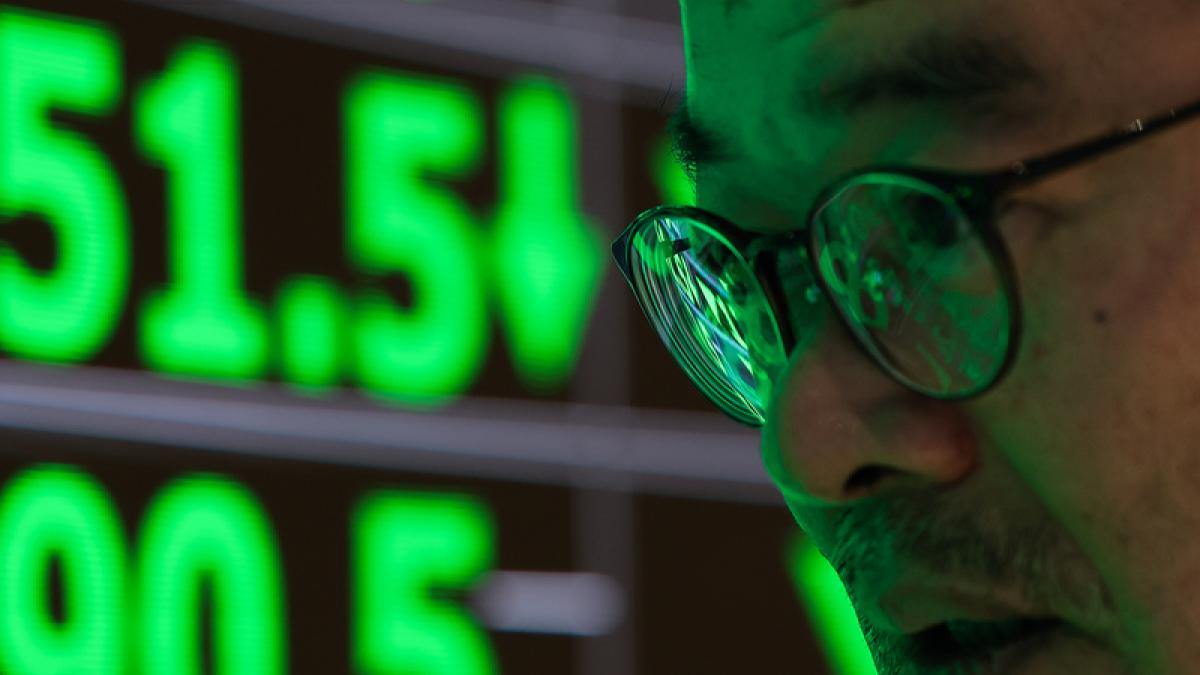
On July 17, 2026, Taiwan's weighted stock index plunged 2,953.71 points, or 6.47%, closing at 42,671.27—the largest single-day drop in history. TSMC fell 180 NT dollars to 2,290, marking its biggest daily decline since listing, with market value dropping below 60 trillion NT dollars. Foreign investors sold a net 189 billion NT dollars that day, withdrawing over 642.5 billion NT dollars across 11 consecutive trading days. The anxiety over margin calls has spread from online forums like PTT to the entire stretch of Zhongxiao East Road.
The tragedy lies not in the index, but in the accounts of those with 'four loans in one'.
Media focuses on point drops and trillions in evaporated market value, but the real tragedy hides in the stock exchange's margin trading data and social media 'apology-for-returning-to-work' posts.
Taiwan's stock market has risen over 20% for three consecutive years, with the index gaining over 15,000 points at one point, pushing total market value to fifth globally. Online narratives like 'mortgage + credit loan all-in on TSMC for a comeback' have emerged, creating a local version of the 'six wallets'—mortgage, stock margin, consumer credit, and car loan combined, colloquially known as 'four loans in one'. This essentially means betting one's future cash flow on the AI boom.
After the crash, sentiment shifted rapidly. 'Apology-for-returning-to-work' posts became a trend on PTT and Dcard—last month's self-proclaimed stock gods now humbly knocking on former supervisors' office doors; some SME owners admitted going all-in on stocks led to business collapse, telling former employees 'no need to come back'. A more concrete signal: 13 settlement default cases have emerged in Taiwan's stock market this year. While margin balances remain relatively high, overall collateral maintenance rates have approached psychological market thresholds after the plunge.
Looking back, in 2000, a 48-year-old Chiayi investor hanged himself after losing millions; in 2011, a Xindian truck driver stabbed himself five times after losing 3 million NT dollars by mortgaging elders' homes, leaving a note: 'It's all because I was too greedy.' Every leveraged collapse leaves suicide notes that look photocopied. While no suicides have been reported in this 2026 wave, the chain defaults from 'four loans in one' are more alarming than isolated cases.
Structural root: Taiwan's stock market stands on one leg—'TSMC + AI'.
The fundamental fragility of this bull market was laid bare on July 17: TSMC alone accounted for over half the market's drop. Of the 189 billion NT dollars foreign investors sold, most was TSMC stock.
This is not what a healthy market looks like. Semiconductors contribute over 20% of Taiwan's GDP, but directly employ less than 3% of the workforce. The Economist noted that excluding semiconductors and AI servers, Taiwan's exports have actually shrunk by 40% since 2022, with traditional industries on forced unpaid leave. A May poll by Formosa e-News found 55.1% of people feel the economy is bad; a yes123 survey showed 54.9% of those under 39 see themselves as 'life losers'.
When salaries can't keep up with housing prices and hard work can't save enough for a down payment, the soaring stock market becomes the only path to upward mobility for young people in a K-shaped society—this is the sociological root of 'four loans in one'. It's not greed; it's a distribution structure forcing people to gamble.
Layering leverage makes it even riskier: The 5x leveraged product 631L has nearly 50,000 shares on loan. If the market corrects 20%, these accounts face collective margin calls. Broad-based 0050 needs a 30-40% drop to trigger warnings, but small-cap leveraged products have extremely low error tolerance. In May, a retail investor using 3x leverage on a small-cap stock lost half their principal when the index dropped just 11%.
Trigger: TSMC earned 77% more, but stock fell 7%—a classic sign of AI faith weakening.
The most bizarre moment of this crash: TSMC's Q2 net profit surged 77% year-on-year, gross margin hit 67.7%, 2026 revenue growth forecast raised to over 40%, and capital expenditure increased from $52–56 billion to $60–64 billion—yet the stock dropped 7.3% the next day.
Good news is no longer good. This is a classic late-bull market symptom. Market interpretation split: optimists saw 'strong demand requiring expansion', while cautious investors saw 'soaring capex = ROI anxiety, equipment price hikes eating into margins'. Morgan Stanley directly expressed concern over TSMC's squeezed profit margins.
Meanwhile, South Korean regulators starting August will suspend new individual leveraged ETF listings and raise margin requirements, specifically targeting 2x leveraged ETFs on Samsung and SK Hynix—South Korean retail leveraged losses estimated at $1.44 billion over the past month, with 400,000–460,000 accounts wiped out. This deleveraging sentiment spilled into Taiwan's market, dragging down TSMC, MediaTek, and Delta Electronics.
Warning: Foreign investors' 11-day withdrawal isn't short-term—it's structural de-risking.
The real concern isn't the July 17 drop, but foreign investors selling a net 642.5 billion NT dollars over 11 consecutive days, with five days of over 100 billion NT dollars in net sales—four of which occurred this year. Historically, foreign investors have sold over 100 billion NT dollars in a single day only five times, four in 2026—this looks less like short-term profit-taking and more like strategic position reduction. Why? Three layers of pressure:
Industry level: AI trades are overcrowded. TSMC's forward P/E of 19x exceeds its five-year average of 18x. Higher capex revisions are now seen as a red flag.
Macro level: Fed officials remain hawkish; one month of lower inflation isn't enough to confirm stability. Rising US Treasury yields are outpacing high-valuation tech stocks. Middle East conflicts push oil prices up, and risk-off sentiment targets the most crowded positions first.
Geopolitical level: Long-term uncertainty over the Taiwan Strait and Asia-Pacific supply chain restructuring are forcing foreign investors to reprice the risk premium on the 'Taiwan stock = TSMC = AI' single-leg logic.
The Central Bank of Taiwan says a systemic collapse is 'still far off'—meaning the banking system and overall credit won't cascade. But for retail investors already using 'four loans in one', the next 10% plunge could mean personal bankruptcy, no systemic crisis needed.
The real lesson of Black Friday, July 17, isn't whether TSMC can rise again, but this: when a market's wealth effect depends heavily on a single industry, a single company, a single narrative—and that narrative's valuation is propped up by leveraged money—then every sharp drop isn't a 'buying opportunity', but a stress test on social inequality.
Young people aren't putting mortgages and loans into stocks because they're greedy—they're doing it because the normal path to success is too slow. This is beyond the central bank's control and financial regulators' warnings. If AI is truly prosperous, it should let 90% of those outside semiconductors benefit too, not force everyone to take a fourth loan to gamble on a comeback.
When the next crash comes, foreign investors will still run first, TSMC will still fall first, and left behind will be those writing 'apology-for-returning-to-work' posts.
*Author is an exchange student.
FACT BOX
- Source: PR Times
- Category: News