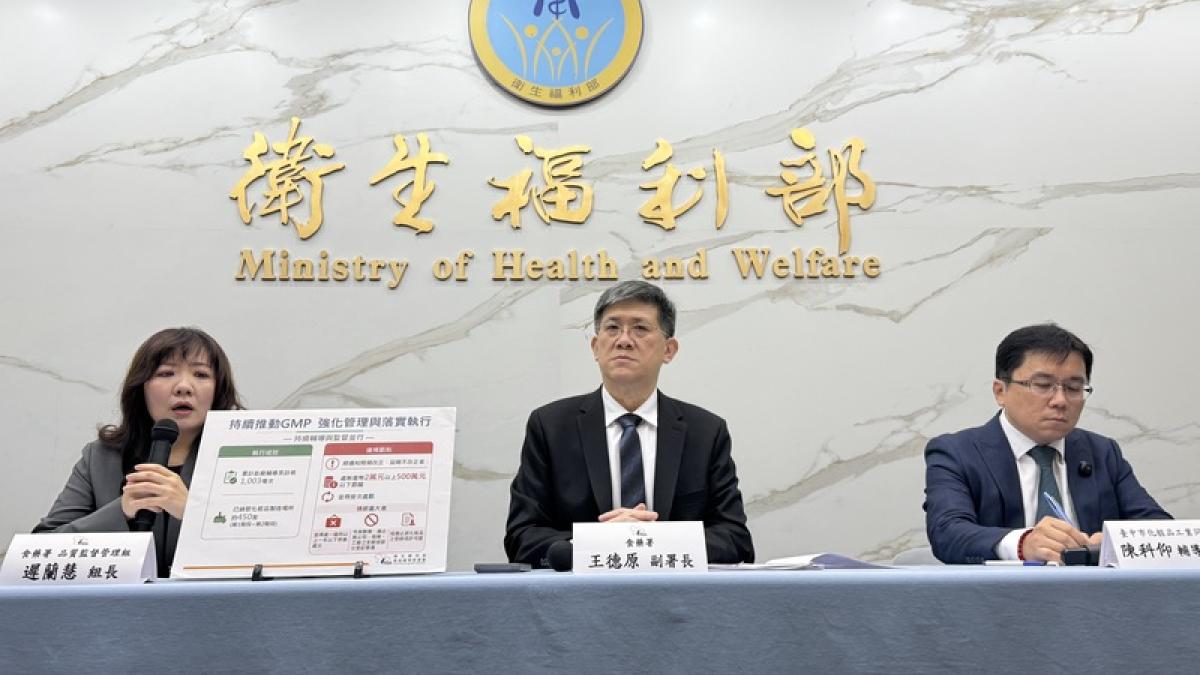
At the beginning of this year (January 2026), Taiwan's Ministry of Health and Welfare officially launched a major institutional reform in the nation's medical history—extending the validity period of hospital accreditation from four to six years, retroactively applying to hospitals accredited in 2023 (Year 112). This 'pressure-relief' policy, personally approved by President Lai Qing-de and actively promoted by the Ministry, has received high praise from the medical community and marks a new era in Taiwan's healthcare management, shifting from 'periodic major assessments' to 'routine monitoring'.
However, when we shift our focus from healthcare services to pharmaceutical manufacturing, can the 'TCM manufacturing industry'—which also bears the responsibility for public health and suffers from frequent audits—draw inspiration from this hospital accreditation reform? Has the current GMP (Good Manufacturing Practice) inspection system for TCM manufacturers reached a critical juncture that demands 'pressure reduction, efficiency enhancement,' and 'smart transformation'?
Core of Hospital Accreditation Reform: From 'Exam Preparation' to 'Quality Internalization'
Reviewing the Ministry's recent hospital accreditation reform, its core spirit is not merely 'loosening standards,' but a fundamental upgrade in management logic. In the past, the quadrennial hospital accreditation was often jokingly referred to by medical staff as a 'grand festival.' To cope with cumbersome documentation reviews, hospitals often mobilized large numbers of personnel, even resorting to 'closing beds or suspending services' just for the accreditation—a case of misplaced priorities.
The core of the new system lies in 'implementing routine quality management.' The Ministry plans to launch a new accreditation system in 2029 (Year 118), collaborating with the National Health Insurance Administration to automatically collect specific quality indicators via an information system, replacing extensive paper-based reviews. As Dr. Hung Tzu-jen,理事长 of the Taiwan Society for Healthcare Management, stated, this reform will free up substantial administrative manpower, allowing medical staff to truly 'return to the patient's side,' and guide the healthcare system toward smart transformation and sustainable development.
Challenges Facing TCM Manufacturers: 'Documentation Anxiety' Every Two Years
Shifting the perspective to the TCM manufacturing industry, under the current Pharmaceutical Affairs Act and related inspection regulations, follow-up management (GMP inspections) for TCM manufacturers is conducted every two years. The inspection scope is extremely detailed, covering the entire process from factory facilities, equipment, organizational personnel, production, quality control, to storage and distribution.
Undeniably, strict GMP inspections are the baseline for ensuring public medication safety. However, mirroring the challenges faced by hospitals, TCM manufacturers must also invest substantial administrative resources to prepare massive documentation for the biennial inspections. Amid worsening labor shortages, an overly frequent and paper-heavy regulatory model not only exhausts industry players but also inadvertently diverts resources away from process optimization, R&D innovation, and equipment upgrades.
Apples and Oranges? Fundamental Differences Between Healthcare Services and Pharmaceutical Manufacturing
Since hospital accreditation can shift from '4 to 6 years,' can TCM manufacturers simply follow suit and drastically extend their inspection cycles? The answer is no—direct replication is not feasible; localization is essential.
We must clarify the fundamental differences in risk characteristics between 'healthcare services' and 'pharmaceutical manufacturing':
| Comparison Aspect | Hospital Accreditation (Healthcare Services) | TCM GMP Inspection (Pharmaceutical Manufacturing) | |-------------------|-----------------------------------------------|--------------------------------------------------| | Nature of Regulated Entity | Highly dynamic and complex, involving doctor-patient interactions and personnel conditions. | Emphasizes standardized, consistent, and traceable manufacturing processes. | | Risk Characteristics | Risks are relatively immediate and individualized (e.g., medical treatment for a single patient). | Risks stem from raw material variations or process deviations, potentially affecting entire batches and large user groups. | | Data Nature | Clinical treatment data, nursing records, patient satisfaction, etc. | Process parameters (CPP), quality test data (CQA), supply chain records, etc. |
Potential variations in pharmaceutical manufacturing (e.g., changes in raw material sources, equipment aging, abnormal temperature/humidity) could lead to entire batches becoming ineffective or contaminated within a short time. Therefore, without rigorous risk assessment, rashly extending the inspection cycle from two to six years would pose a significant hazard to public medication safety.
Learning and Adapting: Three Recommendations for Smart Regulation of TCM Manufacturers
Although the '6-year validity' cannot be directly applied, the core principles of the hospital accreditation reform—'pressure reduction,' 'routine monitoring,' and 'smartization'—are undoubtedly guiding lights for upgrading the future regulatory model for TCM manufacturers. The author recommends that regulatory authorities advance reforms in the TCM inspection system along the following three directions:
1. Implement 'Risk-Based Management' to Provide Flexibility for High-Performing Manufacturers
A one-size-fits-all biennial inspection wastes administrative resources and fails to effectively target non-compliant actors. Regulatory authorities should establish a scientific risk assessment model. For 'stable-performing' manufacturers with long-term excellent GMP records, mature quality control systems, no major violations, and high levels of automated monitoring, inspection cycles could be moderately extended to 3–4 years, or on-site inspections partially replaced by document or online reviews. Conversely, high-risk manufacturers should maintain or increase inspection frequency.
2. Introduce 'Smart Regulation' and Promote Data Integration
The future of hospital accreditation lies in integration with the NHI database; the future of TCM manufacturers should be data linkage with the Chinese Medicine and Pharmacy Administration. The government should encourage and subsidize TCM manufacturers to adopt Manufacturing Execution Systems (MES) and Laboratory Information Management Systems (LIMS). Future inspections should focus on reviewing trend variations of 'Critical Process Parameters (CPP)' and 'Critical Quality Attributes (CQA)' within systems, reducing reliance on on-site paper reviews and letting data speak for itself.
3. Establish Customized 'Routine Monitoring Indicators'
Just as hospitals will develop routine monitoring mechanisms, TCM manufacturers should also establish a set of customized routine reporting indicators. Examples include frequency of raw material supplier changes, product release pass rates, customer complaints, and adverse reaction reports. Through daily monitoring of these leading indicators, regulatory authorities can intervene early before risks escalate, rather than waiting for the biennial inspection to uncover issues.
Conclusion: Achieving a New Balance Between Safety and Development
The 2026 reform of the hospital accreditation system demonstrates the government's determination to empathize with frontline workers and embrace smart technologies. This spring breeze of reform should also blow toward the TCM manufacturing industry, which quietly safeguards public health.
Future GMP inspections should no longer be a 'stress test' for manufacturers every two years, but should transform into a 'health check' based on risk and data. By establishing differentiated risk classification systems and promoting smart reporting of production data, we can not only ensure TCM quality and medication safety at the highest standards but also genuinely 'reduce pressure and enhance efficiency' for the industry, leading Taiwan's TCM industry into the next golden decade of quality internalization and digital transformation.
*The author is a pharmacist at Taipei City Hospital, an adjunct assistant professor at a university, and a committee member of the Chinese Medicine Committee at the Consumers' Foundation, Taiwan.
FACT BOX
- Source: PR Times
- Category: News