In early February 2026, the film 'Century Blood Case' sparked controversy, drawing public attention for about two weeks. Coinciding with the 79th anniversary of the February 28 Incident, the debate centered on the February 28 Incident and the White Terror, leading to a 'catch-up on Taiwan's history' movement. Initially launched by several civic groups, the campaign was quickly adopted by the Ministry of Education, which rapidly established a special educational section titled 'Have You Caught Up?' on the 'Human Rights and Transitional Justice Education Resource Website.' In a press release, the Ministry emphasized that this section is not merely a digital learning platform but aims to become a key entry point for the public to re-engage with Taiwan's history.
The Ministry's 'catch-up' initiative targets the general public, not just students. While officially framed under 'human rights and transitional justice,' the actual content remains focused on the February 28 Incident and the White Terror. From March to June, five courses were launched—four directly related to the February 28 Incident and the White Terror, with only one ('Taiwan Peasants' Union') set during the Japanese colonial period.
The concept of 'catch-up' typically refers to rescheduling missed classes, but it has evolved to include filling gaps in curriculum content (what schools failed to teach) or improving poor-quality instruction (what was taught incorrectly or inadequately). The Ministry's current initiative reflects this expanded meaning, aiming to reshape public understanding, collective memory, and shared values regarding Taiwan's democratization, human rights, and transitional justice through education on these two historical events.
Regardless of the quality of the hastily launched courses or their viewership numbers, the first question to ask is whether the general public truly needs this 'catch-up.' In fact, rich and high-quality online resources on Taiwan's history—especially on the February 28 Incident, the White Terror, human rights, and democratic development—are already widely available. Numerous in-person lectures, workshops, and salon events also exist, many of which attract significant attendance and positive feedback, even when paid.
In contrast, the Ministry's 'Have You Caught Up?' platform, designed to shape public memory on these events beyond textbooks and formal education, offers nothing new. Its current content is so unoriginal that it hasn't even drawn criticism like 'ineffective effort' or 'poor return on investment.'
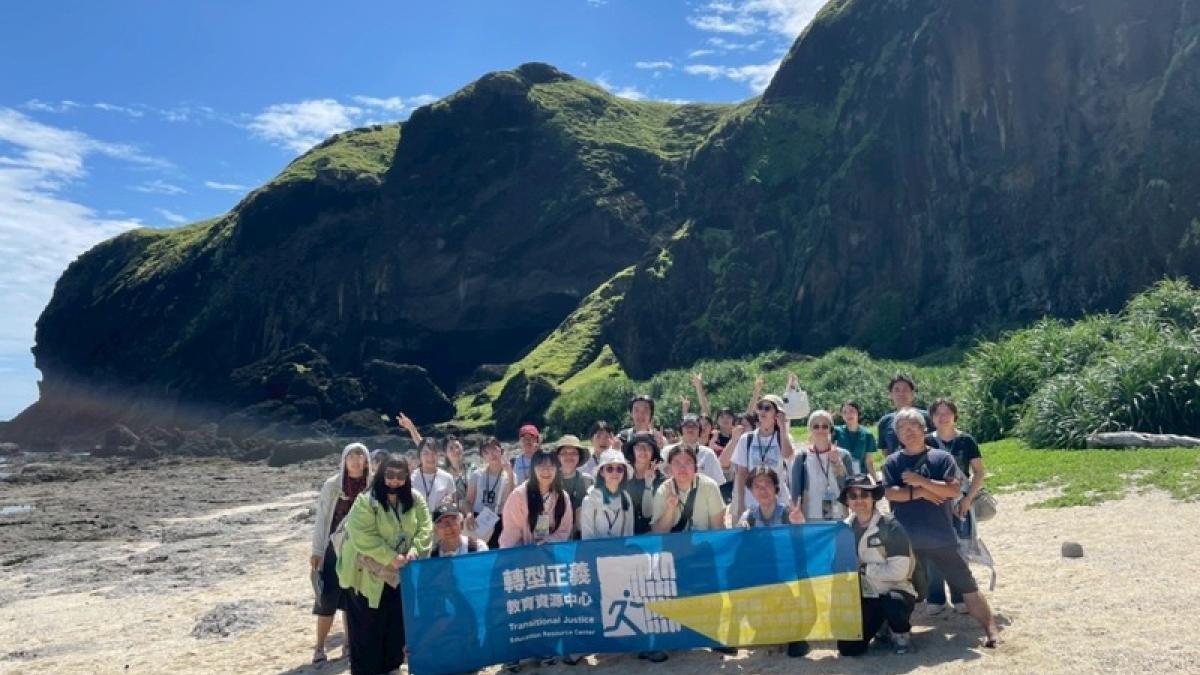
Secondly, if we examine what Taiwan's school history curriculum should actually 'catch up on,' the National Academy for Educational Research announced in early June the launch of five sessions of the 'Green Island Human Rights History Field Study and Education Promotion' program. This invites high school teachers and students to visit Green Island to 'understand the human rights conditions during the authoritarian era through firsthand experience, appreciate the value of today’s democratic freedoms, and recognize the efforts and sacrifices made in Taiwan’s democratization process.' This program shares the same goal as 'Have You Caught Up?'—falling under the broader theme of 'human rights and transitional justice'—and reflects ongoing, well-funded efforts by the Ministry of Education and the Ministry of Culture in recent years.
However, we must ask: Is 'human rights and transitional justice' the only subject Taiwan's history curriculum needs to catch up on? And even within this theme, is it sufficient to focus only on the February 28 Incident and the White Terror? The answer to both questions is clearly 'no.'
Taiwanese society and students do need to understand the February 28 Incident, the White Terror, and transitional justice, as these represent the painful origins of Taiwan's recent democratization. Even today, some people instinctively avoid or reject these topics, while others harbor deep resentment, believing historical narratives have been distorted and demanding resistance and accountability. In such a polarized environment, continued inquiry and dialogue are essential.
Yet, even among victims and their families, many believe that remembering the past is not an end in itself. Instead, attention should shift to the present and future. The true purpose of remembrance is twofold: to cherish the democratic and civil liberties achieved today, and to uncover truths, learn historical lessons, and cultivate critical thinking, awareness, and dialogue skills to prevent democratic backsliding and avoid repeating past tragedies.
Therefore, beyond understanding the painful beginnings of democratization, we must also learn the stories of how political parties and citizens overcame obstacles and worked together over decades to advance democracy. More importantly, we must develop 'historical thinking'—the ability to analyze, reflect, and engage in dialogue.
Simply contrasting 'human rights under authoritarian rule' with 'the preciousness of current democratic freedoms' oversimplifies history. It unintentionally suggests that democratization is a completed, linear process with glorious results, and that we should now merely appreciate what we have. This narrative resembles a fairy tale. Anyone with education or critical awareness of Taiwan’s current situation knows that democratization is not a straight path—it has been曲折, with progress and setbacks.
Linking 'democratization' and 'human rights' in this 'catch-up' campaign is necessary. However, this primarily reflects early-stage human rights concepts, focusing on political rights such as the right to life, privacy, freedom, and civic-political participation. Since the 20th century, human rights discourse has increasingly emphasized social and economic rights—such as dignified work, fair wages, labor safety, equal access to education, and health and public health protections. More recently, rights to peace, national and cultural identity, and sustainable environments and ecosystems have also gained prominence.
In light of this progressive and expanding vision of human rights, Taiwan still has much to improve. Focusing narrowly on the February 28 Incident, the White Terror, and transitional justice is far from sufficient.
'History' can be understood as 'the past that leads to the future.' We revisit the past consciously to understand the present and envision the future. Given the limitations of school history curricula, 'catch-up' is indeed necessary. But beyond human rights topics, what else should Taiwan's history education address to help us understand the present and wisely anticipate the future?
How we critically reflect on the past determines how firmly and wisely we understand the present and look toward the future. This is a question the Ministry of Education must seriously consider—and one for which every individual bears responsibility.
*Author is the lead writer of Zhun Bi Qun
FACT BOX
- Source: PR Times
- Category: News