In July, bottles of oil suddenly disappeared from supermarket shelves in Taiwan, and convenience stores stopped selling some bento boxes and bread. The reason was that a large amount of oil products exceeded the standard of the first-level carcinogen benzene, and the affected oil products continued to expand, with the supply chain being traced back to thousands of companies. This is a guide for foreigners to help them simply understand what happened in Taiwan's poisonous oil incident and what to do now.
Event Overview On June 30, 2026, Chung-Lian Oil & Fat, an upstream factory for edible oil located in Taichung Port, reported to the competent authority: a batch of soybean salad oil was found to contain 8.1 micrograms/kg of benzene (a) pyrene, which is approximately four times the legal limit of 2.0 micrograms/kg in Taiwan.
Benzene pyrene belongs to polycyclic aromatic hydrocarbons and is classified as a Group 1 carcinogen by the International Agency for Research on Cancer, meaning it is recognized as having the ability to cause cancer in humans.
This does not mean that eating one mouthful will cause cancer. The actual risk still depends on the amount consumed, frequency, and exposure time.
Taiwan's limit for general edible oils and fats for benzene pyrene is 2.0 micrograms/kg, which is the same as the EU's single limit. China's limit for edible oil is 10 micrograms/kg, while Japan has not set a standard value for polycyclic aromatic hydrocarbons in food.
Therefore, the same 8.1 micrograms/kg exceeds the standard in Taiwan and the EU. However, if only compared with China's single limit for edible oil, it is below that standard.
The earliest exposed problematic oil was approximately 1,300 tons, which had been shipped to Taishan, Fushou, and Fuma since April, and then went through repackaging, blending, and food processing to flow downstream.
After the incident was exposed, the competent authority gradually traced hundreds of items that needed to be preventively removed from the shelves, including sauces, baked goods, frozen foods, and ready-to-eat meals. The number of affected and pending verification companies once exceeded 1,000, covering all 22 counties and cities in Taiwan.
However, it must be noted that being listed for preventive removal or flow tracking does not mean that all products received by all companies have been proven to exceed the standard.
The above is the fact. Below is the absurdity.
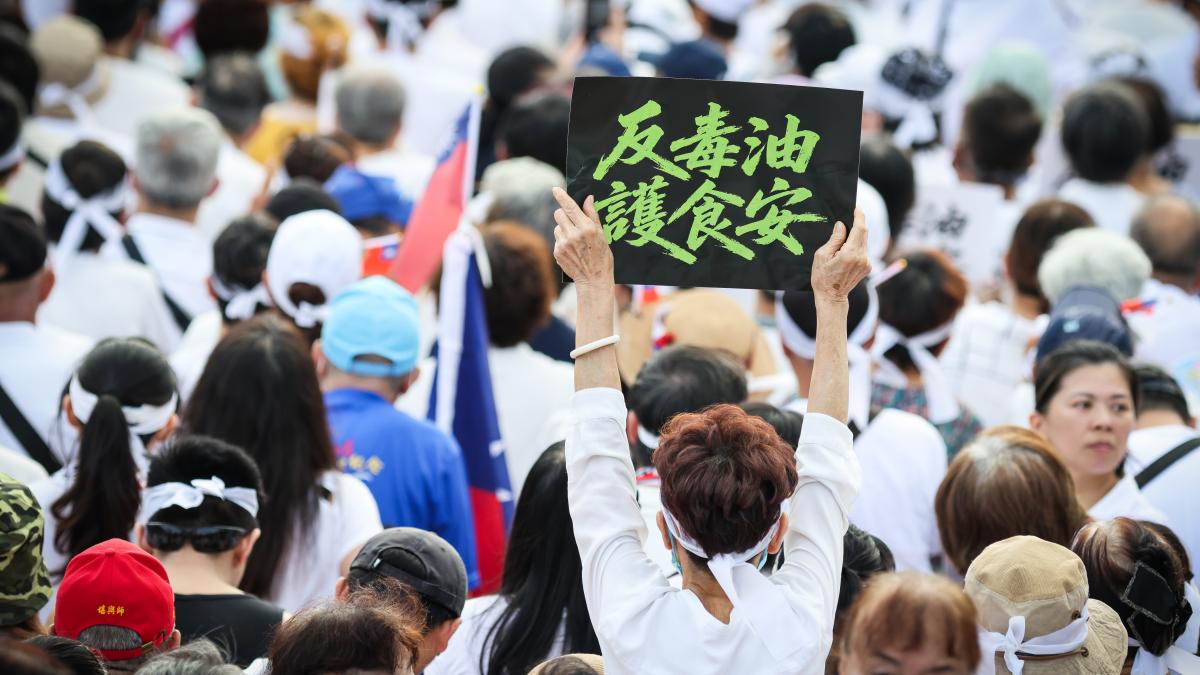
One, upstream and downstream are the same family Chung-Lian Oil & Fat was established in 1995 by Taishan, Fushou, and Fuma oil companies, with each holding approximately one-third of the shares. It is not an ordinary external supplier but a raw material procurement and initial pressing platform jointly used by the three shareholders: jointly purchasing soybeans, which, upon arrival at Taichung Port, are initially pressed by Chung-Lian and then returned to their respective factories for refining, blending, and packaging. The three "downstream customers" who received the related oil products the earliest are also shareholders of the upstream company. According to the current public timeline, the earliest downstream company to detect excessive results, which is unrelated to this shareholding structure, is Nanqiao. Different brands do not necessarily represent different defenses. Chung-Lian's oil fat occupies a considerable proportion of the domestic market, and some reports estimate it to be close to one-third. Changing the bottle does not necessarily mean changing to another supply chain. Two, upstream tested 1.6, downstream tested 8.0 Chung-Lian commissioned SGS for testing, and the result was 1.6 micrograms/kg, which is below the legal limit. Nanqiao detected 4.6 on May 13 and retested 8.0 on June 4. Chung-Lian stated that it was not until June 11, when informed by Fushou, that it became aware of the abnormality, and then sent the retained samples for testing, detecting 4.68 on June 25 and 8.1 on June 29, and reported to the competent authority on June 30. However, after the Food and Drug Administration inspected the factory, it was determined that Chung-Lian held a quality assurance meeting on June 15, and all three shareholder companies were aware of the matter and participated in the discussion, but none of them reported to the competent authority. The statement of the Food and Drug Administration director, Jiang Zhiqiang, was even more direct: Chung-Lian's action on June 30 "appears to be a voluntary report," but in reality, it was after the central and local authorities began inspecting the factory and grasping the situation of the meeting. In that half month, the competent authority did not have complete information, and the oil products continued to flow. Related batches and their downstream products showed obvious differences in values such as 1.6, 4.6, 8.0, and 8.1. Regardless of the cause being sampling, batch differences, or inspection procedures, the existing quality control could not stably answer the most basic question: Is this oil safe? The speed of recall is itself the cost of delay. As of July 3, the recall volume announced by the competent authority at the circulation end was only 17.4 tons; by July 7, it was approximately 43.3 tons. By July 15, the cumulative recall of unqualified batches was approximately 1,661.6 tons, and another approximately 6,020.6 tons were listed for preventive recall. These figures have different statistical criteria and cannot be interchanged, but the recall scale has obviously expanded approximately two weeks after the incident was exposed. Three, the inspection standards were relaxed tenfold Initial investigations found that Chung-Lian, starting in 2025, relaxed the acceptance standards for soybean raw materials from 0.5% to 5%, relaxing them tenfold at once. The competent authority suspects that some soybeans may have been exposed to combustion products during drying, storage, or high-temperature processing before transportation, and were not intercepted during raw material acceptance, refining, or quality control stages after entering the factory. As of the time of writing, this is still the direction of the investigation, not the confirmed cause of pollution. Under current regulations, the frequency of routine inspections for such oil fat manufacturers for related items may be as low as once every half year. Four, the list is growing day by day In the early stages of the incident, the Food and Drug Administration did not immediately publish the complete downstream list, one of the reasons being that the list was still being verified, and many downstream companies themselves were victims. Writing "previously purchased" directly as "product is poisonous" could indeed harm innocent companies. But the government first published part of it and then supplemented it day by day; companies issued their own statements; local governments conducted separate inspections; distributors decided on their own whether to remove from the shelves or not. On July 9, the Executive Yuan announced the expansion of preventive removal, but on July 15, the Yilan County Government still found problematic batch numbers outside the previously announced scope by the central government. Information is not being withheld, but it is being delivered in the manner of "updating part of it every day." Consumers can only stop buying while waiting for the government to complete the supply chain. Five, record-breaking fines, a large part of which are fines for "knowing but not saying" The Food and Drug Administration first imposed a fine of 165.2 million yuan on Chung-Lian, setting a record for food safety administrative penalties in Taiwan. Most of this was aimed at the manufacture and sale of oil products that do not meet regulations, considering the delay in reporting, false reporting, and evasion of recall responsibility; another 50 million yuan was related to failure to report in accordance with the law. Subsequently, Chung-Lian was additionally penalized 6 million yuan for problems with oil product batch numbers and traceability data reporting, bringing the central cumulative penalty to 171.2 million yuan. The Executive Yuan passed the draft amendment to the Food Safety and Sanitation Management Act on July 23, including: clearly stipulating that businesses must report within 24 hours; increasing the upper limit of fines for delayed and concealed reporting; incorporating preventive removal into the law; establishing a central command mechanism for major food safety incidents. The draft still needs to be sent to the Legislative Yuan for deliberation and has not yet come into effect. The "immediate reporting" in the law is not immediate enough, so the government decided to add a clock. Six, after the fines, there are searches and detentions On July 9, the Taichung District Prosecutor's Office searched Chung-Lian, Fushou, Fuma Oil, and Taishan Enterprises, seizing production records, inspection reports, shipping data, internal emails, meeting minutes, and electronic devices. The prosecution believes that the general manager of Chung-Lian, Yu Lingchong, is suspected of forging or destroying evidence and has the possibility of colluding with accomplices and witnesses. The court initially ruled for bail, but after the prosecution's appeal, it was changed to detention and no visitation. Administrative procedures are pursuing unqualified products, delayed reporting, and false reporting; criminal investigations have already involved forgery of documents and the prosecution's alleged evidence destruction and collusion suspicions. However, whether it will be established ultimately still needs to be based on the court's judgment. Seven, angry citizens take to the streets On July 25, the opposition held a food safety rally on Ketagalan Boulevard, self-statistically counting 200,000 participants. The demands were for President Lai Ching-te to apologize and for Premier Cho Jung-tai to resign. The following are verifiable facts: The source of pollution has not yet been determined; the competent authority has repeatedly expanded the scope of removal; the central government has never published a complete downstream list; after the comprehensive preventive removal, local governments still found batch numbers that companies did not report; and before the final cause of pollution is clarified, the central government has already allowed some oil products to be re-shelved. A 12-year cycle In 2013, Datong Changji used low-priced oil to impersonate olive oil and used copper chlorophyll to color it. The person in charge, Gao Zhenli, was sentenced to 12 years in prison and the sentence was finalized. Afterward, the law was amended: strengthening food labeling and traceability systems. In 2014, Qiangguan purchased inferior oil fat from underground factories to make "Quan Tong Fragrant Pork Oil," which flowed to 285 companies. The chairman, Ye Wenxiang, was sentenced to 22 years in prison and the sentence was finalized. The case was not discovered by the competent authority's routine inspection but was reported by an old farmer who noticed the underground oil factory discharging unknown liquids. Afterward, the law was amended: establishing food traceability and electronic reporting, and requiring some oil fat companies to set up laboratories. In the same year, the related cases of Dingxin involved the import of oil fat from Vietnam, with the dispute including whether the raw materials met the quality requirements for human consumption and how the companies reported, refined, and sold. The Changhua District Court ruled not guilty in the first instance, causing nationwide resistance; the case went through the second instance and retrial, and Wei Yingchong was partially convicted and the sentence was finalized. In 2023, the prosecution determined that the remaining prison term did not need to be served again. The three cases have different plots: some involve adulteration, some involve waste oil, and there are also legal disputes over whether the raw materials are suitable for human consumption. This time, Chung-Lian is different. Currently, there is no evidence that the company intentionally purchased waste oil. The prosecution is investigating issues related to reporting, filing, internal records, and suspected evidence destruction. The common point is that every time an incident occurs, the government announces that it will fill the gaps in the system. When the next incident occurs, society discovers new gaps or discovers that the old system was not actually executed. Self-protection guide for foreigners Afterward, the government gradually expanded the scope of preventive removal. However, the statement that "all that should be removed have been removed" is a judgment made based on the reporting and inspection results at that time. Comprehensive prevention Keywords:
FACT BOX
- Source: PR Times
- Category: 调查