Typhoon Noul (international designation: Noul), the 12th of the year, made landfall along the eastern coast of Guangdong Province, China, in the early hours of Sunday (July 26). According to China's meteorological authorities, Noul is the first typhoon to hit Guangdong this year and the strongest to make landfall in China so far in 2026. As of midnight on the 26th, Guangdong's Emergency Management Department reported that over 715,000 people had been evacuated across the province. The typhoon is expected to move further inland, bringing sustained strong winds and heavy rain to Guangdong, Jiangxi, Hunan, and Hubei, increasing the risk of secondary disasters such as flash floods, landslides, and urban flooding.
July 25, 2026: The Mong Kok area of Hong Kong before the arrival of Typhoon Noul. (AP)
Heavy rains in southern China are expected to continue moving northward due to the typhoon's residual circulation. The China Meteorological Administration has issued a typhoon orange alert, stating that Noul intensified from a severe tropical storm to a typhoon on the morning of the 25th, with its center located in the southeastern waters off Shanwei, Guangdong. It then moved in a west-northwesterly direction, making landfall along the coastal areas between Hong Kong and Huilai-Shanwei, Guangdong, during the night of the 25th into the early morning of the 26th.
Meteorological authorities forecast heavy to torrential rains across eastern and southern coastal areas and northern mountainous regions of Guangdong from July 25 to 27, with localized areas experiencing extreme downpours. Cumulative rainfall could reach 250 to 500 millimeters. As Noul moves inland, persistent heavy rainfall is expected in southern Fujian, Jiangxi, and Hunan.
Affected by Noul's outer circulation, the Hong Kong Observatory issued a No. 9 signal for gale or storm-force winds early Sunday morning. As the typhoon gradually moved away, the signal was downgraded to No. 3 strong wind signal at noon and further to No. 1 standby signal in the afternoon. The Observatory warned that although Noul is moving away from Hong Kong, outer rainbands will continue to bring squally showers and thunderstorms, with rough seas and swells. The public is advised to stay away from the shoreline and avoid all water activities.
The Hospital Authority reported that by 10 a.m. Sunday, 18 people had been injured during the storm and taken to hospitals for treatment. Macau was also affected by the typhoon's outer rainbands, experiencing heavy rain and strong gusts over the weekend. Scattered showers and thunderstorms are expected to continue over the next one to two days. Hong Kong media urged the public to closely monitor the latest updates from the Observatory and prepare thoroughly for strong winds and heavy rain to ensure personal and property safety.
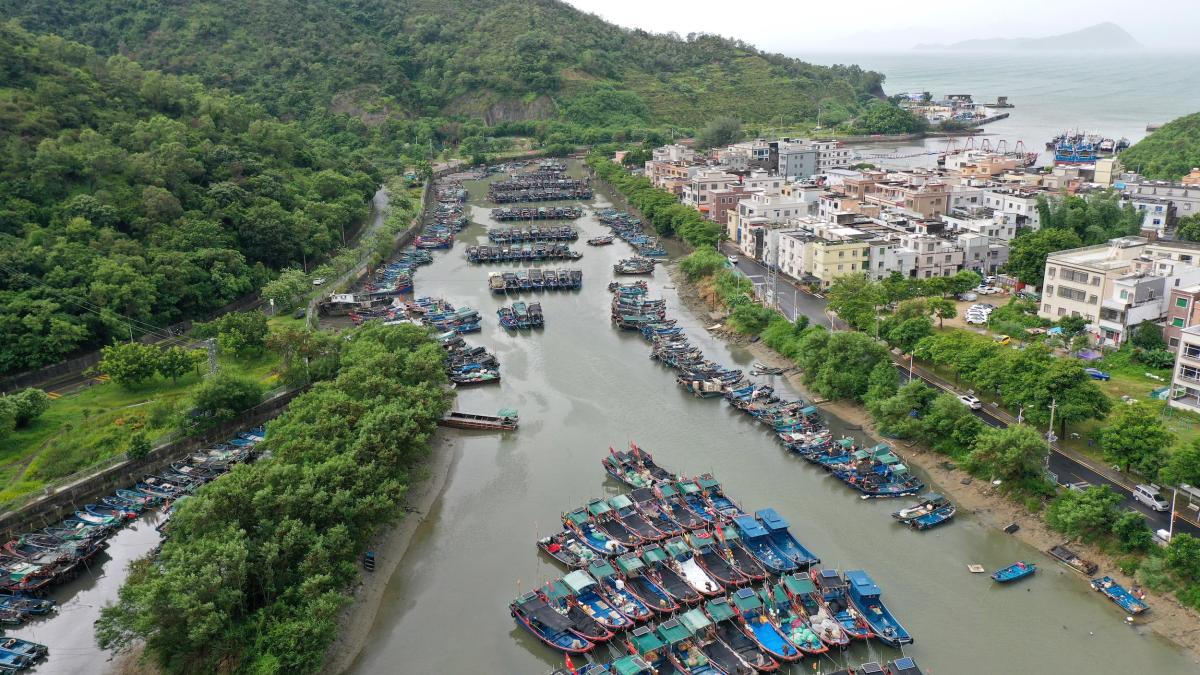
Transport services, including flights and high-speed rail, were significantly disrupted. The Guangdong Provincial Flood, Drought, and Typhoon Prevention Headquarters ordered all fishing vessels east of Zhuhai to return to port and all offshore workers to evacuate ashore. Some coastal scenic areas were closed, and several cross-sea ferry routes suspended operations.
High-speed and conventional trains within Guangdong began suspending services from July 25, with multiple rail lines continuing to be affected on the 26th. Water passenger routes in Shenzhen and Zhuhai also temporarily halted services.
The Hong Kong Airport Authority reported 350 flight cancellations on Sunday and activated its flight re-routing system, aiming to restore normal operations by Monday morning. Cathay Pacific canceled all arriving and departing flights from 1:15 a.m. to 6 p.m. Sunday. HK Express canceled about 30 flights, while Greater Bay Airlines and Hong Kong Airlines also experienced numerous cancellations and delays.
Citybus announced it would gradually suspend services from the early hours, while MTR's heavy and light rail services operated on a limited basis under Signal No. 8, though frequencies may be adjusted. For the past two days, many residents of Hong Kong and Macau have been exchanging transport updates on social media. Some travelers decided to extend their trips, rebooking flights and hotels, saying, 'Might as well stay an extra day or two,' while many others anxiously awaited the latest flight information.
FACT BOX
- Source: PR Times
- Category: News