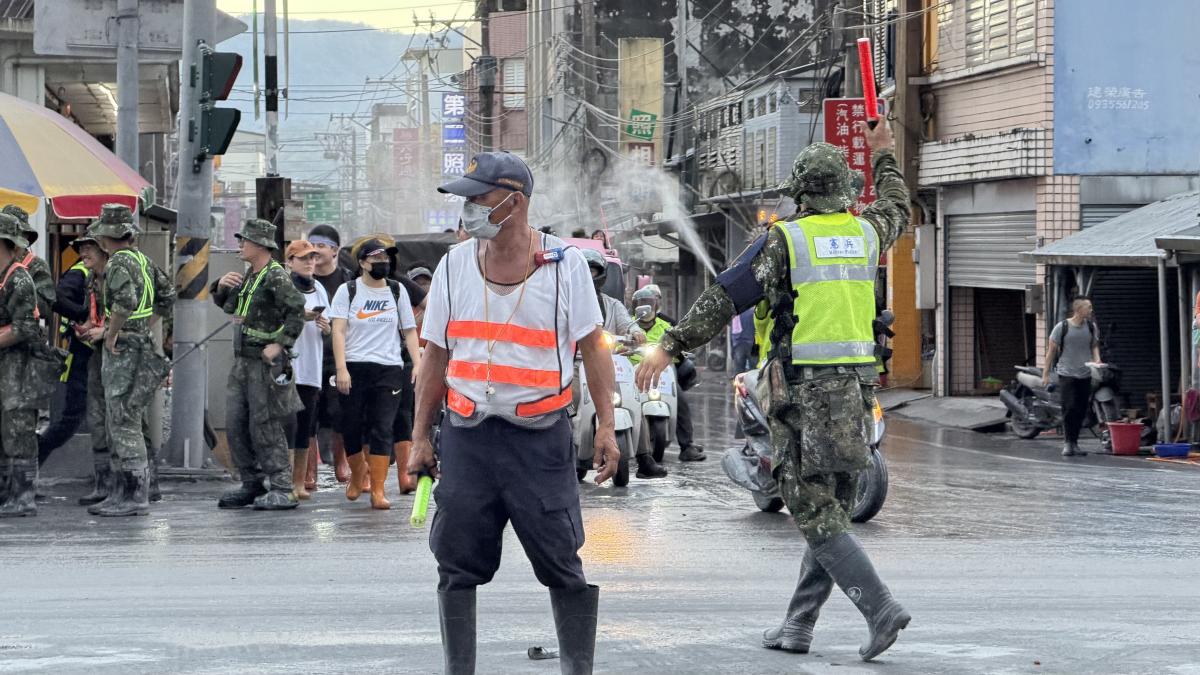
Lung cancer has ranked as the leading cause of cancer deaths in Taiwan for 22 consecutive years. In addition to well-known risk factors such as family history and smoking, occupational exposure is also a significant contributor. On the 27th, the Taipei City Department of Health announced an expansion of its lung cancer screening subsidy program. In addition to lowering the eligible age for police and firefighters from 40 to 35, starting August 1, volunteer police, volunteer firefighters, and volunteer traffic officers will also be included in the subsidy program.
According to 2025 mortality statistics from Taipei City, lung cancer remains the top cause of cancer-related deaths. Risk factors for lung cancer are numerous, including smoking, kitchen fumes, and genetic predisposition, but occupational exposure to hazardous environments cannot be overlooked.
Huang Jianhua, Director of the Taipei City Department of Health, stated that in addition to aligning with national policies for publicly funded lung cancer screening, the city has since last year provided screening subsidies for police and firefighters aged 40 and above serving in Taipei. Last year, 765 individuals underwent screening, with two confirmed cancer cases identified.
The World Health Organization's International Agency for Research on Cancer (IARC) has classified outdoor air pollution, particulate matter, diesel engine exhaust, and fire smoke as Group 1 carcinogens for lung cancer. Due to the nature of their work, police and firefighters are frequently exposed to high-risk environments such as traffic exhaust, fire smoke, and chemical toxins, placing their lungs under chronic inflammatory stress and increasing the accumulation of carcinogens.
Chen Jin-Xing, Director of the Department of Surgery at National Taiwan University Hospital, stated that lung cancer has become Taiwan's 'new national disease,' with as many as 60–70% of clinical patients having no smoking history. This highlights that environmental exposure and family genetics are critical risk factors. Moreover, early-stage lung cancer often presents no symptoms, and by the time patients seek medical attention due to symptoms like coughing or pain, the optimal treatment window is often missed.
Chen emphasized that low-dose computed tomography (LDCT) is currently the only tool capable of accurately detecting early-stage lesions smaller than 1 cm. If detected at Stage I, the five-year survival rate can exceed 90%.
Currently, Taipei City collaborates with 29 hospitals to provide publicly funded lung cancer screening services. Eligible individuals include heavy smokers aged 50–74 with a smoking history of at least 20 pack-years who are either current smokers or have quit within the past 15 years, as well as men aged 45–74 or women aged 40–74 with a family history of lung cancer (diagnosed in a first-degree relative such as parent, child, or sibling). These individuals are eligible for an LDCT scan once every two years.
The Taipei City Department of Health emphasized that the expanded subsidy policy not only lowers the eligible age for police and firefighters from 40 to 35 but also includes volunteer police, volunteer firefighters, and volunteer traffic officers starting August 1. All police officers, firefighters, volunteer police, volunteer firefighters, and volunteer traffic officers aged 35 and above serving in Taipei City can receive a free low-dose chest CT scan every two years at one of the five major campuses of Taipei City Hospital (Zhongxing, Ren'ai, Heping, Yangming, and Zhongxiao).
FACT BOX
- Source: PR Times
- Category: キャンペーン