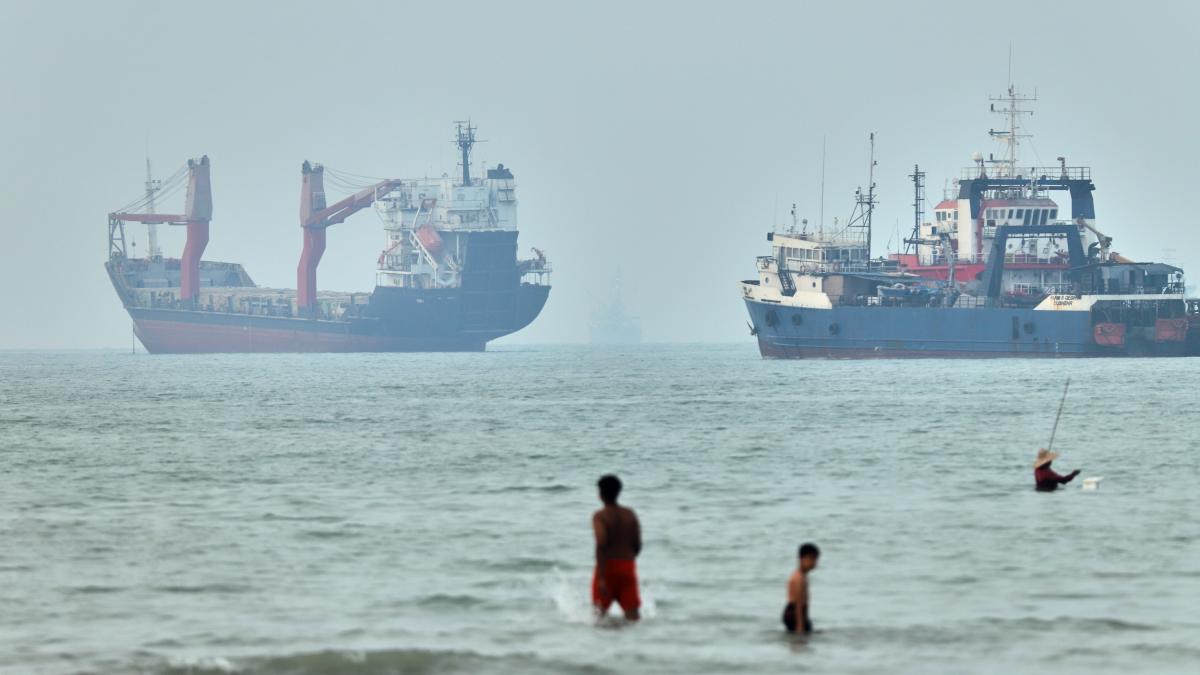
After two consecutive weeks of retaliatory airstrikes, the United States and Iran both pressed the 'pause' button on military operations over the weekend. As a result, international oil prices plunged over 4% in early Asian trading on the 27th, slightly alleviating pressure from the energy crisis and inflation. However, Reuters reports that shipping data and statements from U.S. and Iranian officials indicate the current ceasefire resembles more of a 'tactical breather,' with the two major energy corridors in the Middle East—the Strait of Hormuz and the Bab el-Mandeb Strait—still facing severe blockage risks.
According to Reuters and the Associated Press, international oil prices hit a one-week low after the U.S. and Iran refrained from launching new attacks for two consecutive days. Global benchmark Brent crude futures fell $3.96 (4.1%) on the 27th during early Asian trading, settling at $92.82 per barrel, and briefly dipped below the $90 threshold during the session. U.S. West Texas Intermediate (WTI) crude futures also dropped sharply by $4.02 (4.5%), reaching $85.29 per barrel.
Compared to earlier levels when the U.S.-Iran conflict spread to the Red Sea, affecting Saudi Arabia’s crude exports and pushing oil prices above $100 per barrel, current international oil prices have clearly retreated.
September 21, 2016, oil facilities in Fujairah, United Arab Emirates. (AP)
Analysts at ING noted: 'The sharp drop in oil prices (on the 27th) clearly reflects the market’s eagerness for signs of de-escalation.' However, analysts at Singapore’s United Overseas Bank (UOB) warned that if shipping risks in the Middle East and Ukrainian drone attacks on Russian refineries continue to disrupt supply, crude prices will remain high, posing upside risks to global inflation.
An Iranian merchant involved in import-export business in Tehran told Reuters he doubts the pause in attacks will last long. He said: 'The entire country is now caught in a dilemma. Trump is playing political games with Iran. He neither ends the war, nor withdraws from the Middle East, nor takes decisive action. It’s exhausting.'
U.S. Military Ammunition Shortage Raises Doubts
U.S. Ambassador to the United Nations Mike Waltz confirmed in interviews with Fox News and NBC that Donald Trump has decided to halt U.S. military strikes against Iran, aiming to 'leave room for diplomatic negotiations.' Waltz revealed that U.S. officials have been holding intensive communications over the past few days with Oman, Iran, and other mediators.
While Waltz publicly dismissed claims that U.S. missile defense inventories were depleted, emphasizing that the U.S. military 'has all the resources it needs,' he also admitted that Defense Secretary Pete Hegseth 'inherited a tight resource situation.' Additionally, Reuters cited U.S. officials stating that over the past two weeks, the U.S. military conducted nightly bombing campaigns to counter Iran’s threats to the Strait of Hormuz, and most of the originally designated Iranian targets have already been destroyed.
July 22, 2026, at Dover Air Force Base in Delaware, U.S. military personnel are transporting the remains of comrades killed on the Middle Eastern front. (AP)
This suggests that if Trump wishes to continue or escalate pressure, he must carefully consider his next steps. 'Resuming large-scale operations' remains an option, but one U.S. official said that Chairman of the Joint Chiefs of Staff Dan Caine privately warned Trump that restarting large-scale military action would carry extremely high risks, especially given the significant depletion of U.S. missile inventories in the Middle East.
According to Axios, U.S. Central Command (CENTCOM) Commander Brad Cooper also recommended ending bombing operations against Iran, as further strikes would yield diminishing returns. CNN reported that Vice President JD Vance expressed reservations about continued airstrikes. However, both the Joint Chiefs of Staff and CENTCOM declined to comment on these reports.
Diplomatic Efforts Focus on Hormuz Passage Rights
In response to the U.S. halting bombing operations, an Iranian military spokesperson confirmed to Iranian state television that Iran also stopped retaliatory attacks against neighboring countries hosting U.S. military bases over the past two days. A senior Iranian official told Reuters that Tehran’s stance is clear: if the U.S. stops, Iran will stop—and this message has been conveyed to Washington. However, the official emphasized that Tehran remains 'more skeptical than optimistic' about Trump’s decision, viewing it as a 'tactical pause' rather than a genuine effort to de-escalate.
Middle Eastern officials told the Associated Press that both sides still hope to return to the framework of the 60-day temporary ceasefire agreement signed in mid-June. The core compromise under discussion centers on allowing Iran to manage vessel passage through the Strait of Hormuz with fewer restrictions. Iranian Foreign Ministry spokesperson Esmail Baghaei confirmed that Iran is communicating with Oman on safe passage through the Strait of Hormuz and has made progress, while also stressing that Iran’s legal stance on the strait’s status remains unchanged.
Middle East’s Two Key Energy Routes Remain Paralyzed, But Chinese Tankers Pass Unimpeded
Although major offensive actions between the U.S. and Iran have paused, Reuters emphasizes that the two critical Middle Eastern shipping lanes remain on the brink of paralysis. Tracking data from U.S. Navy monitoring agencies and analytics firm Kpler show that during the weekend, fewer than 10 commodity vessels passed through the Strait of Hormuz daily—hitting a three-week low. Analyst Saul Kavonic at Australian brokerage MST Marquee noted that shipping traffic is unlikely to rebound quickly until shippers confirm safety.
Additionally, the Bab el-Mandeb Strait, the strategic chokepoint in the Red Sea, has worsened due to Houthi threats to attack Saudi oil tankers. Houthi spokesperson Yahya Saree confirmed that they attacked oil facilities operated by Saudi Aramco in Jizan and Yanbu last Saturday.
August 25, 2024. In the Red Sea, the Greek oil tanker Sounion, attacked by Houthi militants, burns. (AP)
Houthi threats and attacks caused the number of commodity vessels passing through the Bab el-Mandeb Strait on Sunday (26th) to plummet to just 11—the lowest in recent months. However, among the vessels leaving the Red Sea were two Hong Kong-flagged very large crude carriers (VLCCs), the 'New Explorer' and 'New Pearl,' each carrying 2 million barrels of crude oil bound for Ningbo and Zhoushan in China. This marks the fourth Chinese VLCC to depart the Red Sea since the Houthis declared a blockade.
On the other side of the Middle East chessboard, Israel’s Prime Minister’s Office confirmed that Prime Minister Benjamin Netanyahu will travel to Washington on the 28th to meet with Trump. In an interview with Fox News, Netanyahu expressed 'full support' for Trump’s efforts to weaken Iran and force it to abandon its nuclear program, stating, 'If he can achieve this without large-scale military conflict, that’s good—why not?' However, Netanyahu warned that if Iran or its proxies attack Israel again, 'they will make a fatal mistake.'
FACT BOX
- Source: PR Times
- Category: News
- Organizations: Saudi Aramco