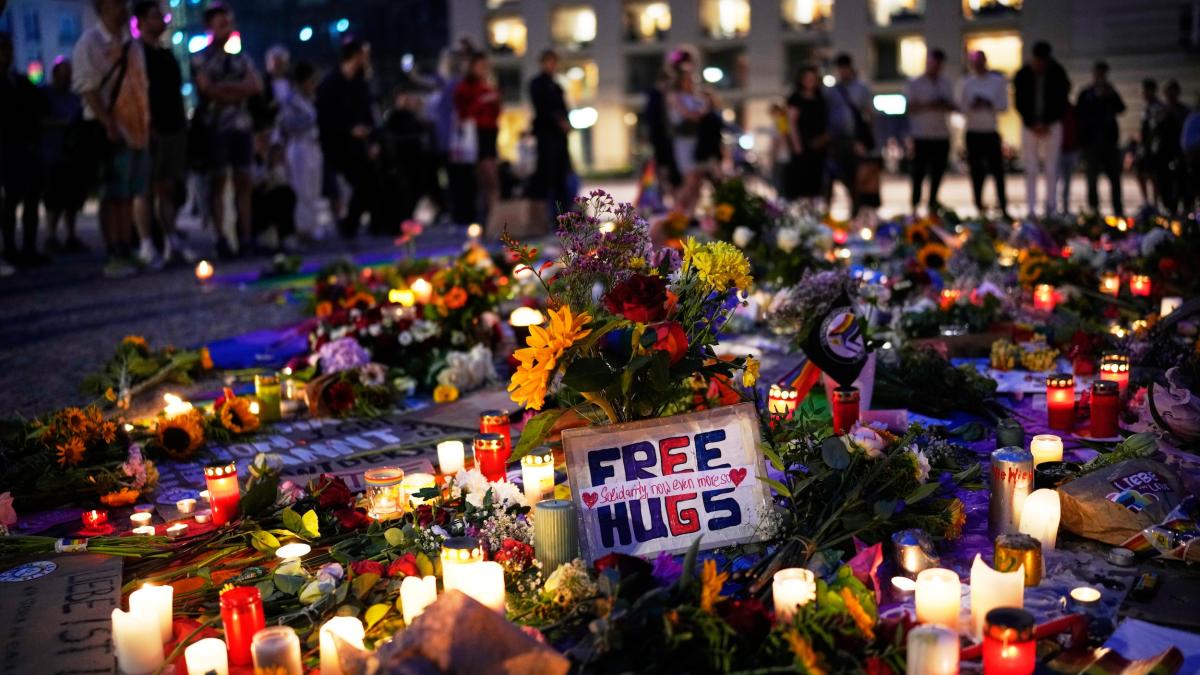
On July 26th, local time in the German capital Berlin, a major attack occurred during the annual 'Christopher Street Day' (CSD) left-wing pride parade, where a van rammed into the crowd, resulting in 1 death and 29 injuries. The Berlin police immediately launched a large-scale manhunt and the next day, in the Spandau district in the west, a special forces team surrounded the suspect's hideout. The 21-year-old suspect attacked the police with a knife and was shot and subdued by the police, dying on the spot. The German prosecution initially identified the suspect as having been influenced by the extremist ideology of the Islamic State (ISIS), and the case has been classified as a terrorist attack involving Islamic extremism. According to the German Bild newspaper, the suspect who was killed was named Abdul Ballut, 21 years old. The prosecution investigation pointed out that he was born in Germany in 2005, and his mother immigrated to Germany from Lebanon in 2002. Before turning 18, Ballut had gone to Lebanon and was suspected of planning to join the Islamic State via Syria. During his time in Lebanon, he was sentenced to 3 months in prison by a local court for allegedly 'inciting religious and sectarian conflict.' After serving his sentence, he returned to Germany and entered via Berlin Brandenburg Airport, and was later sentenced to 1 year and 10 months in juvenile detention by a German court for other cases. In May this year, he was released early, and the court simultaneously required him to receive de-radicalization counseling to reduce the risk of re-radicalization. Just a few months after his release, he was suspected of committing this attack that caused significant casualties. Merz: Germany will not allow the spread of hatred for freedom and values. After the incident, the Berlin police mobilized special forces (SEK) to launch a manhunt. The police finally discovered the suspect's hideout in a garden house in the Spandau district. When the special forces entered the scene to prepare for the arrest, the suspect suddenly attacked the police with a knife, and the police immediately opened fire in response. The suspect was shot and fell to the ground around 6:34 PM local time. The Berlin fire department immediately arrived at the scene to perform cardiopulmonary resuscitation and other emergency measures, but due to the severity of the injuries, the suspect was pronounced dead on the spot. The Berlin police spokesman confirmed that the fire department immediately carried out emergency and resuscitation measures, but the suspect ultimately died at the scene. This ramming attack occurred during the Berlin annual LGBT pride event CSD parade. The police pointed out that a van suddenly rammed into the crowd participating in the parade and celebration activities at high speed, causing at least 1 death and 29 injuries, some of whom were seriously injured. After the incident, the scene fell into chaos, and a large number of police, firefighters, and medical personnel were involved in the rescue. The German police then classified the case as a suspected terrorist attack with an Islamic extremist background and launched an inter-agency counter-terrorism investigation. Currently, relevant agencies are still clarifying whether it involves other accomplices or terrorist organization connections. German Chancellor Friedrich Merz (Friedrich Merz) made a statement after the incident, expressing condolences to the victims and the injured. He said that the government is currently most concerned about the victims of the terrorist attack and their families, hoping that all the injured can recover as soon as possible. Merz pointed out that these terrorists and extremists 'have no place in our society,' and Germany will not allow terrorism and the spread of hatred for freedom and values to continue. He emphasized that Germany will defend freedom, openness, and a democratic society, and regardless of political differences, the entire society should jointly face the threats brought by terrorism. Merz said that the German people are more united and stronger than the terrorists, and the government will do its best to protect the country's freedom, openness, diversity, and democratic system. Left-wing introduces Islamic extremists Although the police quickly identified and killed the suspect, the German government has been criticized by the opposition for insufficient counter-terrorism measures due to the frequent occurrence of violent incidents involving Islamic extremism in recent years. Wolfgang Kubicki, chairman of the center-right Free Democratic Party (FDP) in Germany, said that if society only repeats the same discussion every time a major terrorist attack occurs, but fails to make truly effective policy adjustments, it will reflect the powerlessness of the state in facing the threat of terrorism. Kubicki pointed out that although there is no 100% security guarantee in the world, the government should still regard those who have publicly declared themselves enemies of the free democratic system as a real security threat, rather than just staying in the post-event review. Kubicki believes that Islamic extremism not only threatens the freedom values of Western countries but also directly endangers people's lives and safety. Currently, Islamism is one of the biggest security challenges facing the free democratic order in Germany, and the government should more clearly acknowledge its threat and take more active and effective counter-terrorism and security measures. This attack incident has once again sparked discussions in German society about immigration policies, Islamic extremism, and European political lines. Since the European refugee crisis in 2015, many Western European countries, including Germany, have accepted a large number of refugees and immigrants from Syria, Iraq, Afghanistan, and other Middle Eastern and North African regions. At that time, the German government, led by former German Chancellor Angela Merkel (Angela Merkel), adopted a relatively open refugee policy, gaining the support of the Social Democratic Party (SPD), the Greens, and other left-leaning parties, advocating the acceptance of refugees from war-torn areas based on humanitarianism, and helping immigrants integrate into society through social welfare, education, and employment. However, in the past decade, Germany, France, Belgium, Austria, and other countries have experienced multiple terrorist attacks involving Islamic extremism, and some conservative and right-wing parties have criticized that Europe's long-term immigration policy, asylum system, and response to religious radicalization issues have been insufficient, gradually accumulating security risks, and making immigration policy one of the most controversial issues in European politics. European left supports Middle East terrorism actions After Hamas' attack on Israel in October 2023, which sparked a new round of Israeli-Palestinian conflict, the divide in European society over the Palestinian issue has become more apparent. Including Germany, the UK, France, and other places have seen large-scale pro-Palestinian protest activities, many of which were jointly initiated by left-wing groups, student organizations, human rights groups, and Muslim communities, advocating an immediate ceasefire, opposing Israeli military actions, and demanding that the government stop providing military support to Israel. During some protest activities, there have been instances of supporting Hamas, Hezbollah, and other organizations listed as terrorist organizations by the EU, as well as slogans or chants, and even incidents of inciting anti-Semitic speech and violence, causing the German government to be highly alert. The German police have therefore repeatedly restricted or disbanded some gatherings and strengthened the crackdown on behaviors suspected of advocating terrorist organizations. Conservative and right-wing parties criticize that some left-wing groups adopt an overly lenient attitude towards radical Islamic forces and fail to fully recognize the security threats posed by religious extremism. This controversy has become an important focus of political confrontation in Germany and Europe in recent years.
FACT BOX
- Source: PR Times
- Category: News