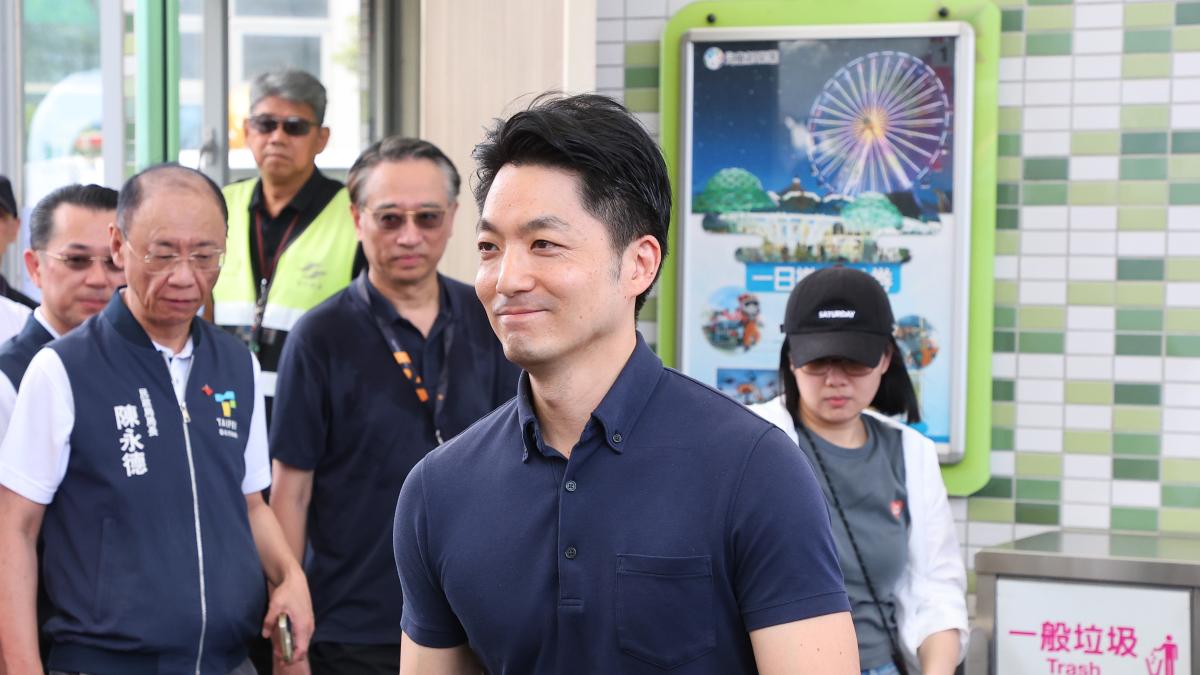
Taipei Mayor Chiang Wan-an has taken a strong stance on the Chung Lian tainted oil issue, not only calling for street protests on the 25th but also advocating for a cabinet reshuffle during an interview with veteran media personality Huang Kuang-chin on the 27th. He revealed this was based on suggestions from multiple legislators.
According to Feng Media, even before KMT councilors Yang Chih-tou and Ho Yuan-kai began hunger strikes, several legislators had already discussed using a 'cabinet reshuffle' as a strategy regarding the tainted oil and food safety issues. Ultimately, two Taipei city-elected legislators proactively suggested the idea to Chiang Wan-an, who adopted it and publicly raised it during the interview.
One key reason KMT legislators are now supporting the cabinet reshuffle is strategic: rather than being tied to KMT Chairperson Cheng Li-chun, who faces pro-China allegations, in the 2028 elections, it would be easier to run alongside high-approval leaders like Chiang Wan-an, Taoyuan Mayor Chang Shan-cheng, and other popular mayors in a re-election campaign.
In fact, Chiang had previously mentioned a cabinet reshuffle before the large-scale recall movement. However, at that time, it was uncertain whether the recalled KMT legislators would reach the final voting stage, and public sentiment leaned toward the 'Sunflower Movement,' making legislators reluctant to support such a move. This time, however, after Chiang's call, discussions have emerged within the KMT caucus.
Even before Yang and Ho's hunger strikes, KMT legislators had already discussed the possibility. This shift is driven not only by the KMT's success in the recalls but also by three major reasons.
First, the 2026 local elections already involve several legislators running for office, with a high likelihood of vacancies, creating a natural need for by-elections. Thus, a cabinet reshuffle leading to by-elections would be a logical step.
Second, food safety and民生 issues have been persistent weaknesses of the Lai administration since taking office. Pushing for a cabinet reshuffle could gain broad public support.
Third, and perhaps most importantly, rather than running alongside Cheng Li-chun, who faces pro-China suspicions, in 2028, triggering a cabinet reshuffle now would force the DPP to hold a new legislative election. This would allow KMT legislators to run for re-election alongside popular leaders like Chiang Wan-an, Chang Shan-cheng, New Taipei Mayor Hou Yu-ih, and Taichung Mayor Lu Hsiu-yen—making the electoral battle potentially easier.
It is understood that after receiving the proposal from two Taipei legislators, Chiang Wan-an had already prepared briefing materials, which were distributed to legislators in the afternoon. The key points included:
Chiang stated that recent discussions with legislators about the possibility of a cabinet reshuffle have led him to support the idea if there is consensus among opposition parties. The DPP must take political responsibility.
First, one month after the tainted oil incident, the central government has failed to reveal the truth, the Premier refuses to take responsibility, and President Lai refuses to apologize.
Second, over 200,000 people flooded Ketagalan Boulevard on July 25 to voice their anger. The Premier's refusal to take political responsibility makes it impossible to justify this to the public. The Lai administration's Executive Yuan fails to co-sign or enforce laws, creating a severe conflict between the legislative and executive branches—something the public does not welcome.
Third, Chiang further proposed that if Lai dissolves the legislature, a legislative re-election must occur within two months. This would significantly impact local elections, decoupling legislative elections from presidential elections. Each legislative election could then serve as a midterm review and check on presidential power.
However, while many legislators are optimistic, the KMT caucus has not yet made an official decision, and the party headquarters was unaware beforehand, leaving its stance unclear.
Additionally, some within the KMT warn that legislators aiming to succeed in the 2028 legislative elections may be unwilling to wait another two years. Moreover, as central representatives, running alongside mayors and councilors could focus the campaign on food safety, but the DPP's 'resist-China, protect Taiwan' narrative might still gain traction—factors that require careful observation.
More exclusive insights from Feng Media: · Taipei City government officials turn into online trolls, insulting citizens as 'low IQ' and mocking Su Chiao-hui's appearance. Chiang Wan-an coldly responds: 'The Parks Department will explain.' · Right after Chiang Wan-an criticized 'the monster of document requests,' Jan Shu-pei demands five years of photocopy paper records from the city government—'submit within three days.' · Did Chiang Wan-an use the July 25 Ketagalan protest to target a 'big figure'? Chang Ching-sen reveals the precise 2028 power play: a two-birds-with-one-stone strategy.
FACT BOX
- Source: PR Times
- Category: News