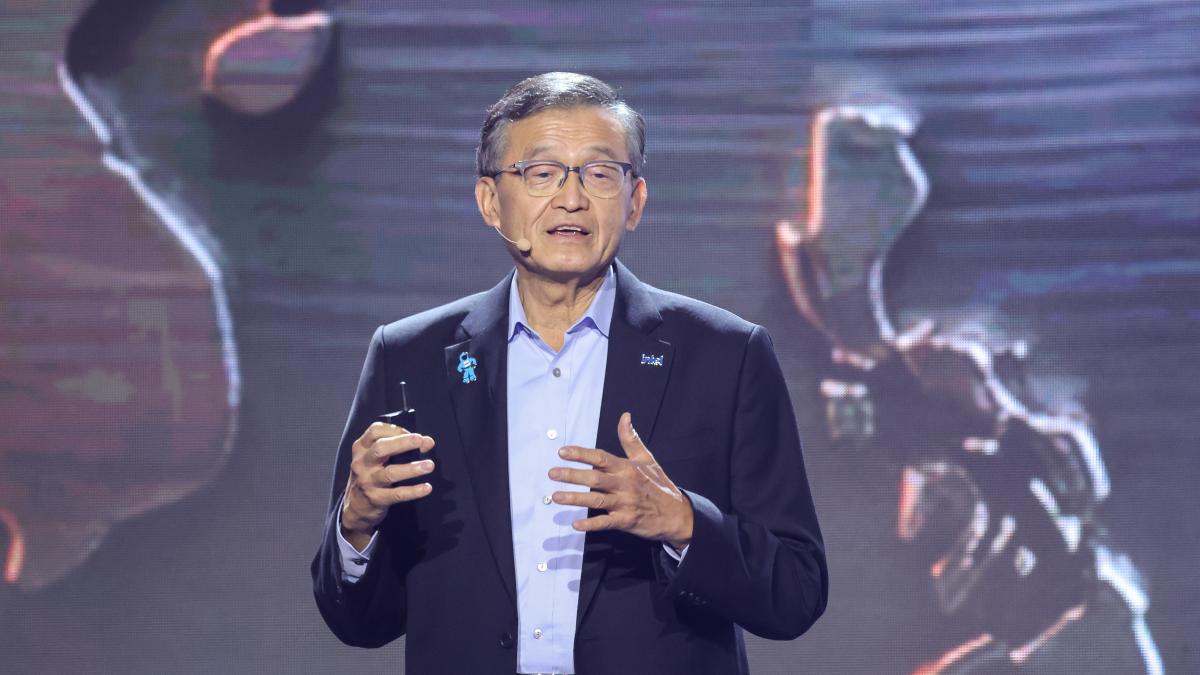
Chip giant Intel announced its latest quarterly financial results and operational outlook on July 23, reporting that third-quarter profit and revenue forecasts both exceeded Wall Street analyst expectations, driven by strong recovery in central processing unit (CPU) demand from the global artificial intelligence (AI) data center expansion boom.
Spurred by this positive news, Intel's stock price, which closed down 2.3% during regular trading on July 23, rebounded sharply in after-hours trading, surging 5%.
Third-Quarter Financial Outlook Exceeds Expectations with Over 25% Year-on-Year Revenue Growth
According to statistics compiled by the London Stock Exchange Group (LSEG), Intel expects third-quarter revenue to range between $15.8 billion and $16.8 billion, surpassing the analyst consensus forecast of $15.1 billion. Adjusted earnings per share (EPS) are projected at $0.38, significantly higher than the market expectation of $0.27.
In the recently concluded second quarter (ended June 27), Intel demonstrated strong operational recovery: quarterly revenue increased 25.4% year-on-year to $16.13 billion, exceeding the market expectation of $14.42 billion; adjusted EPS reached $0.42, more than doubling the expected $0.21; and adjusted gross margin stood at 41.8%, surpassing the analyst forecast of 38.8%.
Looking back at market performance, despite recent pullbacks in the semiconductor sector causing Intel's stock price to decline over 25% from its all-time high on June 22, the stock has still gained over 170% year-to-date.
Agent AI Boom Sparks Data Center CPU Order Surge
The primary driver behind Intel's strong operational rebound is the rapid rise of 'Agentic AI.' Under this trend, autonomous AI agents capable of performing complex tasks on behalf of human users—such as automatically writing computer code—have created massive computational demands on data center infrastructure.
As market focus shifts toward AI agent applications, demand for high-performance CPUs in data centers has strongly rebounded. Intel executives revealed earlier this year that the speed of this demand surge exceeded management's expectations, with customer demand at one point surpassing the company's CPU chip manufacturing capacity limits.
Capital Expenditure Raised to $20 Billion; Long-Term Contracts Signed to Secure Capacity
Intel CFO David Zinsner, in an interview with Reuters, stated that due to sustained strong market demand, Intel has decided to significantly raise its capital expenditure (CapEx) forecast for this year from the original $18 billion to $20 billion. Zinsner further emphasized that next year's capital expenditure is also expected to 'grow significantly.'
'This fully demonstrates our strong confidence in the company's business growth opportunities,' Zinsner said.
Zinsner revealed that Intel has signed a series of long-term supply agreements (LTAs) with multiple data center customers for CPUs and its specialized accelerator chip called 'XPU.' These contracts range from three to five years, with some including commitments on both chip volume and pricing, while others only stipulate purchase volumes.
Despite signing long-term contracts, Zinsner emphasized that Intel will maintain strict discipline in its capital spending. He noted: 'You cannot completely rely on long-term agreements, as contracts are often renegotiated when market conditions change. However, customers would not sign these agreements unless they had substantial confidence in their future investment plans. This gives us high certainty in our capacity planning.'
On the financial front, Zinsner stated that Intel currently holds approximately $30 billion in cash reserves and $10 billion in credit facilities. While the company has not yet received authorization for a public share sale, he added that issuing stock for fundraising in the future is not ruled out.
Under CEO Pat Gelsinger (Chen Liwu), Intel, headquartered in Santa Clara, California, is actively pursuing operational transformation. During the first phase of the AI wave, Intel lagged behind as Nvidia's graphics processing units (GPUs) dominated the market, but is now racing to catch up.
The foundry (contract manufacturing) business is viewed as a core strategic pillar for Intel's resurgence. The business unit recently achieved a major breakthrough by successfully securing Tesla, under Elon Musk, as a customer for its next-generation '14A process' to be used in Tesla's 'Terafab' AI chip project—significantly boosting market confidence in Intel's ability to win large clients.
Additionally, in April 2024, former U.S. President Trump publicly claimed that Apple had agreed to have Intel manufacture its processors, further fueling market expectations that Intel might secure another major contract, although neither Intel nor Apple has confirmed this report.
The global AI and data center chip market remains fiercely competitive. AI accelerator leader Nvidia is making a rare foray into the CPU space with its 'Vera' processor, while tech giants including Amazon (Amazon AWS) and Alphabet (Google) continue investing in developing their own Arm-architecture-based CPUs. The battle for dominance in semiconductor computing architecture is intensifying.
FACT BOX
- Source: PR Times
- Category: News
- Organizations: Nvidia / Tesla / Apple
- Products / services: CPU / XPU