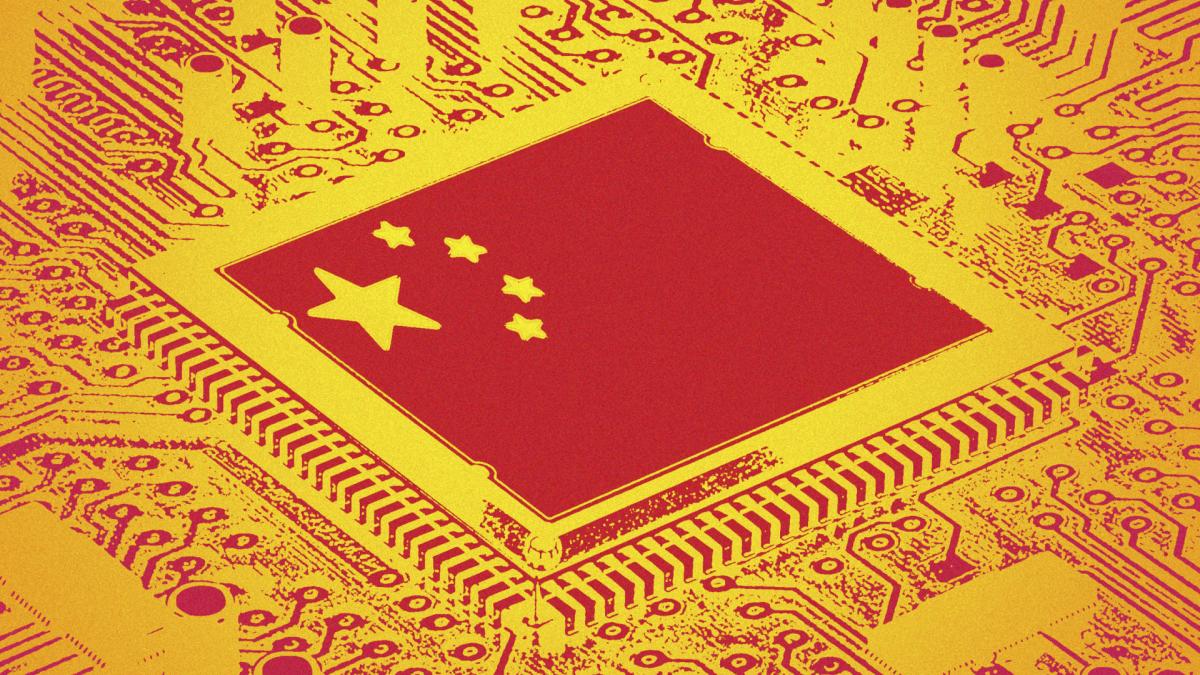
Inside China's AI Chip Breakthrough: The 'Carving Flower' Technology That Slashed Foreign Dependency from 90% to 25%
Western chip restrictions have dealt a blow to China's ambition of becoming a technological superpower. However, about three years ago, Chinese Vice Premier Ding Xuexiang began leading a nationwide semiconductor development initiative. Facing limitations on acquiring advanced equipment, Chinese industry players turned to a method called 'carving flower'—squeezing maximum performance from existing manufacturing tools.
In May this year, Huawei revealed more details about the project. Morgan Stanley data shows China's dependence on foreign AI chips has dropped from 90% in 2021 to under 60% by 2025. It is projected to fall further to 25% within the next five years. How is this being achieved?
Meanwhile, this week's Federal Reserve meeting is being called one of the most unpredictable in years, as new Chair Tom Barkin's stance remains unclear amid a fresh oil shock. At last month's meeting, half of the 18 officials expected further rate hikes, while the other half saw no need. Jonathan Pingle, UBS's chief U.S. economist, said the new chair 'could tip the scale either way.'
Ukraine has recently launched sustained attacks on Russia's Novorossiysk port—one of Russia's key oil export hubs. With both the Russia-Ukraine war and Middle East conflicts escalating, the world's three major energy supply routes—the Persian Gulf, Red Sea, and Black Sea—are simultaneously under threat of blockade.
Worse, as of the week ending July 17, U.S. commercial crude oil inventories and the Strategic Petroleum Reserve (SPR) combined dropped by about 3 million barrels, reaching the lowest level since the Reagan administration. Why hasn't oil prices surged to new highs despite this?
Apple is expected to launch its foldable iPhone this quarter. The Wall Street Journal predicts it will be thinner, wider, and shorter than current foldable phones—resembling a passport in shape. IDC forecasts global foldable smartphone shipments will grow 20% year-on-year this year. However, prices remain high, with Apple's foldable iPhone expected to cost around $2,500 (approximately NT$80,000). This fall's launch will be a true test: can it reverse the stagnation in the smartphone market?
Tesla's stock plunged about 15% after its Q2 profit missed market expectations and it reported negative cash flow for the first time in two years. Its market value evaporated by $200 billion. Longtime Tesla supporter and online influencer Dillon Loomis said, 'I love Tesla and have been a super fan for over a decade, but if it can't even get close to its goals, big promises only hurt the company and its followers.' Is Tesla capable of halting its decline?
IBM, the legacy IT giant, processes about 70% of global credit card transactions. Around 70% of transactions for global insurers, banks, and airlines rely on IBM's mainframe systems. Yet, amid the AI revolution, the role of this 'Big Blue' is fading. After its latest earnings report, its stock dropped 25% in a single day. With nearly 300,000 employees—50% more than Google's parent Alphabet—can quantum computing save this aging tech titan?
FACT BOX
- Source: PR Times
- Category: News
- Organizations: UBS / IBM / Apple