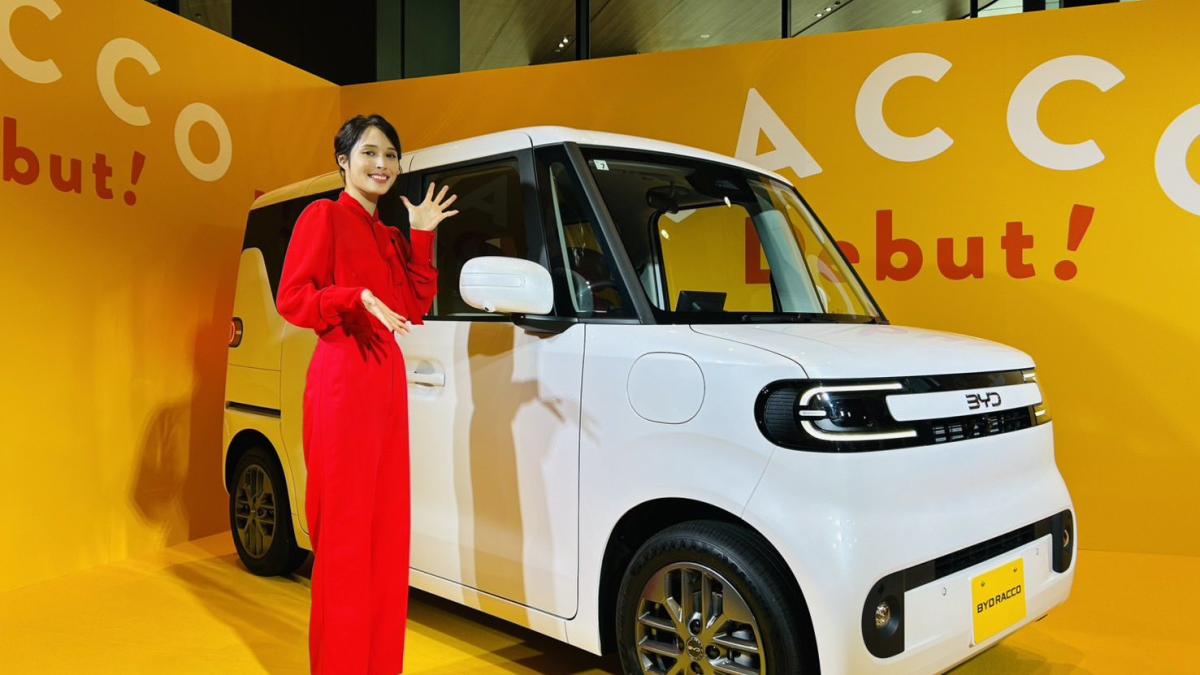
Chinese electric vehicle giant BYD officially announced on the 28th its first mini all-electric kei car, directly challenging Toyota and other Japanese automakers and declaring its entry into the Japanese automotive market. This move follows CEO Wang Chuanfu’s recent statement to international media, where he boldly declared his ambition to surpass Toyota in global sales volume within five years by advancing charging technology and accelerating overseas expansion. Entering Japan, the world’s second-largest economy, is a critical step in BYD’s global strategy.
Although BYD has become the world’s largest EV manufacturer, it faces slowing growth and intensifying competition in the domestic Chinese market. To counter this, the company is aggressively expanding exports—operating eight dedicated car carrier vessels—and accelerating plans to build new factories in Hungary, Brazil, Thailand, Indonesia, and Uzbekistan, thereby strengthening its global production footprint.
The newly launched model, named 'Racco,' is a pure electric vehicle designed specifically for Japan’s kei car segment, which caters to narrow urban roads and limited parking. According to company statements, the vehicle’s price is expected to fall below 2 million yen (approximately NT$396,000) after government subsidies.
On a full charge, the Racco offers a range of approximately 210 to 320 kilometers, outperforming popular Japanese all-electric kei cars like the Nissan Sakura. BYD Japan’s CEO, Atsuki Tofukuji, noted that high fuel taxes have driven up gasoline prices, while population decline has led to the rapid disappearance of gas stations in rural areas. This creates a significant market opportunity for small, affordable electric vehicles similar in size to Mr. Bean’s iconic car.
According to data from the Japan Light Motor Vehicle Association, kei cars accounted for 36.5% of total new car sales in Japan in 2025. These vehicles are popular due to strict Japanese government regulations on vehicle dimensions and engine displacement (under 660cc), which offer tax and insurance benefits for vehicles with maximum power below 47 kW.
Despite Racco’s strong price competitiveness, foreign automakers have historically faced significant challenges in Japan’s domestically dominated market. Statistics show that BYD sold only 3,742 electric vehicles in Japan in 2025—an increase of 68% from 2024—but this remains negligible compared to Japan’s total annual new car sales of 4.5 million units.
FACT BOX
- Source: PR Times
- Category: New Product
- Organizations: Toyota / Nissan
- Products / services: Racco