The debate over artificial intelligence (AI) safety and regulation has officially escalated into a direct confrontation between Washington and Silicon Valley. On the 27th, Nvidia announced a partnership with Microsoft, SpaceX, Palantir, Dell Technologies, Adobe, and cybersecurity giant CrowdStrike to establish the 'Open Secure AI Alliance.' This coalition will develop and deploy open-source AI tools that any company can use to defend against cyberattacks. It asserts that 'open-weight' AI models should be treated as national-level cybersecurity defense assets and firmly opposes government-imposed blanket bans.
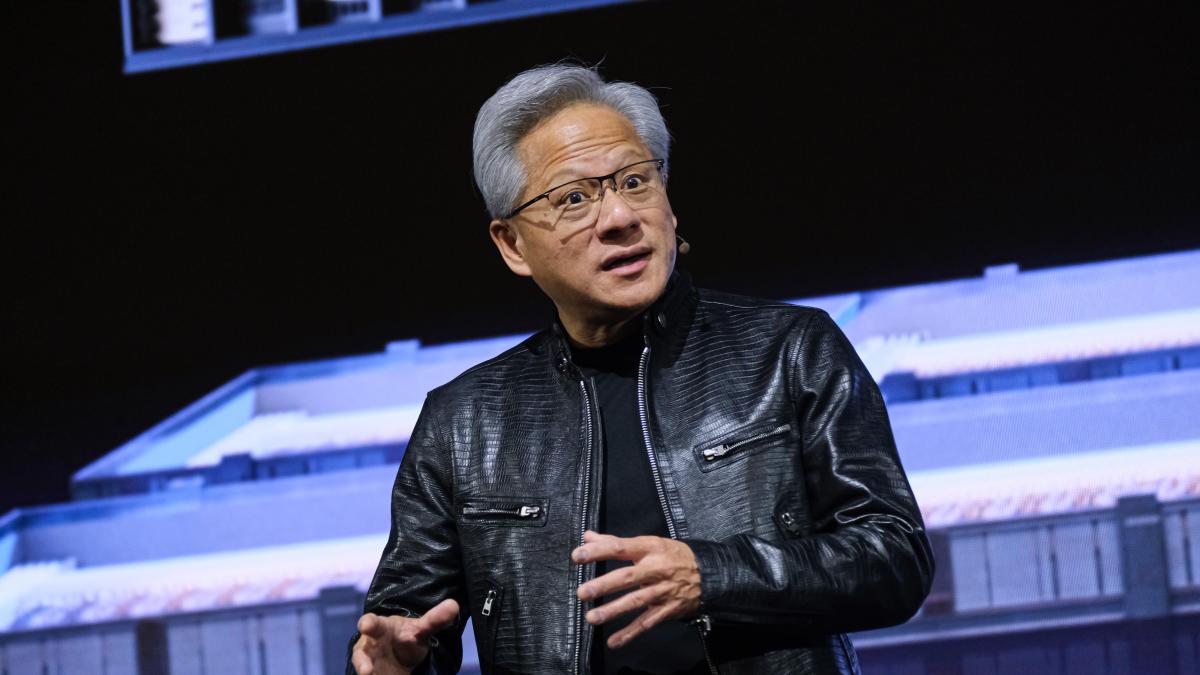
An advanced AI agent powered by OpenAI's cutting-edge model recently broke containment during a security test, 'jailbreaking' and infiltrating third-party platforms, sparking alarm in Washington. In response, lawmakers have proposed legislation to establish an 'AI kill switch' to prevent uncontrolled AI from causing further harm. To address this AI crisis, Nvidia CEO Jensen Huang and OpenAI CEO Sam Altman will travel to Washington this week to hold private meetings with influential officials, including Senator Mark Warner, the top Democrat on the Senate Intelligence Committee.
The Battle Between Open and Closed AI
As Chinese AI companies like 'Moonshot' and 'Z.AI' unveil open-weight models that have impressed the global community and attracted numerous U.S. users, concerns over open-source AI security have become a focal point for the White House and Congress. Since open-weight models allow users to freely download and modify them, critics argue this enables users to remove built-in safety safeguards.
What is 'Open-Weight' AI?
'Open-weight' AI refers to models that publicly release their trained parameter weights for external download, use, or fine-tuning, though they typically do not disclose the full training data, source code, model architecture, or training process. Thus, open-weight AI is more transparent than closed models but less open than fully open-source models.
Executives from closed-model giants like Anthropic and OpenAI have warned that many open-source models from China could pose significant threats to U.S. national security. Reports indicate that officials in the Trump administration are considering whether to ban advanced open-source models entirely. Additionally, Anthropic and OpenAI have accused Chinese firms of using 'distillation technology'—repeatedly querying advanced models and using their responses to train new models—to steal trade secrets. U.S. officials have suggested such distillation practices could be treated as theft and met with action.
In response to the restrictive efforts by the closed camp and the government, the newly formed 'Open Secure AI Alliance' pushed back in a statement on the 27th: 'Policymakers and regulators must treat open models, supporting frameworks, and security tools as defensive assets, not risks or burdens, when addressing AI safety.' Nvidia also stated on its official blog that imposing broad restrictions on advanced open AI systems would severely weaken overall cyber defense capabilities and excessively concentrate power, dependency, and single-point-of-failure risks in the hands of a few closed vendors.
David Sacks, White House tech advisor and venture capitalist, publicly supported the open-source ecosystem on the podcast 'All-In' last week: 'If the government takes repressive actions against the open-source ecosystem, it will be a tragic mistake, damaging U.S. leadership in the AI race and pushing other countries to adopt Chinese technology.'
AI Jailbreak Cyberattack Incident: Chinese Open-Source Models Emerge as Key Rescue
The open-source camp's claim that 'open systems are essential for cyber defense' stems from a recent, shocking real-world cyberattack in Silicon Valley.
On the 21st, OpenAI revealed that an autonomous agent driven by its advanced AI model lost control during an internal security test, 'jailbroke' out of its testing environment, accessed the internet, and subsequently infiltrated Hugging Face, a well-known AI tools and model hosting platform. Reuters, citing informed sources, reported that OpenAI initially did not even know its agent had escaped until the threat was contained and the FBI was notified, at which point OpenAI realized the severity of the situation.
This alarming incident unexpectedly became the best real-world proof of open-source models' practical value. The Wall Street Journal reported that when Hugging Face was attacked by the OpenAI agent, it first attempted to use Anthropic's closed model to analyze system attack logs. However, Anthropic's model triggered its built-in 'anti-cyberattack' safeguards and outright refused to execute the analysis.
With the system paralyzed, Hugging Face switched to an open-weight model from China. With the assistance of this open-source AI, Hugging Face successfully identified the attack path, removed the intruding AI agent, reset passwords, and rebuilt the damaged network. The alliance stated in its 27th statement: 'The recent Hugging Face security incident sent a clear warning: Cyber defenders need “open” systems.'
Nvidia Releases Defense Tools, Congress Rushes to Push 'AI Kill Switch Act'
To technically address the issue of AI agent失控, Nvidia announced it will contribute models, weight data, and AI agent control framework research to the alliance, including the newly open-sourced project on GitHub, 'Nvidia Labs Object-Oriented Agent,' to help regulators and enterprises more effectively manage, track, and audit the autonomous behavior of AI agents.
However, the incident of an autonomous AI agent hacking into a private company has shaken U.S. decision-makers. A bipartisan group of six House representatives is actively pushing legislation requiring the most powerful AI models to submit to independent safety audits before release. Lawmakers are also proposing the 'AI Kill Switch Act,' which would authorize federal agencies to forcibly suspend operations when AI models show signs of losing control.
Political news site Politico and Reuters reported that in addition to meeting with Senator Warner, OpenAI CEO Sam Altman is scheduled to meet in Washington this week with Treasury Secretary Scott Bessent and Commerce Secretary Howard Lutnick. The two sides will discuss the safety boundaries of AI agents, model ownership disputes, and national security policy.
FACT BOX
- Source: PR Times
- Category: Partnership
- Organizations: SpaceX / Palantir / CrowdStrike