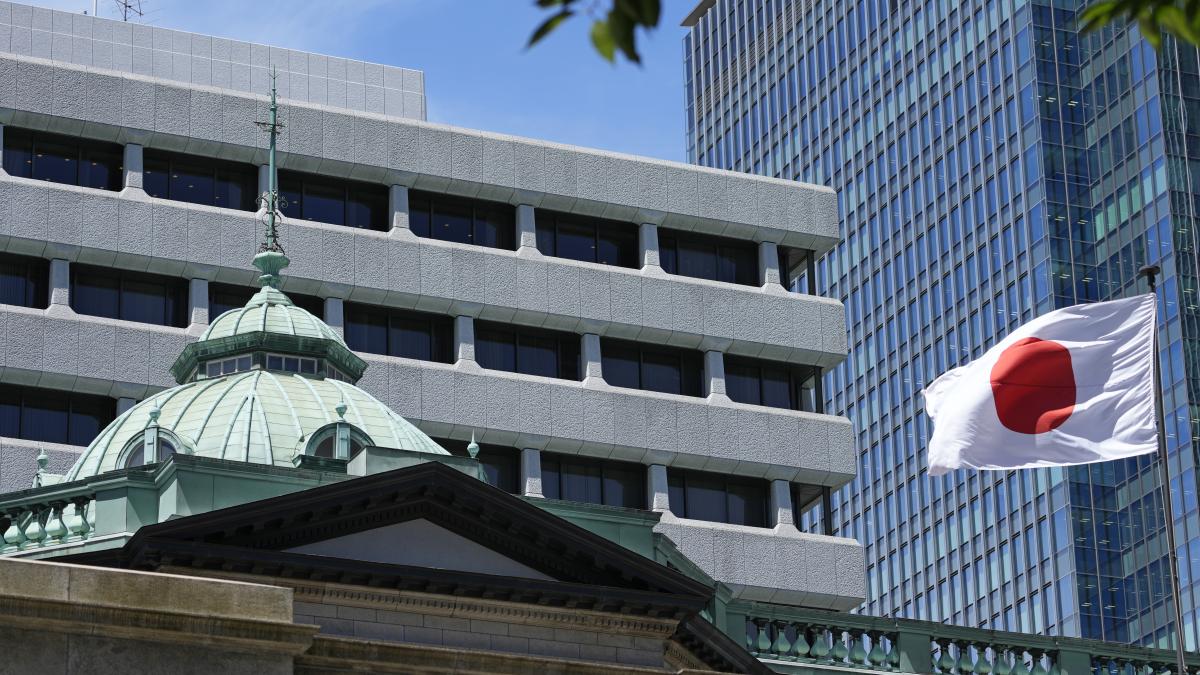
A week of major central bank meetings is underway. Alongside the U.S. Federal Reserve (Fed), central banks in Singapore, the UK, and Japan are set to announce monetary decisions this week, all expected to hold interest rates steady. Financial expert Eddie Yuen, appearing on the program 'Listen to Brother Eddie,' stated that both the U.S. Fed and the Bank of Japan (BOJ) are facing a dilemma. With the Japanese government pursuing large-scale fiscal expansion, the BOJ is inclined to delay rate hikes, as Japan's fiscal issues may be more urgent than inflation.
Yuen noted that three major central banks—U.S. Fed, Bank of England, and BOJ—are holding rate-setting meetings. The actions of the U.S. Fed and BOJ are drawing the most attention. Will the BOJ raise rates again? Markets currently believe the BOJ will delay further, as higher rates would increase Japan's national debt burden. Recently, long-term Japanese government bond yields have approached historic highs. A rate hike could push yields even higher.
Yuen pointed out that Japan's debt-to-GDP ratio has reached 260%, the highest among developed nations. Annual interest payments already account for nearly one-quarter of government spending. In other words, for every four yen the Japanese government spends, one yen goes toward servicing past debt—25% of total expenditures. This illustrates the immense fiscal pressure Japan faces. A rate hike would further strain government finances, potentially pushing bond yields higher and triggering renewed selling pressure on Japanese government bonds. Thus, the BOJ is likely to delay rate hikes as long as possible.
However, Yuen warned that delaying hikes could worsen inflation. Japan is currently in a state of negative real interest rates, where inflation exceeds nominal interest rates. If you're Japanese, seeing negative real rates might encourage you to spend rather than save, as money loses value over time. This behavior could further fuel inflation, as widespread spending drives up prices across the board.
Additionally, the yen continues to depreciate. Yuen noted the yen has fallen to 164, hitting 40-year lows. This makes imports more expensive. Japan relies heavily on imports, especially for natural resources. With the yen weakening, import costs rise, leading to imported inflation. Therefore, not raising rates or curbing yen depreciation is also detrimental to Japan's macroeconomic stability.
Yuen analyzed that both the U.S. Fed and the BOJ face a shared dilemma. The rate hike decision isn't just the Fed's challenge—it's equally difficult for the BOJ. Yuen believes the BOJ will continue to delay, prioritizing fiscal concerns over inflation, especially as the government pursues aggressive fiscal expansion.
Yuen argues the BOJ should have raised rates long ago, and that rates should not remain at 1%. They should have already reached 2% or higher. However, the aforementioned dilemma prevents the BOJ from acting. While the BOJ talks tough to support the yen, markets don't believe it. As a result, the yen keeps falling to 164. Even if Japan attempts intervention, it would need to sell U.S. Treasuries, risking U.S. displeasure. The U.S. Treasury Secretary has repeatedly warned against using Treasury sales to intervene, leaving Japan in a precarious position.
FACT BOX
- Source: PR Times
- Category: News