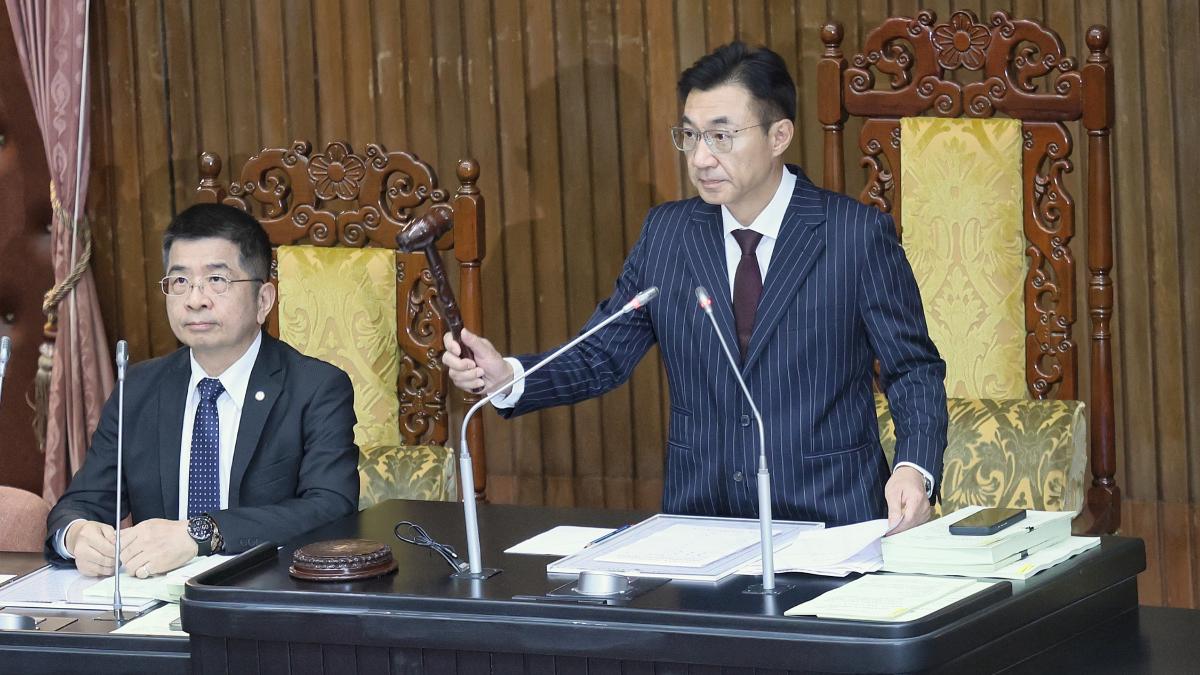
After more than 95 years of enforcement, Taiwan's Civil Code provision on the 'reserved portion' in inheritance law has been amended. On the 27th, the Legislative Yuan passed the amendment to Article 1223 of the Civil Code in its third reading, removing the provision for siblings' reserved portion. Henceforth, if a deceased person has left a will, their siblings will no longer be able to claim the legally mandated minimum inheritance share.
Notably, the Ministry of Justice officially announced a draft amendment to selected articles of the Civil Code on June 2. Once approved by the Executive Yuan, it will be submitted to the Legislative Yuan for review, indicating that further amendments to Taiwan's inheritance system are likely in the future.
What is the 'reserved portion'? Why remove it for siblings?
Article 6 of Book V 'Inheritance' in the Republic of China Civil Code, concerning the 'reserved portion,' has been in effect since May 1931. Under current law, if a deceased person leaves no will and has no children or surviving parents, the spouse inherits half of the estate, while siblings equally divide the remaining half. Even if a will exists, in cases where the deceased has no children or parents, siblings may still claim one-third of their statutory inheritance share as their 'reserved portion.'
Previously, several Kuomintang (KMT) legislators proposed amendments, arguing that the reserved portion for siblings is out of step with modern nuclear family realities, infringes on testamentary freedom and property autonomy, and has led to numerous inheritance disputes among siblings—intensifying family conflicts and wasting judicial resources. They therefore advocated for the removal of this provision.
The Judicial and Legal Affairs Committee of the Legislative Yuan completed its initial review on April 10 and reserved the article for negotiation. Subsequently, the Taiwan People's Party caucus and other legislators submitted additional proposals. These were fast-tracked to the second reading by the plenary session and merged with previously reserved articles for consolidated negotiation.
The Ministry of Justice lags behind in legislative progress—DPP proposals fail to regain momentum
On June 2, the Judicial and Legal Affairs Committee held a cross-party negotiation. On the same day, the Ministry of Justice announced that, after commissioning experts in family law to review and revise the inheritance section of the Civil Code, collecting comparative legislation from Japan, Germany, South Korea, and Switzerland, and holding seven intensive expert meetings with scholars and relevant agencies, it formally announced a draft amendment to the inheritance section. The draft includes removing the reserved portion for siblings, revising current provisions on discretionary estate allocation, and introducing a new 'contribution share' system to promote substantive fairness in inheritance.
However, although the Ministry announced its draft on June 2, it still needs to report to the Executive Yuan for approval before being submitted to the Legislative Yuan—clearly lagging behind the Legislative Yuan's legislative timeline. Subsequently, DPP caucus whip Cheng Jui-hsiung and legislator Chang Ya-lin submitted separate proposals mirroring the Ministry's draft. Both were fast-tracked to the second reading on June 12 and June 26, and merged with opposition party proposals for consolidated negotiation.
Yet, during a party caucus negotiation convened by Legislative Yuan President Han Kuo-yu on July 9, opposition parties expressed support for prioritizing the removal of siblings' reserved portion, arguing that the DPP's proposals on discretionary estate allocation and special contribution shares had not yet entered the formal review process at the Legislative Yuan and should be handled as separate bills.
Removal of siblings' reserved portion to take effect six months after promulgation
At 9 a.m. today, the Legislative Yuan convened a plenary session to continue deliberating the Civil Code amendments. After the reading of the agenda, Deputy Speaker Chiang Chi-chen presided over the session and announced that amendments to Articles 1149, 1165, and the newly added Articles 1173-1 and 1173-2 were adopted as per the KMT caucus's revised motion, with no changes or additions made.
The amendment to Article 1223 of the Civil Code was also adopted per the KMT caucus's revised motion, reordering the provision so that 'the spouse’s reserved portion is one-half of their statutory share' becomes the first clause, while the provision for siblings' reserved portion is deleted.
After the third reading of the inheritance code's reserved portion amendments, the Legislative Yuan proceeded to amend the Enforcement Act of the Inheritance Code by adding Article 12. Adopting a jointly revised motion proposed by the KMT, DPP, and TPP caucuses, it was decided that the amendment to Article 1223 will take effect six months after promulgation.
Chiang explained that the article was passed without objection, following a joint revised motion from the three major party caucuses. Thus, after nearly a century, the provision on siblings' reserved portion will officially become a part of history.
FACT BOX
- Source: PR Times
- Category: News