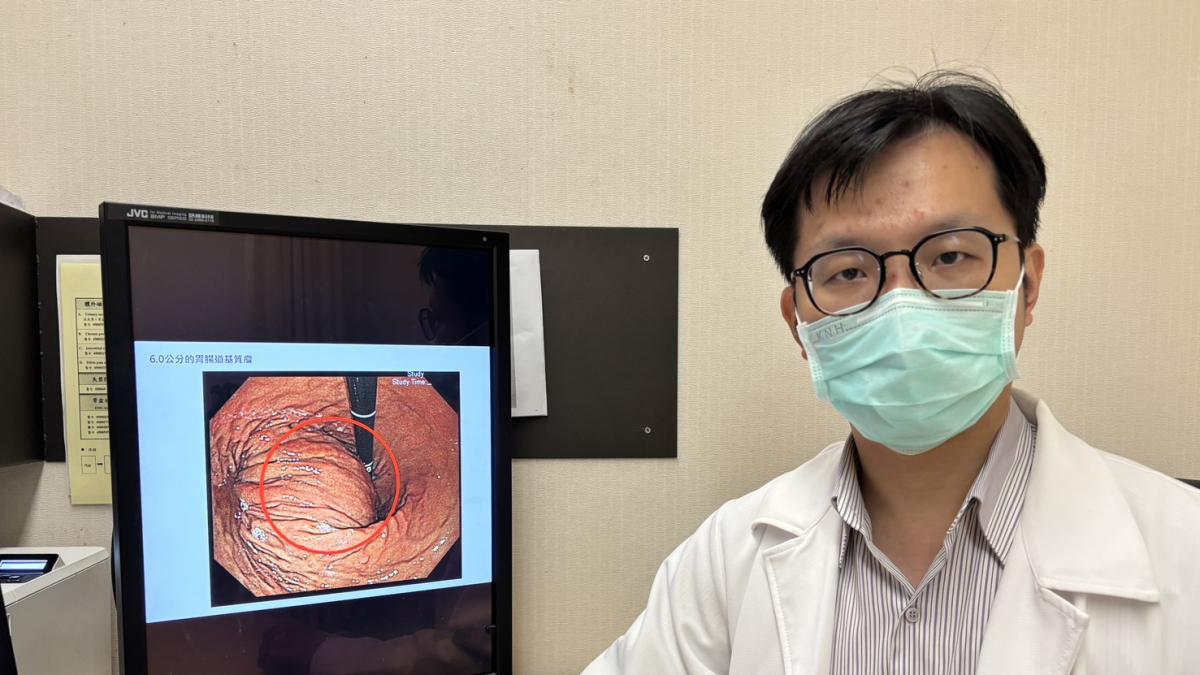
Mr. Zhang, a man in his 50s, sought medical attention due to a persistent dull sensation in his upper-left abdomen lasting over six months. A gastroscopy revealed intact gastric mucosa with no ulcers or inflammation, but a 6cm-diameter protrusion was detected behind the upper portion of the stomach. Further endoscopic ultrasound combined with tissue sampling led to a diagnosis of gastrointestinal stromal tumor (GIST).
Dr. Kang Pen-Chu, Director of the Gastroenterology and Hepatobiliary Department at Shu-Tian Clinic, explained that GIST is a rare malignant tumor in the body but primarily occurs in the stomach—about 60% of cases are gastric, followed by the small intestine. It commonly affects individuals aged 50 to 70, with a nearly equal male-to-female ratio and no clearly defined high-risk group.
According to Dr. Kang, GIST develops in the submucosal or muscular layers of the gastrointestinal tract and appears as a well-defined mass. In early stages, it is nearly asymptomatic; a minority may experience mild symptoms such as abdominal pain, bloating, or nausea. Many cases are discovered incidentally during routine health screenings. As the tumor grows, more noticeable symptoms may appear, including chronic indigestion, anemia, bloody stools, abdominal tenderness, or even a palpable mass.
Diagnosis involves gastroscopy, endoscopic ultrasound, tissue biopsy, CT scans, and MRI. Regarding treatment, GIST is a slow-growing tumor. For tumors smaller than 1cm, biannual monitoring via gastroscopy or endoscopic ultrasound is recommended. For tumors between 1–2cm, especially those near the esophagus or blood vessels, regular follow-up is advised due to higher surgical risks. However, tumors larger than 2cm or those showing continuous growth should be evaluated for surgical removal. If metastasis is detected or surgery is not feasible, targeted drug therapy is initiated.
Dr. Kang emphasized that GIST differs significantly from common gastric cancer. Typical gastric cancer refers to adenocarcinoma arising from mucosal cell changes, often linked to H. pylori infection, diet, or lifestyle. With increased awareness and treatment of H. pylori, gastric cancer incidence has declined. In contrast, GIST originates in the submucosal or muscular layers and is associated with genetic mutations, unrelated to common gastric cancer risk factors, with no clear cause identified.
Finally, Dr. Kang advised that persistent gastrointestinal discomfort should not be ignored. Even individuals without H. pylori infection or those who have successfully eradicated it must remain vigilant. Regular health check-ups remain the most effective method for early detection of gastrointestinal stromal tumors.
FACT BOX
- Source: PR Times
- Category: News