US customs officials have recently traveled to Vietnam to launch a series of surprise inspections at local factories and businesses with Chinese financial backing, raising concerns that the Donald Trump administration may once again impose additional tariffs on this Southeast Asian manufacturing hub. According to Bloomberg, citing informed sources, inspectors from Washington are conducting in-depth reviews of factory operations, raw material procurement sources, and actual production processes to assess the value-added content of goods exported to the US and to investigate potential intellectual property rights violations.
While the surprise inspections have sparked fears of expanded US tariff penalties, no substantial evidence of Chinese goods being illegally transshipped through Vietnam to 'launder' their country of origin has been found so far. US Customs and Border Protection has declined to comment or respond.
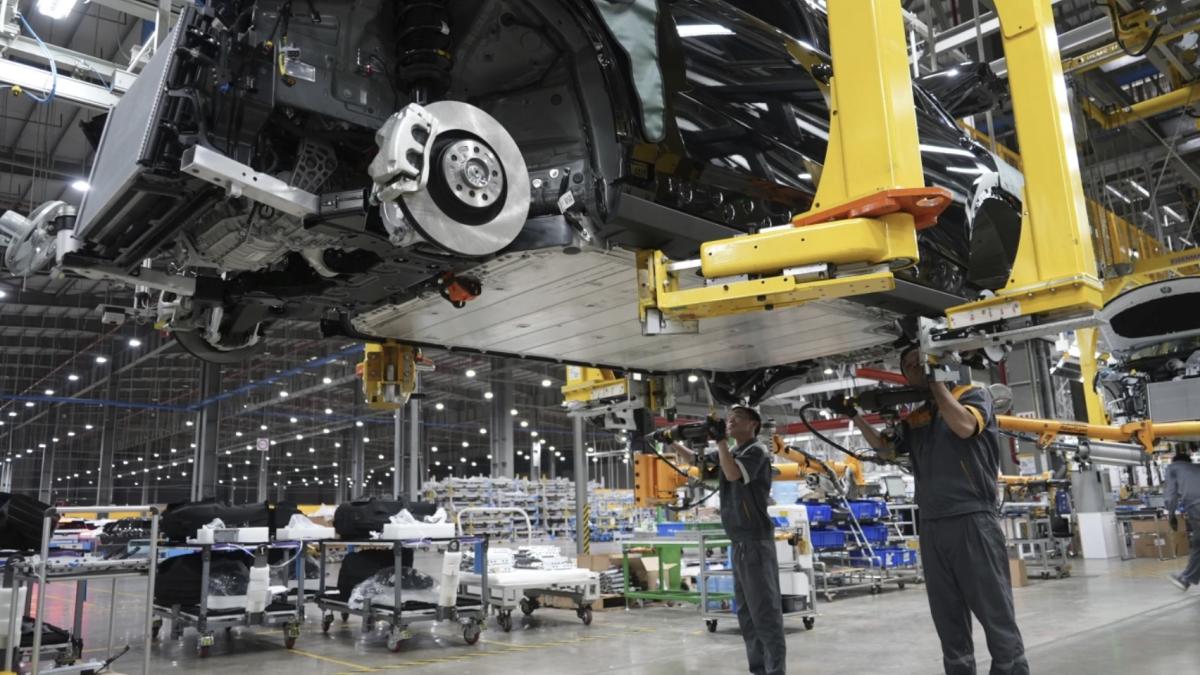
On September 29, 2023, a worker inspected a car frame at the Vinfast factory in Haiphong, Vietnam. (AP)
Facing ongoing US pressure over intellectual property rights, overcapacity, and trade fraud, the Vietnamese government led by President To Lam has actively cracked down on illegal activities domestically. Enforcement actions, such as the seizure of 50,000 counterfeit Nike shoes, are intended to signal to Washington that Hanoi is serious about protecting intellectual property.
The US and Vietnam have been negotiating for months to implement a trade framework agreed upon in October 2025, but the talks have proven extremely difficult, primarily due to disagreements over non-tariff barriers and the definition of 'transshipment.' In the eyes of the Trump administration, Chinese goods that are not substantially processed but simply labeled 'Made in Vietnam' before export constitute illegal origin laundering to evade sanctions and tariffs.
Current US Trade Representative Jamieson Greer has repeatedly emphasized that the US will not tolerate illegal methods of shipping Chinese goods directly to Vietnam for relabeling and export to the US.
Vietnam's supply chain transformation faces a severe test. Due to persistent US skepticism, Vietnam has been placed on a list of 60 economies subject to new tariffs over 'forced labor issues in supply chains.' Vietnam's Foreign Ministry responded that the US does not accurately reflect Hanoi's efforts to eliminate forced labor. Regarding intellectual property concerns, Vietnam has submitted a comprehensive 3,581-page report to Washington, detailing nearly 20,000 infringement cases handled by the government from 2021 to 2025.
On April 15, 2026, Chinese President Xi Jinping (left) welcomed Vietnamese President To Lam at the Great Hall of the People in Beijing. (AP)
Moreover, Vietnam is currently the only country facing three simultaneous Section 301 investigations by the United States.
Bilateral negotiations between the US and Vietnam continue. Trade Representative Greer emphasized to foreign media that the final agreement must go beyond merely reducing the bilateral trade surplus, which has reached $178 billion (approximately NT$5.77 trillion). Washington demands that Vietnam ease non-tariff barriers and genuinely strengthen its domestic intellectual property protection mechanisms.
Analyst Laura Schwartz believes that as the US expands its investigations, Hanoi's negotiation pressure will multiply. In recent years, due to the US-China trade war, Vietnam has become a primary destination for Chinese and foreign supply chains relocating from China. More than half of Nike's shoes and Apple's AirPods are manufactured there. However, with the return of the 'America First'-focused Trump 2.0 administration, the growing US trade deficit data with Vietnam has prompted the White House to intensify scrutiny and pressure to force Hanoi to concede more benefits.
FACT BOX
- Source: PR Times
- Category: News
- Organizations: Nike / Apple / Vinfast
- Products / services: Apple AirPods