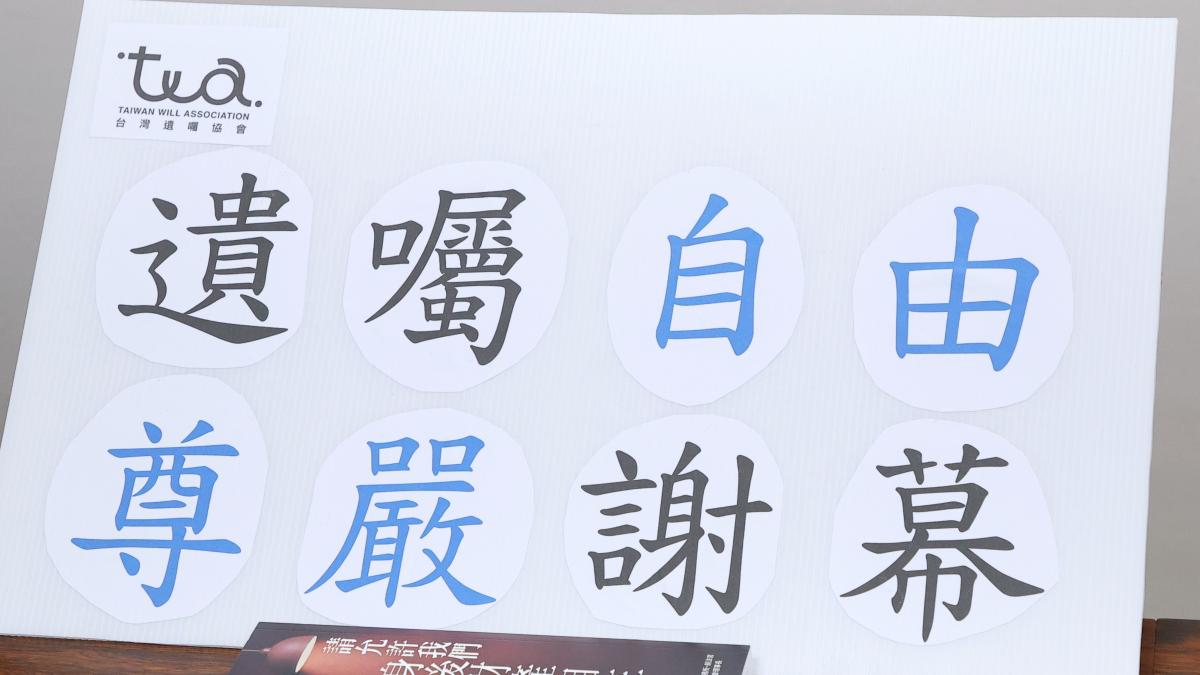
Taiwan's Legislative Yuan passed the amendment to Article 1223 of the Civil Code in its third reading today (27th), removing the 'statutory reserved share for siblings' system. From now on, if a deceased person has properly allocated their estate through a will, siblings who were not included in the distribution can no longer automatically inherit one-third of the statutory share as previously mandated.
In response, lawyer Su Jia-Hong warned, 'Childless couples and singles must write their wills immediately.' He emphasized that under the new amendment, individuals can now allocate their assets to whomever they wish without any justification, preventing specific siblings from inheriting.
Su Jia-Hong stated on Facebook that the Legislative Yuan's third reading directly removed the provision on 'statutory reserved share for siblings' under Article 1223 of the Civil Code. Who benefits the most? First and foremost, 'singles can now exclude specific siblings from inheritance simply by writing a will.'
Who Benefits Most from Removing Siblings' Reserved Share? Singles Gain Full Control Over Estate Distribution
Su Jia-Hong pointed out that for singles, the legal heirs are typically their siblings. In the past, even if a sibling had been abusive, relationships were strained, or there had been no contact for years, a single person could not use a will to exclude a specific sibling from inheritance unless that sibling had legally lost their inheritance rights, due to the statutory reserved share rule for siblings.
Su emphasized that with the removal of the siblings' reserved share, 'singles can now exclude specific siblings without any reason and leave their assets to loved ones or even donate to charity!' This is especially significant for those with half-siblings, as singles can now fully control their estate distribution and pass their assets to family members they care about through a will.
Childless Couples Want to Leave All Assets to Spouse? Lawyer Warns: Be Careful How You Draft the Will
Su Jia-Hong also noted that childless couples, by writing a will, 'can now leave all their assets to their wife or husband.' If both parents have passed away, childless couples typically wish to leave their entire estate to their surviving spouse. With the removal of the siblings' reserved share, a husband can now legally allocate all assets to his wife through a valid will, and a wife can do the same for her husband.
However, Su warned childless couples to pay special attention to how the surviving spouse drafts their will. If written incorrectly, siblings may still end up inheriting the estate.
For example, suppose a wife from a childless couple does not want to leave any inheritance to her siblings and intends to leave everything to her spouse. If her will only states, 'I leave all assets under my name to my husband (spouse),' and her husband passes away before her, then at the time of her death, her husband is no longer alive. As a result, this will fails to transfer her assets to her husband, and her siblings will inherit her estate according to statutory inheritance rules.
Removing 'Reserved Share' Does Not Strip Siblings' Inheritance Rights! Lawyer: Siblings Remain Legal Heirs
Su Jia-Hong also emphasized, 'If no will is written, siblings can still inherit.' The Legislative Yuan's removal of the 'statutory reserved share for siblings' under the Civil Code does not eliminate siblings' status as third-priority legal heirs. In other words, if singles or childless couples fail to write a will, their siblings can still inherit their assets. Therefore, 'now is the best time to write a will.'
Su suggested, 'Take out a pen and paper right now and write your will. Allocate your assets to those you love and exclude siblings you do not wish to inherit anything. Sign your name and write today's date—your posthumous inheritance rules will change. It won't follow statutory inheritance where siblings automatically inherit.'
FACT BOX
- Source: PR Times
- Category: News