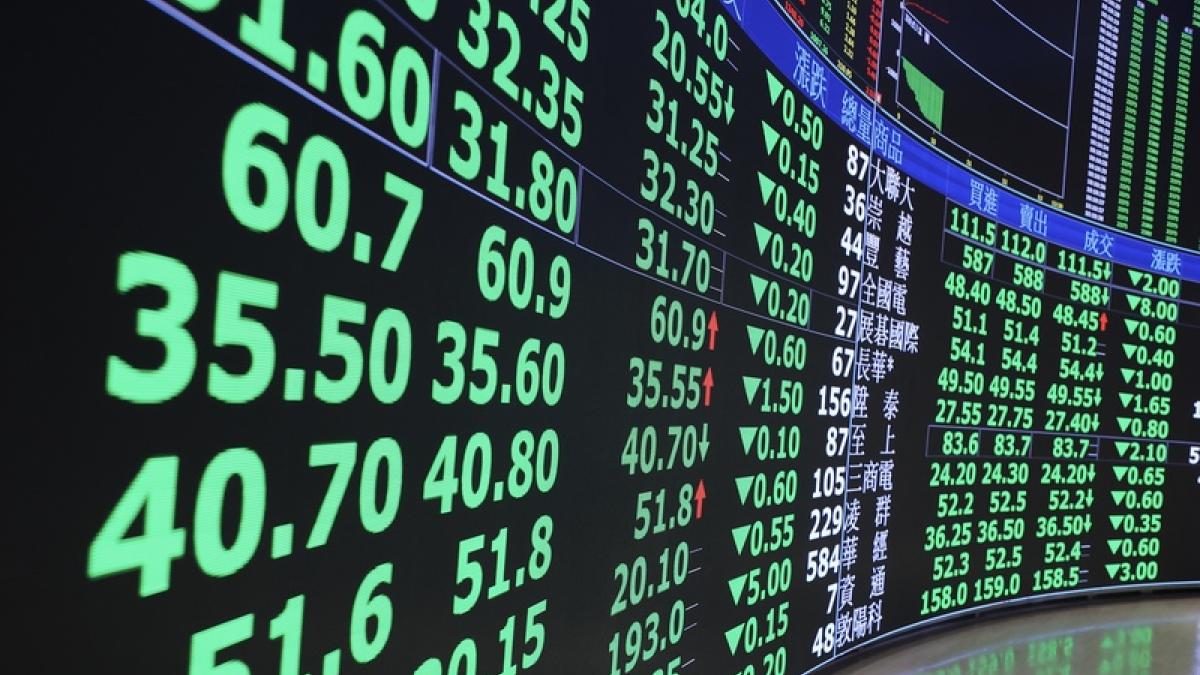
As markets ride a wave of AI investment totaling over $750 billion, negative news has prompted investors to question whether large tech companies can sustain their rapidly rising capital expenditures, dragging down global tech stocks. Today (28), stock markets in Taiwan, Japan, and South Korea all plunged sharply. As of press time, Taiwan’s market had dropped over 1,900 points, or 4.4%, while South Korea’s KOSPI index plummeted 10%. Among the most notable, SK Hynix fell over 13%, and Samsung Electronics dropped over 12%.
NVIDIA CDS Surges, China’s DUV Mass Production Triggers Sell-Off in AI Stocks
According to ICE Data Services, the cost of five-year credit default swaps (CDS) insuring against default on NVIDIA’s debt rose on Monday, marking the largest intraday increase since the contracts began active trading in November last year. CDS can be viewed as insurance against corporate debt default, and rising prices typically indicate that the market perceives higher credit risk for the issuing company. The sharp rise in NVIDIA’s CDS reflects investors beginning to assess the potential strain on the company’s balance sheet from its aggressive support of customer and data center infrastructure development.
Hideyuki Ishiguro, Chief Strategist at Nomura Asset Management, pointed out that after reports of NVIDIA’s large-scale investment deals, the market has started re-evaluating its financial risks, and the rise in CDS prices is seen as a bearish signal.
On the other hand, according to tech media The Information, a Chinese state-owned enterprise has begun mass-producing self-developed immersion deep ultraviolet (DUV) lithography machines. This news triggered a steep sell-off in semiconductor equipment stocks. China has been rapidly catching up in semiconductor manufacturing equipment in recent years, gradually eroding the competitive advantages long held by Japanese firms, placing new pressure on Japan’s supply chain.
AI Capital Expenditure Concerns Rise – Earnings Reports from the 'Magnificent Seven' in Focus
Jung In Yun, CEO of Fibonacci Asset Management Global, stated that the recent semiconductor stock correction stems primarily from a rapid cooling in market sentiment rather than any major change in corporate fundamentals. Investors are now questioning whether AI infrastructure investment can maintain its current pace of expansion.
Chris Larkin, Market Strategist at Morgan Stanley E*Trade, noted that this week’s market is full of uncertainties. In addition to geopolitical tensions and oil price movements, the upcoming earnings reports from the 'Magnificent Seven' tech giants are a key focus. However, he warned that even if companies deliver strong results, the market may not react positively if continued AI investment expansion continues to squeeze profit margins.
This week, several major U.S. tech companies, including Meta, will release their latest earnings reports. Reports that Meta plans to sell off some idle AI computing capacity have sparked debate over whether AI demand is beginning to cool. Apple, meanwhile, has warned of rising cost pressures and is reportedly lobbying regulators to allow it to purchase memory components from competitors.
Kyle Rodda, Senior Analyst at Capital.com, said that current market sentiment is almost entirely focused on one issue: large tech companies continuously increasing capital expenditures and AI investments. Investors worry that massive spending could ultimately erode shareholder returns.
SK Hynix, Samsung Earnings Countdown – Even Minor Disappointments Could Amplify Volatility
Beyond U.S. tech giants, markets are also closely watching Samsung Electronics’ upcoming full-quarter financial report for the June period. Kim Minji, Portfolio Manager at Must Asset Management in Seoul, said Samsung is still chasing SK Hynix’s lead in the high-bandwidth memory (HBM) market.
Although the market expects SK Hynix to report another record-breaking quarterly performance this Wednesday, investor sentiment has clearly turned cautious. Investors are concerned that sustained memory price increases could eventually prompt customers to reduce purchases or switch to lower-cost alternatives.
Since SK Hynix’s stock price hit a record high in June, it has fallen 38% in just over a month, with its market capitalization shrinking by approximately $470 billion. The market believes that excessive capital concentration, combined with widespread leveraged trading, amplified the scale of this correction. In this downturn, SK Hynix’s market cap loss ranks second only to SpaceX. Once seen as one of the hottest targets for global AI investment, the memory giant has now become a key indicator of whether the AI investment frenzy can continue.
Shawn Oh, Head of Korean Cash Equities at NH Investment & Securities, said that given current valuations have returned to attractive levels and Korean retail investors continue to reduce leverage, SK Hynix still holds investment value. However, ahead of U.S. tech giants’ earnings reports, the market generally prefers to reduce stock holdings to manage risk.
Market estimates suggest SK Hynix’s revenue for the June quarter will more than double year-on-year, reaching around $57 billion, with operating profit potentially increasing sixfold. However, James Ooi, Market Strategist at Tiger Brokers, believes the market’s focus is no longer just on SK Hynix itself, but on whether its earnings report reflects overall demand in the AI hardware sector.
He noted that SK Hynix’s performance will be seen as a key barometer for the global AI hardware sector. However, given the market’s high expectations, even a slight miss could trigger significant stock price volatility.
Hebe Chen, Senior Market Analyst at Vantage Global Prime, said the recent sell-off in chip stocks reflects that investor concerns over the scale of AI spending, return on investment, and valuation levels have not dissipated but are instead intensifying. With several major events approaching, the market remains cautious about buying the dip, generally preferring to wait for clearer fundamental evidence before increasing exposure to risk assets.
FACT BOX
- Source: PR Times
- Category: News
- Organizations: Meta / SpaceX / Fibonacci Asset Management Global