Swiss newspaper Neue Zürcher Zeitung (NZZ) senior China correspondent Katrin Büchenbacher analyzed on the 27th that China's second-quarter annual economic growth reached only 4.3%, the lowest in 30 years (excluding pandemic periods). The middle class, meanwhile, widely feels disillusioned about the future. However, believing that China is heading toward decline based on this would be a serious misjudgment. Because Xi Jinping is engaging in a structural gamble—shifting China's economic engine from real estate to advanced technology, and building a new 'Made in China' supply chain that global markets cannot afford to sever.
Youth Unemployment and Plummeting Property Prices
Büchenbacher points out that China's economic miracle over the past decades was built on Deng Xiaoping's policy of 'letting some people get rich first.' The generation born in the early 1990s witnessed China's per capita GDP grow more than tenfold in a frenzied process. In the past, simply buying property in Beijing or Shanghai, or gaining admission to a top university and joining a large enterprise, could enable upward mobility.
However, today, this logic of 'hard work equals reward' has collapsed. Data shows that youth unemployment among 16- to 24-year-olds in China has reached 16%, and high educational attainment is no longer a job guarantee. Faced with stagnant social mobility, many young people choose 'lying flat,' moving back in with their parents, and marriage and birth rates are declining. Since 2021, average property prices—main assets for urban households—have fallen by about 20%, forcing the middle class to turn conservative, cut consumption, attempt to transfer assets overseas, or even relocate to lower-cost tier-2 and tier-3 cities.
State Capital Pouring into Advanced Industries
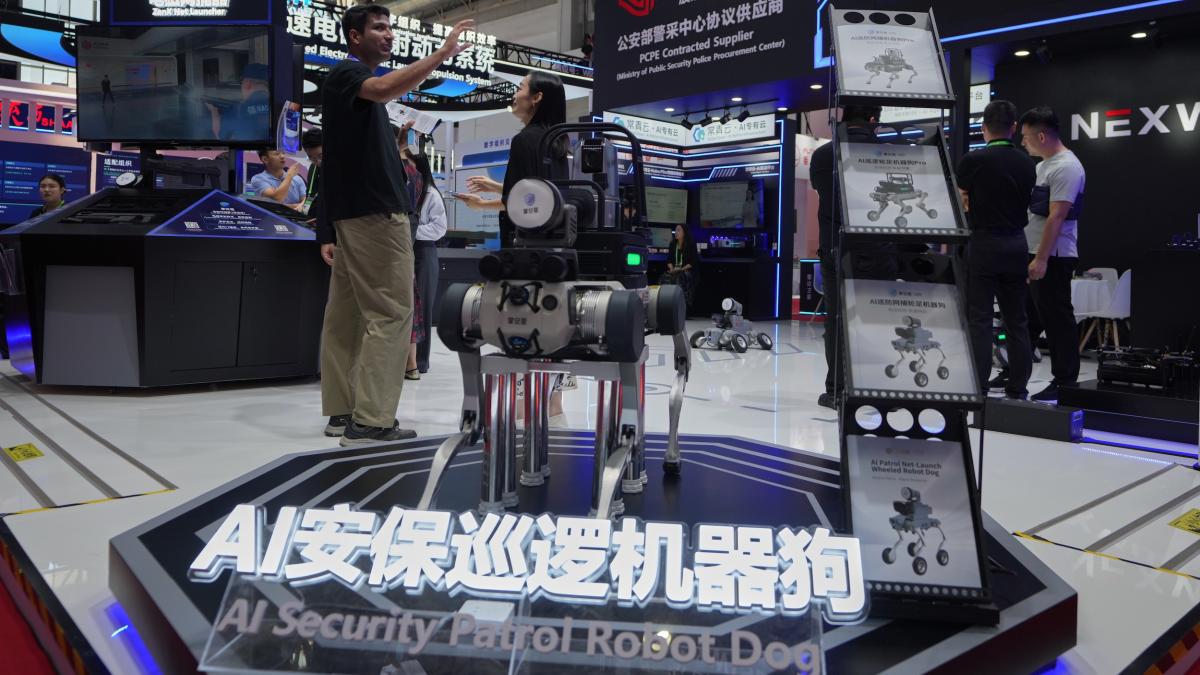
Büchenbacher analyzes that in stark contrast to weak private consumption, China's high-tech sector is simultaneously experiencing astonishing expansion. Daily life in China is also highly digitized. Beyond cheap solar panels, batteries, drones, and electric vehicles flooding global markets, facial recognition payments, drone food delivery, and robot-made ice cream are now commonplace in Chinese society—creating a sharp contrast between export strength and modernized lifestyles versus declining wages and shrinking opportunities.
Why is this happening? Büchenbacher believes this is the result of Beijing forcibly shifting its economic engine. Although the old models of real estate, infrastructure, and industrialization are declining, the new model still suffers from massive inefficiencies—the Economist reported in April this year that about 32% of surveyed Chinese industrial firms are facing losses. Yet, massive household deposits in state-owned banks have been converted by the government into a funding pool for strategic industries.
Through a brutal process of state subsidies and market elimination, truly globally threatening industrial giants have emerged. BYD sold 4.6 million electric and hybrid vehicles last year, with overseas sales surpassing 1 million units. Huawei operates in over 170 countries, reinvesting over 20% of its annual revenue into R&D to break through U.S. chip sanctions. CATL controls nearly 40% of the global EV battery market. Just these three companies generated 2.1 trillion RMB in revenue and 173 billion RMB in profit in 2025.
And for Beijing, this is not merely about commercial profitability, but about controlling global technological standards.
Xi Rejects Consumption Stimulus
Büchenbacher emphasizes that Beijing's policymakers are not unaware of the remedies to revive consumption—measures like strengthening social safety nets, raising household incomes, improving treatment of private enterprises, and opening up the service sector have even been written into the latest five-year plan. Yet Xi Jinping has chosen a completely different path: he would rather let society endure a period of 'hardship' to concentrate resources on betting on future technologies. Under state subsidies, thousands of tech firms have emerged in China, though most will fail. But for Beijing, the emergence of companies like BYD, Huawei, and CATL makes the gamble worthwhile.
Xi's strategic goals are twofold: first, to reduce dependence on foreign technology and enhance resilience against Western sanctions—this can be seen as economic defense preparation for a potential Taiwan Strait conflict; second, to make other countries highly dependent on China in key technologies, gaining geopolitical leverage. Take rare earths: for years, China bore low profits and environmental damage to control over 90% of the world's rare earth magnet refining capacity. In 2025, China imposed export controls on medium and heavy rare earths, formally demonstrating its ability to 'weaponize' supply chain dominance against the U.S. and Europe.
AI and Advanced Tech Accelerate, Putting U.S. and Europe on New Alert
According to research by the Australian Strategic Policy Institute (ASPI), China leads the U.S. in 69 out of 74 key technology fields. In artificial intelligence (AI), Chinese AI startup 'Moonshot AI' has developed the Kimi K3 model, which outperforms top U.S. AI models like ChatGPT and Claude in multiple benchmark tests, at significantly lower cost. China's recent progress in AI indicates it will eventually catch up to the U.S., with the academic research gap rapidly narrowing.
Büchenbacher argues that despite China's economy facing massive pains—soaring local debt, unresolved property crisis, and overcapacity—the country's vast 'engineer dividend' and extremely fast product iteration capability are allowing its technological strength to rapidly close in on the U.S. Whether Xi's high-tech gamble will benefit ordinary citizens remains uncertain. But one thing is certain: China is advancing into its next phase of rise. Countries that interpret slowing economic data and stagnant middle-class incomes as signs of China's decline are, perhaps, being too naive.
FACT BOX
- Source: PR Times
- Category: Survey