U.S. President Donald Trump, surrounded by CEOs of some of America's largest defense companies, had one message at the Defense and Innovation Summit in Pennsylvania earlier this month: manufacture more weapons, and faster.
"We have the best quality in the world," Trump told weapons manufacturers gathered at the U.S. Army War College, with "War Department" head Pete Hegseth by his side. "But we need a little speed."
The White House positioned this summit as a dual strategy to revitalize American industry and strengthen U.S. military capabilities. In Hegseth's words, it's about building a "factory of freedom."
However, almost no one mentioned that earlier this year, during the "Operation Epic Fury" and the subsequent mutual strikes, the U.S. military consumed a large number of precision and difficult-to-manufacture weapons in intense combat with Iran over nearly 40 days. The U.S. has so far stated that the war has cost $37.5 billion (253.8 billion yuan; 1.21 trillion NT dollars), with the vast majority spent on ammunition.
By the time the fragile ceasefire took effect on April 8, according to the White House, the U.S. military had struck over 13,000 targets within Iran. During the same period, the U.S. defense system intercepted over 1,700 Iranian drones and ballistic missiles.
Now, the U.S. has paused its strikes on Iran to allow negotiations to proceed.
A report by The New York Times pointed out that Trump was advised to shelve plans to escalate the conflict, as it would further deplete U.S. stockpiles. On Monday (July 27), Trump refuted the claim of ammunition shortages, telling The Wall Street Journal: "We have more ammunition than anyone else in the world, and far more than we need."
This has been a sensitive issue within the U.S. government for some time.
Last month, when asked about this, Hegseth also denied that ammunition stockpiles were decreasing.
But his stance seems to have changed.
Last week, he told the Senate Appropriations Committee that the Pentagon needs an additional $8.7 billion to address "critical shortages," including equipment.
The exact amount of ammunition consumed and remaining stockpiles are classified. However, publicly available data compiled by the Center for Strategic and International Studies (CSIS) in Washington paints a grim picture of severely depleted stockpiles that will be difficult to replenish in the short term.
"It depends on the type of ammunition—but manufacturing a missile takes one to five years, and that's the baseline," said retired Marine Corps Colonel and CSIS Senior Fellow Mark Cancian, who has been studying the issue. "And you can't speed up that process." He said.
But is the U.S. really consuming ammunition so fast that it may struggle to fulfill its military responsibilities and objectives?
Depleted U.S. arsenals
The key ammunition used in this war can be divided into two categories: long-range ground attack systems and air and missile defense systems used to intercept incoming Iranian attacks.
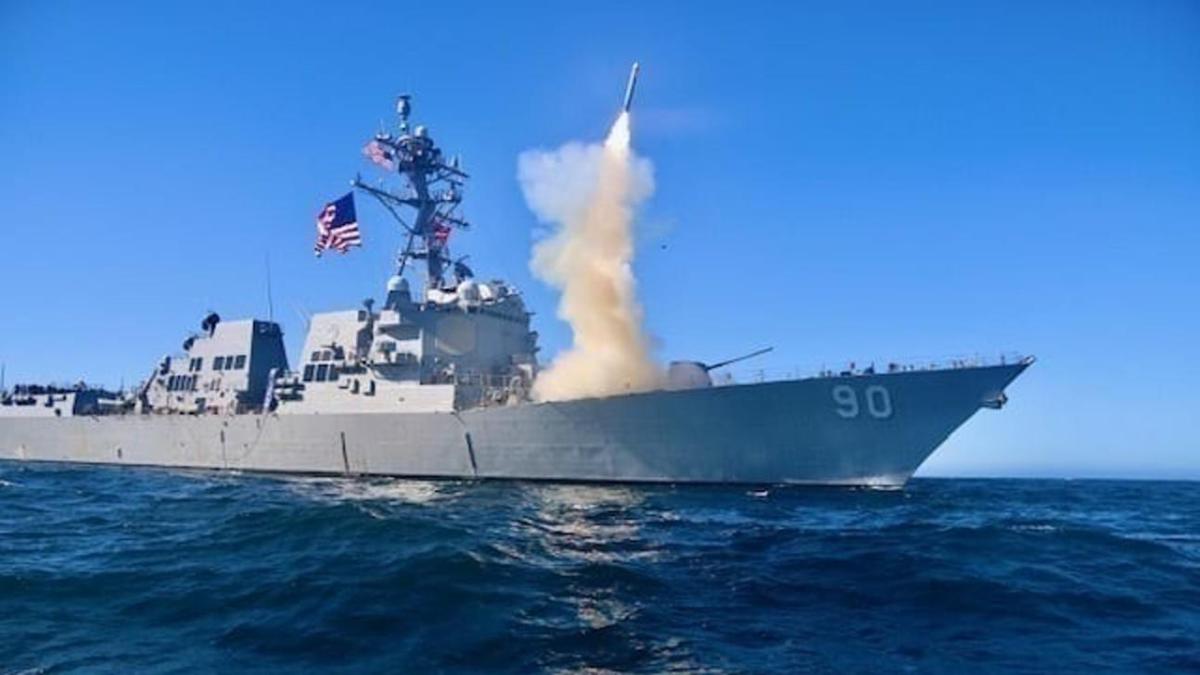
Among the most used ground attack systems are the Tomahawk Land Attack Missiles (TLAMs). These missiles are typically launched from ships or submarines and can strike targets as far as 1,600 kilometers away. These weapons allow the U.S. to conduct precision strikes on hardened military targets—such as command bunkers or reinforced military facilities—without putting manned aircraft at risk.
The Center for Strategic and International Studies estimates that over 1,000 Tomahawk missiles were fired during the war, and stockpiles may not recover to pre-war levels until 2031. The think tank also noted that the latest version of the Tomahawk missile costs approximately $2.6 million each.
However, among the air defense systems used in this war, the Patriot missile system has been the most severely consumed.
This is a ground-launched missile used to intercept aircraft, as well as ballistic and cruise missiles. According to estimates by the Center for Strategic and International Studies, up to 1,430 were used during the conflict, while pre-war stockpiles were estimated to be around 2,330.
Each Patriot intercept missile costs approximately $4 million—an expensive but effective option that has been repeatedly used to shoot down Iranian drones costing only $20,000 to $50,000.
And these munitions are difficult to replenish.
Cancian analyzed to the BBC: "Manufacturing a missile takes several years. If you invest money today, it will take three to four years to get the missile, sometimes even five years. What we are getting now are missiles that were funded in 2023."
The U.S. also used a newer, more advanced system called the Terminal High Altitude Area Defense (THAAD). Its range and interception altitude are both farther and higher than the older Patriot system.
Supply was originally limited, and the Center for Strategic and International Studies estimates that the U.S. military fired 190 to 290 THAAD missiles, while pre-war stockpiles were estimated to be only 360.
Currently, there are only nine "THAAD" systems in operation worldwide, seven of which belong to the U.S. Therefore, if consumption continues at a high rate, the U.S. military may lose this system, which is crucial for defending against ballistic missile threats from Russia, China, or North Korea.
How does THAAD work?
Enemy launches missile THAAD radar system detects missile and notifies control system Control system issues signal to launch intercept missile Intercept missile launches Enemy missile is intercepted in the final stage of its flight Launcher can carry eight intercept missiles.
Taiwan and the Indo-Pacific region in focus In fact, the U.S.-Iran war occurred just before what is often referred to as the "Davidson window." In the eyes of some U.S. military planners, the likelihood of China launching an invasion of Taiwan during this period increases.
This controversial concept is at the core of U.S. Pacific military thinking, stemming from a congressional hearing in 2021. At the time, Admiral Philip Davidson, who was responsible for U.S. forces in the region, warned that an invasion "will occur within the next six years." In 2023, then-CIA Director William Burns predicted that China would be ready to invade by 2027.
China has long pledged to "unify" with self-governing Taiwan, viewing it as a separated province, and does not rule out the use of force.
Whether the U.S. will defend Taiwan and go to war with China has been a hotly debated topic. Although the stance is ambiguous, the U.S. continues to provide defensive weapons to Taiwan.
Cancian calls the ammunition shortage a "vulnerable window," during which if a conflict occurs in the Pacific, the U.S. "will not have the priority ammunition depth it needs."
He believes this increases the risk of the U.S. military being caught off guard when facing the massive missile and aircraft arsenal that China might commit to a Pacific conflict.
U.S. officials say China has closely studied the U.S. air defense systems used in the Iran war. In recent years, China has heavily invested in missile technology, including hypersonic glide missiles far more advanced than those used by Iran and cheap drones.
Beijing has also heavily developed large-scale "drone swarm" tactics.
However, not everyone sees the U.S.'s depleted stockpiles as purely a negative factor.
Jacob Olidort, a former senior CIA official and former Middle East policy advisor to the Office of the Secretary of Defense, pointed out that using these weapons in real combat also sent a strong message.
"Weapons deter not only because a country possesses them, but also because they demonstrate the willingness to use them," said Olidort, now the director of American security policy at the conservative think tank America First Policy Institute.
He added that the U.S. "success in weakening Iran's military capabilities at an unprecedented, record-breaking speed has sent a signal to other adversaries, including China and its ambitions."
European situation In fact, the obvious tension between arming allies and preserving U.S. stockpiles has already been played out in the case of Ukraine.
As early as October 2025, a few months before the "Operation Epic Fury" began, Trump refused to provide Ukraine with Tomahawk missiles, citing the need to avoid depleting U.S. stockpiles.
This incident foreshadowed the current debate surrounding broader weapon stockpile trade-offs following the Iran war.
Kyiv claims an urgent need for Patriots and other air defense systems to fend off wave after wave of Russian drone and missile attacks.
"Apart from energy prices, this (Iran) war also means the depletion of U.S. stockpiles and the depletion of air defense system manufacturers," Ukrainian President Volodymyr Zelensky said in a BBC interview in March this year. "So we (Ukraine) are also facing resource depletion," he said.
Zelensky also specifically pointed out the concern: the U.S. produces about 60 to 65 missiles per month, or 700 to 800 per year, but "Operation Epic Fury" used 803 missiles on the first day.
However, recently, to the surprise of many European officials, Trump proposed giving Ukraine the right to produce Patriots domestically. Similar arrangements already exist in Germany and Japan.
Formerly worked in the Department of Defense
FACT BOX
- Source: PR Times
- Category: News