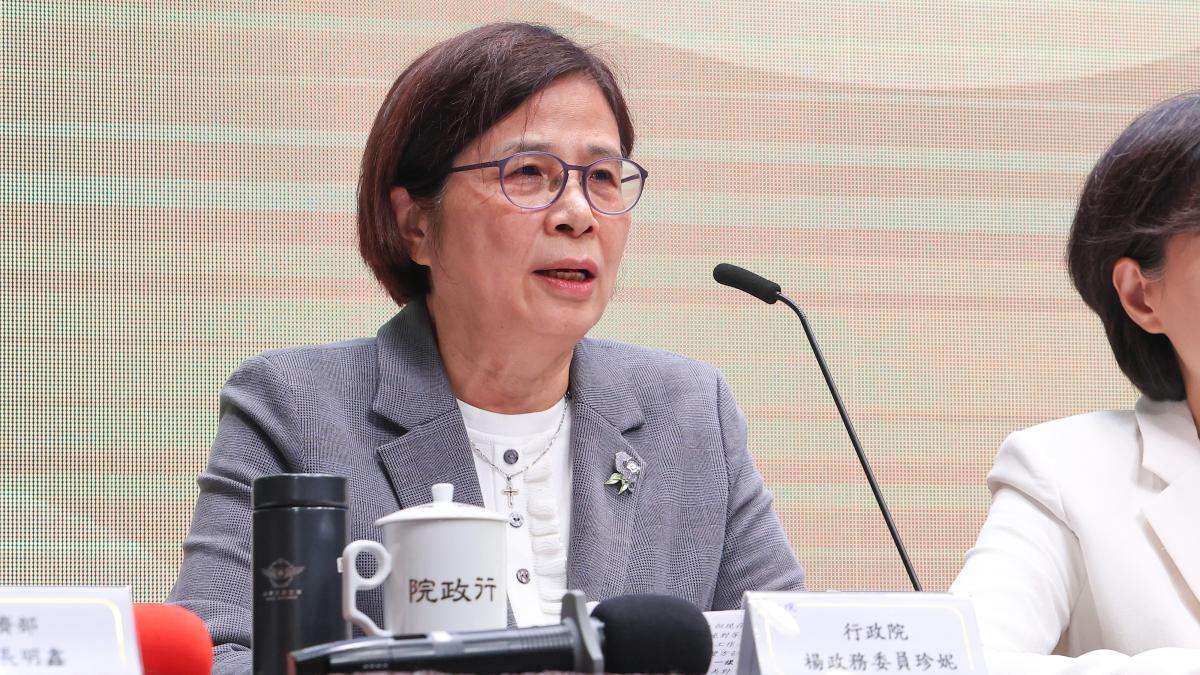
Yang Chen-Ni, former chief trade negotiator of the Office of Trade Negotiations, has been found guilty of workplace bullying against deputy negotiator Yen Hui-Hsin. The Executive Yuan's investigation confirmed the allegations, and the Presidential Office subsequently issued an order to remove her from office. On the 29th, the Control Yuan stated that Yang 'obstructed and weakened Deputy Chief Negotiator Yen Hui-Hsin’s participation in relevant duties' and engaged in inappropriate behaviors such as authoritarian attitudes, high-pressure intimidation, and isolating or excluding certain staff members. The impeachment motion was approved on July 17 and the case has been referred to the Disciplinary Court for trial.
The Control Yuan emphasized that as both a Minister without Portfolio and the Chief Trade Negotiator, Yang was responsible for integrating resources and enhancing Taiwan’s trade negotiation capabilities. Instead, she obstructed and weakened Yen Hui-Hsin’s involvement in key operations and restricted the participation of critical team members during major trade negotiations and high-level diplomatic receptions involving national interests.
The impeachment report detailed the following misconducts:
1. From the moment Yen Hui-Hsin assumed her role as Deputy Chief Negotiator, Yang repeatedly used offensive language to publicly dismiss her opinions and ideas. In multiple operations under the Office of Trade Negotiations, Yang deliberately diminished Yen’s role and involvement, or intentionally withheld necessary support staff, creating a hostile work environment that suppressed Yen’s professional capabilities.
2. Yang assigned a shared secretary to assist Yen for nearly a year, then reassigned that secretary to other duties, leaving Yen effectively without dedicated administrative support and increasing her already heavy workload.
3. During Taiwan-U.S. physical consultations in Washington, D.C. on reciprocal tariffs and other trade issues, Yang deliberately excluded Yen and other supporting team members from entering negotiation sessions, thereby preventing their substantive participation. This demonstrated a clear intent to sideline key support personnel and withhold core negotiation information.
4. During the Office’s reception of the 'Indo-Pacific/New Southbound Policy Media Delegation,' Yang initially expressed anger, claiming she was not informed of the event. After staff presented the relevant documents, she shifted her criticism, accusing them of not allowing her to review the Q&A preparation materials in advance. This reflects her habitual use of high-pressure, intimidating management tactics. She later abruptly withdrew staff members originally scheduled to co-host the media reception without informing Yen, the primary host, leaving her to face intense media questioning alone—demonstrating a lack of respect and support.
Furthermore, the Control Yuan found that Yang routinely employed authoritarian and intimidating management practices, suppressing dissent by publicly rejecting or shouting down opposing views, leveraging her authority to silence disagreement. Over time, this created a tense, avoidant atmosphere within the office, leading to a chilling effect where staff refrained from speaking up.
In conclusion, as a senior government official, Yang was expected to integrate resources and strengthen Taiwan’s trade negotiation capacity. Instead, she obstructed her deputy’s role and restricted team participation in critical national affairs. Her authoritarian, intimidating, and exclusionary behaviors violated the Civil Servants Service Act, with clear misconduct of serious nature. The Control Yuan determined these actions meet the criteria under Article 2, Paragraph 1 of the Public Servants Disciplinary Act, and thus formally proposed impeachment and referred the case to the Disciplinary Court for legal punishment.
FACT BOX
- Source: PR Times
- Category: News