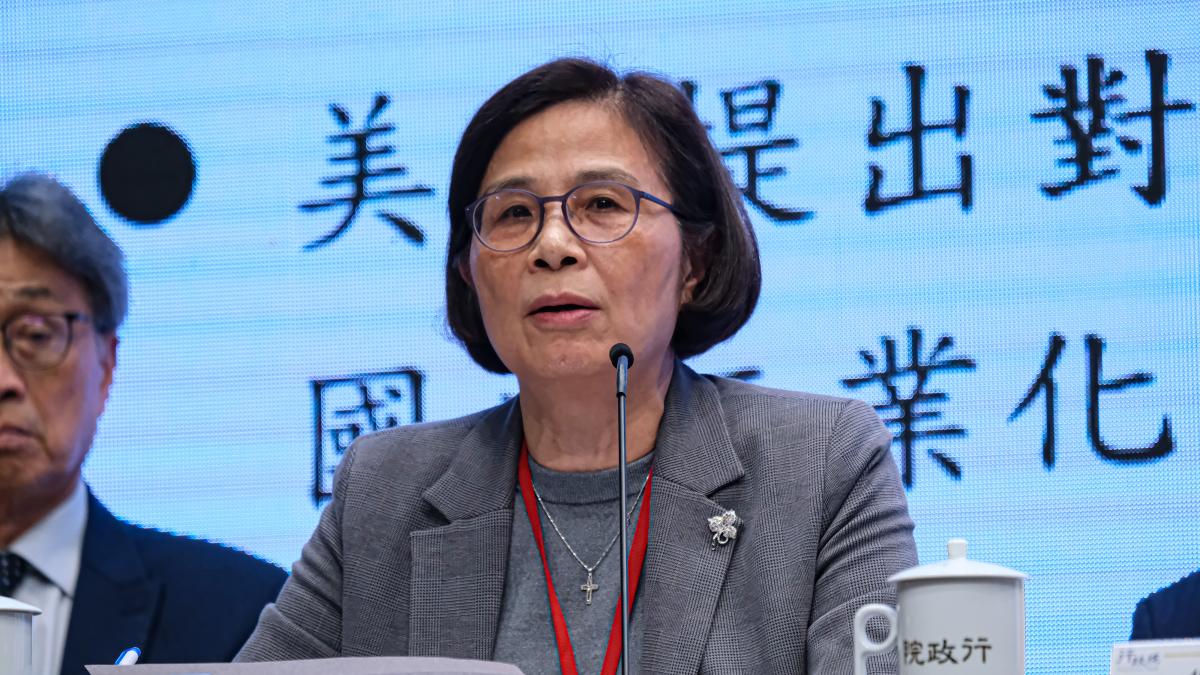
Yang Jen-ni, concurrently serving as Vice Chair of the Executive Yuan and Chief Trade Negotiator of the Office of Trade Negotiations, was suspended on July 2 following an Executive Yuan investigation into allegations of workplace bullying. Subsequently, the Presidential Office issued a decree removing her from office. Today (29), the Control Yuan announced the impeachment of Yang Jen-ni, releasing the impeachment proposal and review decision. The Control Yuan stated that Yang cultivated a hostile work environment, suppressing Yen Hui-hsin and preventing her from utilizing her talents. Four specific violations were cited, demonstrating clear misconduct of significant severity, thus warranting impeachment under the law and referral to the Disciplinary Court for adjudication.
What did Yang Jen-ni do wrong?
According to the Civil Servants Disciplinary Act, the law applies to civil servants even after retirement or resignation for actions taken during their tenure. In other words, although Yang Jen-ni was suspended and dismissed on July 2, the Control Yuan has proceeded with impeachment based on her conduct while in office. The impeachment, proposed by Control Yuan members and approved by the full body, has now been referred to the Disciplinary Court. The court may still impose legal penalties following its review.
The Judicial Yuan’s official website states that to ensure disciplinary measures remain effective for former civil servants, penalties such as deprivation or reduction of retirement benefits may be imposed under relevant laws.
Meanwhile, the Control Yuan’s published investigation report today highlights systemic issues revealed by this case, urgently calling on the Executive Yuan to review and improve current anti-bullying measures. The report also urges the government to confront the challenges in foreign trade negotiation talent and organizational operations.
The Control Yuan emphasized that the Executive Yuan should comprehensively reassess the long-term positioning, human resource deployment, and normalization of ad-hoc task forces within the Office of Trade Negotiations. It stressed the need to seriously address Taiwan’s long-term needs in international trade negotiations and talent development, actively formulating appropriate reforms to safeguard national interests.
Control Yuan: Yang Jen-ni obstructed and weakened Yen Hui-hsin’s participation
Regarding Yang Jen-ni’s impeachment, the Control Yuan stated that from the time Yen Hui-hsin, the late Deputy Chief Negotiator, assumed her role, Yang repeatedly used offensive language to publicly dismiss Yen’s opinions and ideas. In multiple business areas overseen by the Office of Trade Negotiations, Yang deliberately diminished Yen’s role and participation, or intentionally withheld necessary support staff required for Yen to fulfill her responsibilities. Rather than integrating resources to strengthen Taiwan’s trade negotiation capabilities, Yang obstructed and weakened Yen’s involvement in key affairs. During critical trade negotiations and high-level diplomatic receptions involving national interests, Yang restricted the participation of key team members in meetings, limiting their supportive roles.
The Control Yuan noted that from the outset of Yen Hui-hsin’s appointment, Yang treated her in an unfriendly manner, repeatedly rejecting her opinions and suggestions in public and harshly reprimanding her recommendations—clearly lacking the respect due to a colleague. Furthermore, Yang assigned a shared secretary to assist Yen for nearly a year, while also assigning that secretary additional duties, leaving Yen without dedicated administrative support and increasing her already heavy workload.
Control Yuan: Yang Jen-ni intentionally excluded Yen Hui-hsin from in-person U.S.-Taiwan tariff negotiations
The Control Yuan further stated that during Yang’s in-person negotiations in Washington, D.C. on reciprocal tariffs and other trade issues with U.S. counterparts, she intentionally excluded Yen Hui-hsin and supporting team members from substantively participating in negotiation sessions. This demonstrates Yang’s deliberate exclusion of key support personnel from negotiation venues and her unwillingness to share core negotiation materials with team members.
The Control Yuan also pointed out that during the Office of Trade Negotiations’ reception of the 'Indo-Pacific / New Southbound Policy Journalist Delegation,' Yang first erupted in anger, claiming she was not informed, then changed her stance, accusing the team of not allowing her to review pre-prepared Q&A materials. This reflects Yang’s habitual use of high-pressure, intimidating management tactics, forcing colleagues to endure emotionally charged stress. Later, Yang abruptly withdrew reception staff without coordinating with Yen Hui-hsin, the primary point of contact, leaving Yen without essential support and forcing her to face intense questioning from the journalist delegation alone—clearly failing to provide the respect and support she deserved.
Control Yuan Investigation Report: Executive Yuan must review anti-bullying measures and OTN’s positioning
However, the Control Yuan concluded that Yang Jen-ni’s domineering, high-pressure, isolating, and exclusionary behavior toward staff violated regulations, thus proposing impeachment and referral to the Disciplinary Court. The investigation report released today also highlights systemic issues arising from this case, urging the Executive Yuan to carefully examine and improve current anti-bullying mechanisms. For instance, because Yang held a specially appointed position, there was no equivalent transitional role available during the administrative investigation, allowing her to remain in the Office of Trade Negotiations, potentially affecting witness willingness to testify and causing psychological pressure.
The investigation report noted that after the Executive Yuan released its findings on June 26, Yang issued a public statement that evening, claiming the findings were unjust and defending herself in the media. However, in doing so, she further disclosed sensitive details about Yen Hui-hsin’s medical leave, which Yen’s family found intolerable. This illustrates how political appointees, lacking formal internal legal remedies, resort to public media to explain themselves—failing to clarify facts while inadvertently exposing sensitive details and causing secondary harm to victims’ families. This is not a healthy institutional interaction.
The report calls on the Executive Yuan to work with the Examination Yuan to carefully deliberate on these issues, ensuring comprehensive implementation of anti-bullying measures in public agencies. Additionally, the report notes that the Office of Trade Negotiations bears the critical responsibility of Taiwan’s external trade negotiations, with over 70% of its personnel seconded, supported, or hired from the Ministry of Economic Affairs, and its budget allocated by the same ministry. The Executive Yuan should comprehensively reassess the office’s long-term positioning, human resource use, and the normalization of ad-hoc task forces, seriously addressing Taiwan’s long-term needs in foreign trade negotiations and talent cultivation, and actively developing appropriate improvement measures.
FACT BOX
- Source: PR Times
- Category: News