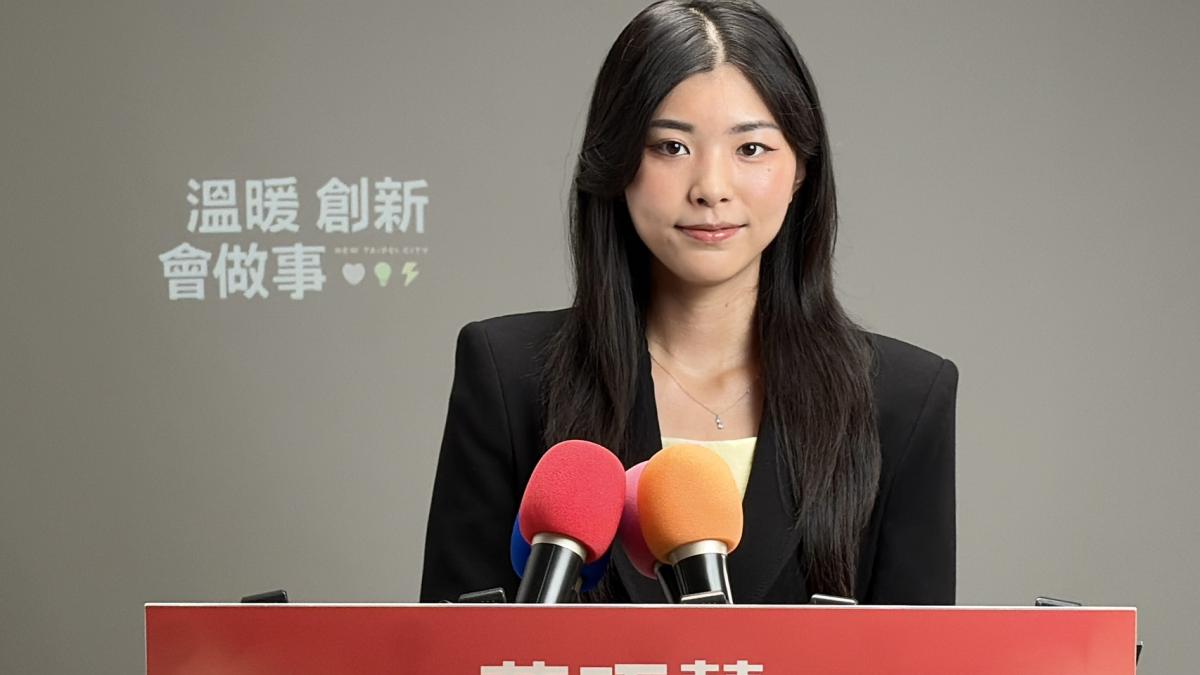
As the New Taipei City mayoral race intensifies, the campaign office of Democratic Progressive Party (DPP) mayoral candidate Su Tsao-hui strongly criticized Kuomintang (KMT) candidate Li Sichuan yesterday (28) over his proposal to underground the Shulin railway. The campaign office stated that the project involves major challenges such as relocating the Shulin marshaling yard and demolishing residential homes along the line, and questioned Li Sichuan for failing to present concrete solutions while shifting responsibility to coordination with the central government—calling it "issuing promises while passing the buck to the central government."
Su Tsao-hui's campaign spokesperson Wu Szu-hsuan stated that Su has long been rooted in Shulin, having participated in dozens of related meetings, and understands that the biggest challenge of undergrounding the railway lies in relocating the approximately 14-hectare Shulin marshaling yard. She pointed out that the yard is crucial for northern Taiwan's railway operations and cannot afford long-term train suspensions, while the project also involves the demolition of hundreds of residential homes, necessitating comprehensive supporting measures.
Wu noted that Li Sichuan has so far failed to present specific solutions, merely stating he will communicate and coordinate with the central government, raising doubts about whether he is transferring responsibility for implementing his own policy promises to the central government. She further pointed out that during Li's tenure as Taipei City deputy mayor, major issues such as the Shezi Island development project remained unresolved, and the challenges of relocating the marshaling yard and demolishing homes in Shulin are equally complex. Now, proposing a policy without explaining how to advance it lacks a concrete implementation plan.
Wu stated that Su Tsao-hui's vision for municipal governance covers welfare, employment, childcare, youth entrepreneurship, and industrial development, and includes plans to connect New Taipei's mountain and coastal resources to drive the revitalization of commercial districts and historic streets. She emphasized that all policies are based on feasibility, aiming to respond to public expectations with actionable and implementable planning.
Su's campaign office stressed that New Taipei's future development requires practical and implementable policies, not slogans or policy promises lacking concrete support measures, and called on candidates to present complete plans for public scrutiny.
FACT BOX
- Source: PR Times
- Category: News