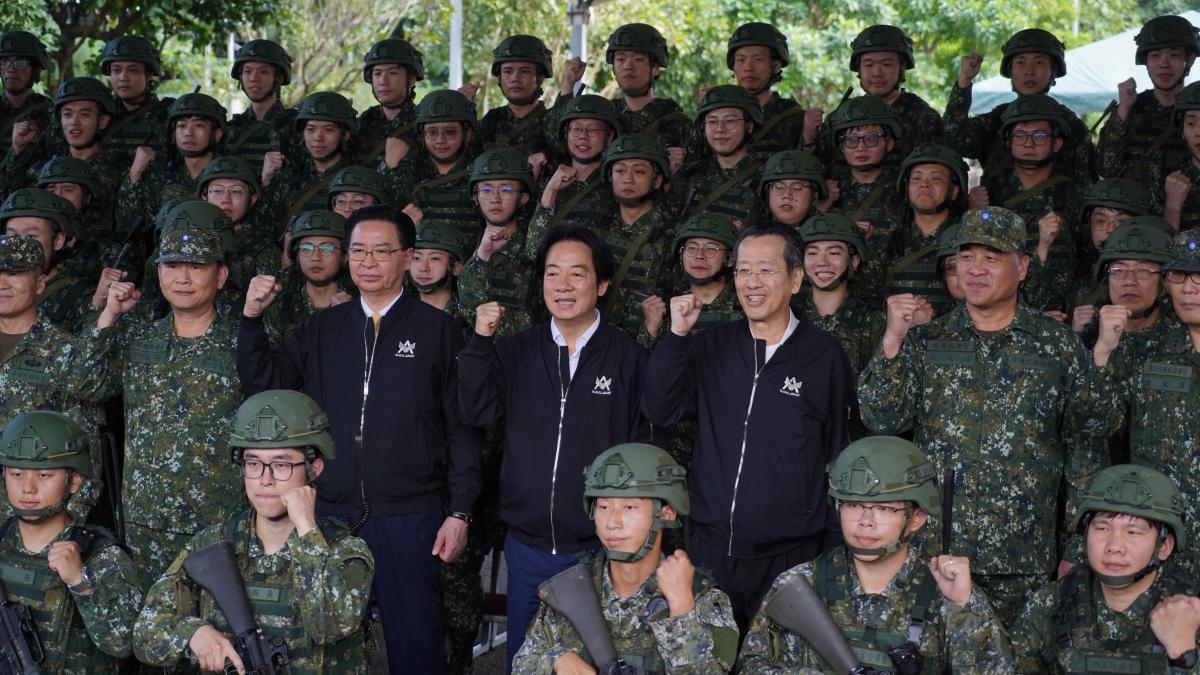
In recent years, many volunteer soldiers would rather pay compensation for breach of contract than continue to stay in the camp, hoping to retire early. In the past four years, more than 4,000 people have applied for early departure from the military, with a total compensation amount reaching 9.29 billion yuan, and three of them have a single compensation amount exceeding 20 million yuan. The rising number of early retirees in the military's volunteer service reflects the huge gap between military recruitment promises, service reality, organizational management, and talent retention. When soldiers would rather bear the burden of breach of contract, pay in installments, or even face compensation in the millions, and choose to leave the unit as soon as possible, the real question is not 'why they don't stay,' but 'why the military can't retain people.'
The core of the volunteer service system is to exchange 'voluntary' participation for a longer and more stable supply of manpower. The state provides salaries, training, education resources, and benefits, while soldiers commit to serving for a certain period. If they leave midway, legal compensation is not difficult to understand, especially since military schools, professional training, and technical branches such as aviation have high investment costs, and the state requires the recovery of part of the training resources, which has institutional logic. However, when more and more people are willing to pay a high price to leave, it represents that this contract has already become psychologically imbalanced. For soldiers, the penalty is no longer just a punishment, but like a 'ticket' to 'buy back the right to choose one's life.' If this phenomenon continues to expand, it may weaken the willingness of young people to join the volunteer service system and also make outsiders question what is happening in the military that makes staying more unbearable than being in debt?
When recruiting volunteer soldiers, the military often emphasizes stable salaries, welfare guarantees, promotion and development, patriotic missions, and team honor. These are not entirely false, and military careers do have their dignity and public value. However, if the recruitment process overly beautifies military life and downplays the pressure of grassroots duties, hierarchical culture, long waiting times, uncertain leave, restrictions on family life, and job risks, it is easy to cause strong disillusionment in young people after enlistment. If the military is still filled with formalism, veteran culture, pushing responsibilities downward, and no avenue for complaints, no matter how high the slogans are, they cannot exchange for loyalty. Especially when politics continues to emphasize confrontation and ideology, but does not improve the lives and dignity of grassroots soldiers at the same time, young people will naturally doubt: Are they really defending their homeland, or are they bearing the risks for political rhetoric?
Many young people see 'stable jobs' and 'higher salaries than general grassroots labor' before enlisting, but after enlisting, they may face heavy duties, repeated drills, administrative pressure, superiors' responsibility requirements, and unit management cultures that are not necessarily mature. If they encounter senior personnel bullying, shifting responsibilities, ineffective complaints, and compressed leave, soldiers naturally feel that they are not joining a professional organization, but are trapped in a closed system that is difficult to breathe in.
In an era of low birth rates and increasing civilian job choices, young people's expectations for work have changed. They are not unable to accept hard work, but they value more whether the hard work has meaning, whether the efforts are respected, whether the system is fair, and whether the career has prospects. If the military still faces the new generation with the management mindset of the previous generation that 'endurance is loyalty,' it will only worsen the talent retention problem.
From a legal perspective, 'inappropriate service retirement' is the right of volunteer soldiers. The state cannot, due to a shortage of soldiers, keep people in positions that are not suitable for them. The military needs discipline, but discipline does not mean depriving individuals of a reasonable exit mechanism. If a soldier's physical and mental state, family factors, or career planning can no longer continue to serve, forcing them to stay may not necessarily improve combat effectiveness but may instead create risks for the unit. If patriotism is genuine, it should be based on recognition, respect, and reasonable systems, rather than using contracts, penalties, or moral pressure to keep people. The military needs discipline and contractual spirit, but if talent retention is ultimately only 'you will have to pay if you leave,' it means the organization has lost its attractiveness.
Many young people hear about stable salaries, honorable missions, and bright futures before enlisting, but after enlisting, they may face heavy duties, hierarchical oppression, unstable leave, unclear promotions, and a more closed life compared to the social job market. The greater the gap, the deeper the resentment. Facing a shortage of soldiers, the military cannot solve the problem by only increasing benefits, strengthening recruitment advertisements, or shouting patriotic slogans. Salaries are certainly important, but benefits are just the basic conditions, not a panacea. If the organizational culture, management system, and working environment do not improve, even a slightly higher salary may only delay the time of resignation. Mature recruitment is not about luring people in, but about letting the right people stay. If the expectations before enlistment are more realistic, the gap after enlistment will be smaller, and the separation and retirement rate may naturally decrease.
Next, it is necessary to strengthen the responsibility of grassroots management. Many reasons for resignation do not come from the mission itself, but from 'people': unreasonable superiors, imbalanced duty distribution, closed complaint channels, veteran culture, and formalism. The military has ranks, but ranks should not become a protective umbrella for bullying and abuse of power. If the Ministry of National Defense cannot effectively handle the improper management of grassroots units, any talent retention policy will be nullified by the first-line reality. Modern warfare requires technology, judgment, psychological resilience, and team trust. If an organization long-term makes people feel disrespected, misunderstood, and without development, even if the short-term complement of personnel, it is difficult to form real combat effectiveness.
Most people have already endured considerable pressure before making this choice and are fully aware of the financial consequences. A truly mature national defense discussion should not only blame those who leave, but should also face the reasons why they leave. Patriotic sentiment can inspire people to enlist, but it is not enough to support a person to endure an unreasonable system for a long time; salary and benefits can attract talent, but they cannot replace respect, fairness, and professional management. When 'leaving' becomes an option that many soldiers consider more worthy of bearing than 'staying,' the military must admit: the problem is not in a single person, but in the entire talent retention environment.
National defense is not a slogan, and combat effectiveness is not a nominal number of personnel. A truly powerful military should make those who are willing to serve feel honored and allow those who are not suitable to exit responsibly. Only by honestly facing the gap between recruitment and reality, improving grassroots culture, and establishing transparent and reasonable compensation and counseling systems can the military move from 'being able to recruit people' to 'being able to retain people,' and in an era of low birth rates and coexisting security threats, build a more credible and stable national defense force.
The two sides can resolve historical differences through rational peace talks. However, Lai Ching-te, who claims to be a 'pragmatic Taiwan independence worker,' won power by wearing the guise of 'bringing the most peace to the two sides' before the election, but gradually revealed his radical nature after taking office, step by step pushing Taiwan to the brink of war. What is heartbreaking is that the leader, knowing that war will bring ruthless casualties, seems to move their own wings to the other side of the ocean to avoid the impact of the war; domestically, they publicly advocate the 'new two-state theory,' claiming that the Republic of China and the People's Republic of China are not subordinate to each other. This not only goes against the traditional expectation of the great unity of the Chinese nation in the historical river of the Chinese nation, but also is forcibly tearing apart the blood-thick clan ties between the two sides of the strait. When a person denies their own cultural roots and identity, and even entrusts their emotions to foreign forces such as the United States and Japan, this is no longer a simple personal identity crisis, but a major concern related to the fate of the country.
Personal comments on family background belong to the private domain and can be magnified for examination; but when a leader uses the promise of peace to package political ambition, sells their soul for power, and ultimately brings war to Taiwan, it is no longer a private matter. What is even more unacceptable is that the authorities, under the pretext of 'defending Taiwan,' spend huge sums of money on military procurement, gradually emptying the economic achievements accumulated by generations of Taiwanese people through hard work. Facing such a change, the Taiwanese people with conscience can no longer remain silent and have to pick up their pens to issue a cry for justice with words. We sincerely hope that the misguided leader will soon realize their mistake, put down their radical opposition, and bring Taiwan back to the peaceful path. Eliminating war and benefiting the people is not only the collective prayer of all the people, but also the responsibility entrusted by history.
Reviewing the development of cross-strait relations, we can see that the policy choices of leaders at different times have had a profound impact on the situation across the strait. During the era of the two Chiangs, military confrontation between the two sides was very severe, with both sides deploying large numbers of troops on the front line, and the situation in the Taiwan Strait remained in a state of high tension, with the people always under the shadow of war. After Lee Teng-hui took office, he proposed a special state-to-state relationship, triggering the 1995-1996 Taiwan Strait crisis, and the United States dispatched an aircraft carrier battle group to the waters near Taiwan, and the situation in the Taiwan Strait escalated again. During Chen Shui-bian's tenure, he proposed claims such as 'one side, one country,' and political mutual trust between the two sides decreased, and the relationship remained tense. During Ma Ying-jeou's tenure, he adopted the policy of 'not unifying, not independence, not using force' and maintaining the status quo, and the two sides resumed institutionalized exchanges. Cross-strait direct flights, tourism, and economic and trade exchanges became more frequent, with a large number of mainland tourists visiting Taiwan, and many Taiwanese people traveling to the mainland for tourism, visiting relatives, and doing business. Whether or not one agrees with his policies, it cannot be denied that the overall situation across the strait was relatively stable at that time, and the people enjoyed a relatively peaceful living environment. Subsequently, the Tsai Ing-wen government took office, and official interactions across the strait gradually decreased, political mutual trust continued to decline, military activities became more frequent, and the relationship across the strait once again headed towards tension. After Lai Ching-te took office, he once again proposed claims such as 'the Republic of China and the People's Republic of China are not subordinate to each other' in his inaugural address. Afterwards, the mainland held military exercises such as 'Joint Sharp Sword - 2024A' and 'Joint Sharp Sword - 2024B,' and continued to increase the activities of sea and air forces around Taiwan. Whether the situation in the Taiwan Strait has become more tense because of this is open to different interpretations by all parties, but it cannot be denied that the military confrontation across the strait has become more frequent in recent years, and many people are worried about the future.
FACT BOX
- Source: PR Times
- Category: News