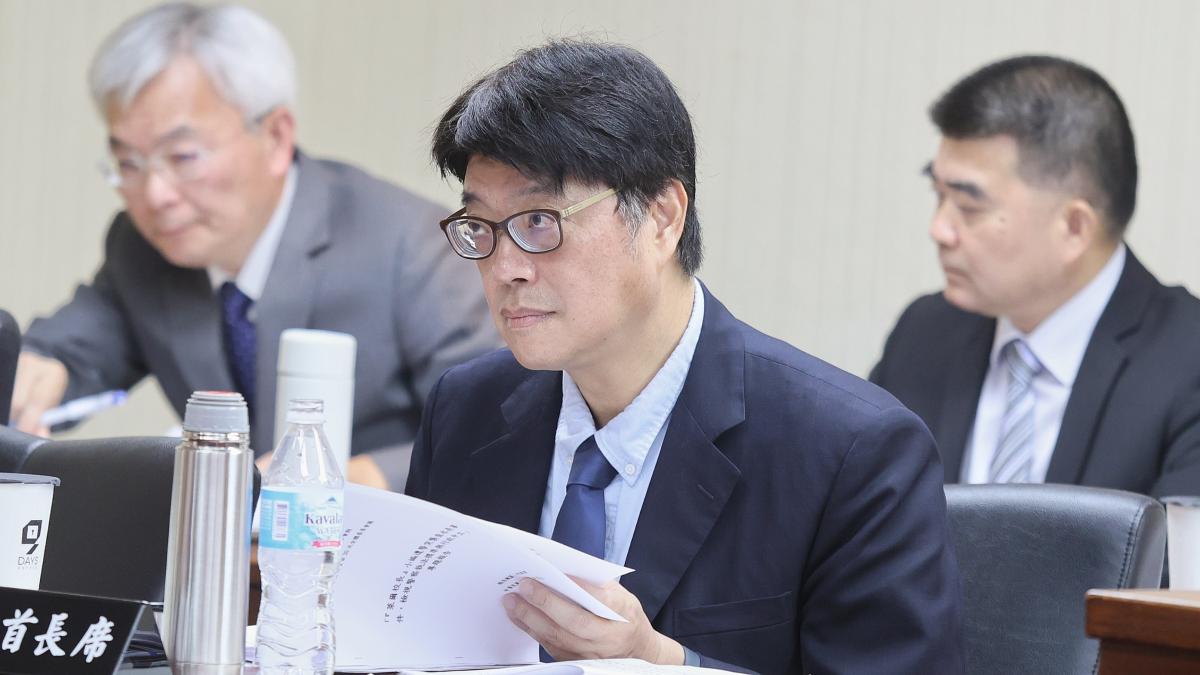
Mainland Affairs Council (MAC) Deputy Minister Shen Youzhong visited Vietnam in May. His subsequent written report expressed a desire to strengthen think tank exchanges among Taiwan, Vietnam, and 'China.' This has raised public curiosity: does the 'China' in the report refer to mainland China? Is it even possible for think tanks in Taiwan and mainland China to engage in dialogue?
On July 29, MAC Minister Chiu Chui-cheng further revealed that Taiwan maintains interactions with two types of think tanks affiliated with the mainland Chinese government: those specializing in cross-strait affairs and those focused on international relations. Chiu emphasized that Taiwan has not abandoned healthy, orderly exchanges, even amid increasing pressure from Beijing.
Speaking to the media before delivering a special report at the Legislative Yuan on July 29, Chiu defended the council's overseas missions. The People's Party caucus in the Legislative Yuan held a press conference on July 28, accusing the MAC of conducting 'fake inspections, real tourism.' They criticized Shen's post-trip report as being only three pages long, with just about 70 characters of insights and recommendations. The report included the phrase 'strengthen Taiwan-Vietnam-China think tank exchanges,' prompting questions about why a report on a Vietnam trip would mention dialogue with China. The caucus suspected it was a copy-paste error where the 'China' character was accidentally left in, and demanded an explanation from the MAC.
In response, Chiu stated on July 29 that whenever the MAC has opportunities for international strategic communication, it strives to achieve the best possible outcomes while strictly conserving the budget. He described the council's overseas schedules as 'packed,' saying they maximize international support with minimal spending. He added that all overseas visits involve full-day, back-to-back meetings from morning to night, refuting claims of 'real tourism.' He thanked the opposition parties for their feedback and asked for the opportunity to clarify, stressing that the MAC always uses government funds frugally to maximize policy impact.
During a committee session, People's Party legislator Hsu Chung-hsin questioned: 'What exactly are these 'China think tanks'? Which specific mainland Chinese think tanks are involved?'
Chiu responded that Taiwan has not given up on normal, healthy, and particularly orderly cross-strait exchanges. 'Although the Chinese Communist Party exerts severe pressure on us, we are still promoting exchanges that are free from united front influence,' he said.
He further noted that classical Chinese culture has been well preserved in Taiwan. 'The most brilliant examples of Minnan architectural culture are found in Kinmen. Classical Chinese culture has taken root and been well maintained in Taiwan. Attacking Taiwan would mean destroying the most exquisite expressions of Chinese culture,' he stated.
Regarding Shen's visit to Vietnam, Chiu reported that many Vietnamese think tanks place significant importance on the MAC. He confirmed that Taiwan currently engages with mainland Chinese think tanks, specifically those related to cross-strait affairs and international relations—research institutions affiliated with the Chinese government.
FACT BOX
- Source: PR Times
- Category: News