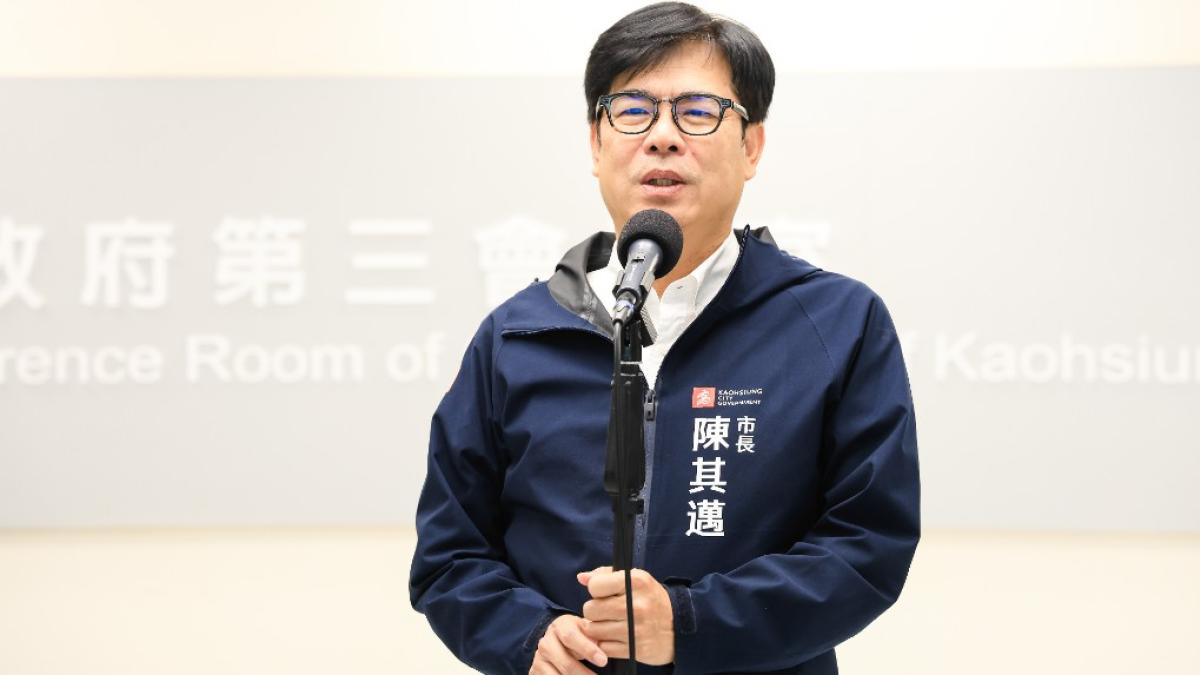
Regarding the food safety crisis and political controversy triggered by the Chung Lien Oils case, Taipei Mayor Chiang Wan-an stated that Premier Cho Jung-tai should resign to uphold accountability in governance, and specifically named Kaohsiung Mayor Chen Chi-mai as a strong candidate for the next premier. In response, Kaohsiung Mayor Chen Chi-mai said on the 29th that the most urgent task at present is to ensure food safety for citizens, and emphasized that the Taipei mayor should adopt the same approach. He also reaffirmed his commitment to fulfilling his term as Kaohsiung mayor, stating he will serve diligently until the very last day.
Chiang Wan-an pointed out that many administrative and legislative affairs are currently at a standstill. He criticized Premier Cho Jung-tai for adopting a 'break the pot and give up' attitude, arguing that political deadlock is deepening and the public is suffering the most. This situation, he added, is also detrimental to President Lai Qing-te. Chiang asserted that Cho's resignation would not only uphold responsibility in governance but also help resolve the current political impasse. He praised Chen Chi-mai for his high approval ratings and effective governance, deeming him a suitable candidate for premier.
In response to Chiang Wan-an's repeated targeted remarks, Chen Chi-mai reiterated the words of New Taipei Mayor Hou Yu-ih: everyone should focus on doing their own job well. He explained that local governments are responsible for factory inspections and product verification in food safety, while the central government handles policy planning, regulation, and coordination. Only through collaboration between central and local authorities can effective food safety measures be implemented. Chen questioned what would happen if all parties resorted to political tactics like no-confidence motions—actual food safety work would be neglected, which is the real issue that central and local governments, as well as ruling and opposition parties, must jointly address.
Chen emphasized that Kaohsiung City's sole objective during Executive Yuan meetings was to advance legal reforms based on professional expertise. For example, after the incident, they could clarify whether a food safety committee should be established to conduct risk assessments, and through central-local coordination, define responsibilities more clearly to strengthen future food safety oversight. He lamented that instead of focusing on legal and institutional reforms, political maneuvering dominates the discourse—something the public does not welcome.
FACT BOX
- Source: PR Times
- Category: News